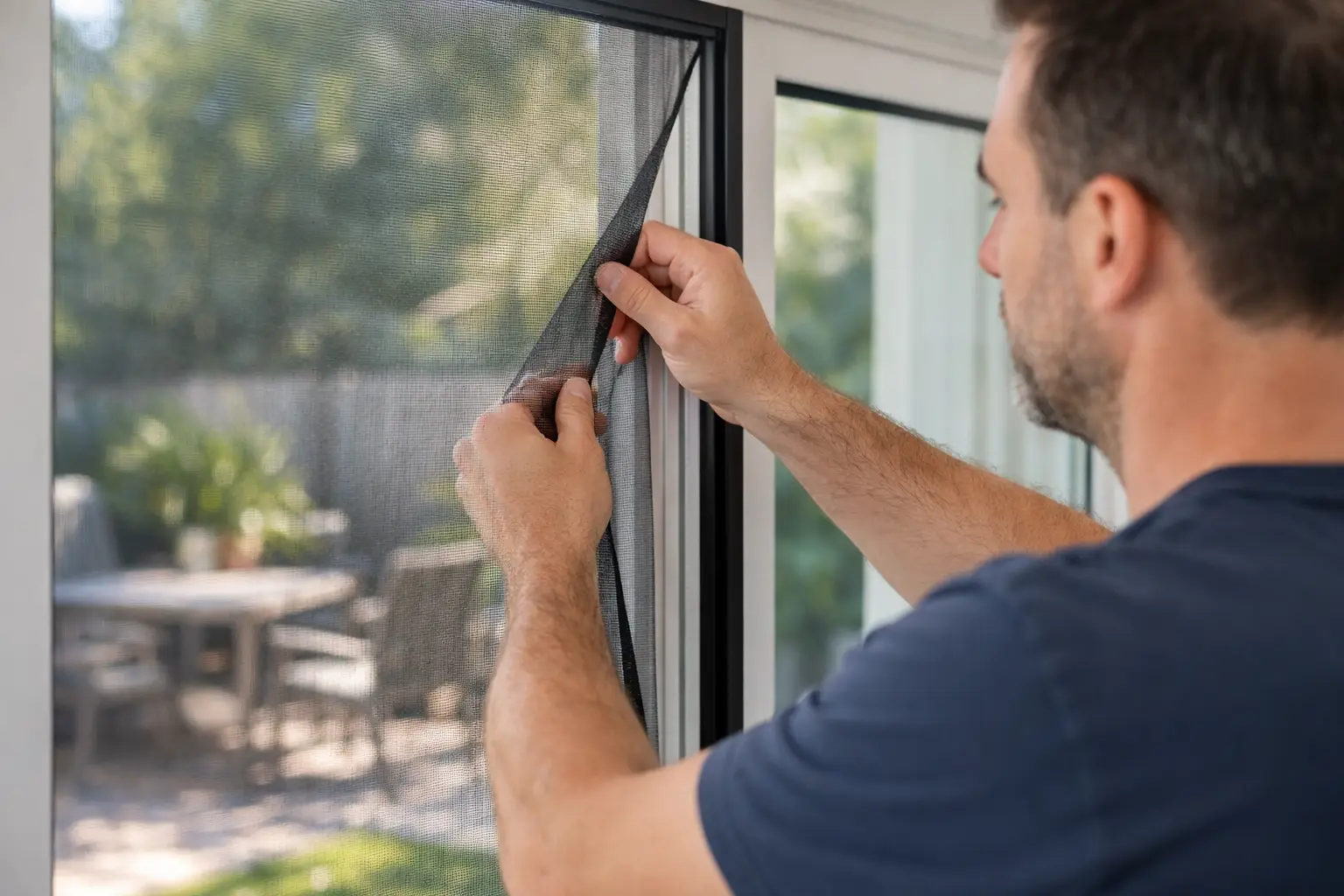
A torn panel in an otherwise sound door screen does not always mean replacing the complete unit. The right replacement fly mesh for screen doors can restore protection against flies, mosquitoes and wasps while keeping the doorway open for fresh air. The key is to identify how the existing screen is constructed, choose a mesh suited to the location, and measure the usable opening rather than relying on an approximate door size.
For a kitchen door, patio entrance or commercial access point, the replacement needs to do more than cover a gap. It must remain secure under regular use, allow good airflow and stand up to cleaning, pets or high footfall where required.
When replacement mesh is the sensible option
Replacing mesh is usually cost-effective when the aluminium frame, tracks, hinges, magnetic closures or roller mechanism are still working properly. A small tear, sun-faded mesh, stretched material or damage caused by a pet can often be dealt with without changing the entire screen system.
It is less suitable where the frame has bent, the corners have loosened, the door no longer closes squarely, or the retaining channels are cracked. In those cases, fresh mesh may not tension evenly and could pull free again. A made-to-measure replacement screen is normally the more dependable long-term answer.
The design of the screen matters too. A fixed framed panel can often be re-meshed in place or on a work surface. Hinged and sliding screens may need the panel removed first. Roller and plissé door screens use purpose-designed fabric within a cassette or track system, so they should not be treated as a standard mesh-roll repair. If the mesh is damaged on one of these systems, the correct replacement component is essential for reliable operation.
Choosing replacement fly mesh for screen doors
Standard insect mesh is a practical choice for many domestic doors. Its fine openings help stop common flying insects while allowing air and daylight through. It suits back doors, utility rooms, conservatory entrances and patio door screens where normal household use is expected.
However, standard mesh is not the best answer for every opening. The right specification depends on what happens at the doorway.
Fine mesh for smaller insects
Where midges, small flies or mosquitoes are a persistent problem, a finer weave gives improved protection. The trade-off is that finer mesh can slightly reduce airflow and visibility compared with a more open standard weave. This is rarely an issue on a single domestic door, but it is worth considering on a large opening where ventilation is the main priority.
Pet-resistant mesh for busy homes
Cats and dogs can quickly damage lightweight mesh by leaning, scratching or pushing through it. Pet-resistant mesh is designed for greater strength and is a sensible upgrade for doors used by animals. It will still need a properly supported frame and secure fitting, but it is far more suited to everyday contact than ordinary insect mesh.
A stronger mesh may appear darker and can be less discreet when viewed from indoors. For many households, that is a worthwhile compromise if it prevents repeated repairs.
Mesh for kitchens and hygiene-sensitive areas
Food preparation areas, catering premises and commercial kitchens need insect control that supports good hygiene without preventing ventilation. The mesh should fit neatly into a suitably maintained screen system, with no loose edges or openings around the perimeter that insects can use to enter.
For frequently used commercial doorways, the screen type is as important as the mesh itself. Heavy-duty hinged screens, sliding systems and PVC strip curtains can be better suited to repeated passage by staff, trolleys or deliveries. A replacement mesh panel works well where the existing framed screen remains serviceable, but it is not a substitute for a screen system designed for the level of traffic involved.
Visibility, airflow and durability
Every mesh choice involves a balance. A more open mesh generally provides better visibility and airflow, while a finer or heavier material offers more specialised protection. Before ordering, consider whether the door is mainly used for ventilation, whether pets use it, and whether the screen is in a domestic or commercial setting.
For exposed south-facing doors, UV exposure and heat can gradually affect mesh over time. Choosing quality material and avoiding excessive tension during fitting will help it last longer.
Measure the mesh opening, not just the door
The most common cause of an unsuccessful re-mesh is ordering material based on the external door size. What matters is the area the mesh must cover, including enough extra material to secure it into the frame or retaining channel.
First, remove the damaged panel if practical and measure the internal aperture where the mesh sits. Take the width and height in millimetres at more than one point, particularly on older frames that may not be perfectly square. Use the smallest measurement for the visible opening, then allow additional material around all sides for fitting.
The amount of overlap depends on the method used to retain the mesh. Spline-retained frames need enough excess to sit beneath the rubber spline. Frames using clips, beading or a clamping strip need enough material to remain fully gripped. If you are replacing a panel in an existing door screen, inspect the old mesh before removing it. Its edges often show exactly how much material was previously retained.
It is also worth checking the mesh direction. Some meshes have a clearer visual finish or stronger orientation in one direction. Keeping the weave square with the frame gives a neater result and makes tension easier to control.
How to replace mesh in a framed door screen
A straightforward framed screen repair is well within reach for a careful DIY customer, provided the frame is in good condition. Lay the panel flat on a clean, level surface so it is supported along its full length. Remove the old retaining spline, beading or clips carefully, keeping reusable parts to one side.
Place the new mesh over the aperture with generous overlap. Start securing one edge, then work across to the opposite side while keeping the mesh flat rather than pulling it tight. Secure the remaining sides gradually, checking that the weave remains straight as you go.
The aim is even tension, not drum-tight tension. Overstretching can distort the weave, place unnecessary load on the frame and cause the mesh to pull back from the retaining channel. Once the mesh is secure, trim the excess with a sharp knife, cutting away from the frame and taking care not to nick the newly fitted panel.
Before refitting the screen, inspect the perimeter closely. Even a small gap at a corner can undermine the purpose of the screen. Open and close the door several times to confirm that the mesh does not catch on handles, thresholds or adjacent door furniture.
Avoid the shortcuts that shorten mesh life
Adhesive patches can be useful as a temporary fix, but they are rarely a tidy or durable answer on a door screen. They can collect dirt, reduce visibility and lift at the edges with repeated opening and closing. For a larger tear or worn panel, replacing the full mesh section produces a cleaner finish and more reliable insect control.
Do not fit mesh to a distorted frame and expect it to correct the problem. Equally, avoid using household netting intended for windows or gardening where a proper insect-screen mesh is needed. Door screens experience movement, vibration and frequent contact, so the material and fitting method need to match the job.
Cleaning also makes a difference. A soft brush or vacuum with a brush attachment will remove dust and pollen without pulling at the weave. For more stubborn marks, use mild soapy water and a soft cloth, then allow the mesh to dry naturally. Harsh chemicals and aggressive scrubbing can weaken some mesh materials or damage surrounding frame finishes.
When a made-to-measure screen is the better upgrade
If your current door arrangement has no proper frame, the opening is unusually shaped, or the screen has already been repaired several times, a replacement panel may only delay the next problem. A made-to-measure screen can provide a cleaner fit, more durable aluminium construction and a mesh specification matched to the doorway.
This is particularly relevant for wide patio doors, French doors, bifold openings and commercial entrances. The best solution may be a hinged, sliding, roller, magnetic or plissé screen rather than a basic mesh panel. Premier Screens manufactures bespoke options for these different applications, helping customers select a screen that works with the way the door is actually used.
A well-fitted replacement mesh should disappear into daily life: fresh air can move through the property, the door can remain usable, and insects stay outside where they belong.