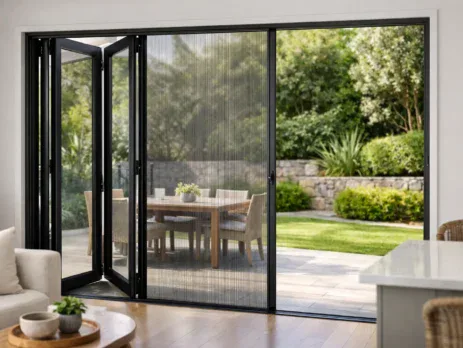
Open bifold doors on a warm evening and you get exactly what you wanted – fresh air, more light, and an easier connection to the garden. You also tend to get flies, wasps and midges finding their way indoors. That is why fly screens for bifold doors are increasingly popular in UK homes, especially where kitchens, dining areas and patio spaces open directly outside.
The challenge is that bifold doors are not a standard opening. They fold, stack and span wider apertures than most patio or French doors, so the screen needs to work around the way the doors are used. A basic off-the-shelf insect screen often falls short. For most properties, a made-to-measure system gives a better fit, smoother operation and far better long-term value.
Why bifold doors need a different type of fly screen
A bifold door creates a large opening, and that changes what a fly screen has to do. It is not just about covering a gap. The screen needs to suit regular access, cope with wider spans and stay practical when children, pets or guests are moving in and out.
With a single back door, a hinged or magnetic screen may be enough. With bifolds, the opening is usually much wider and used more frequently, particularly in summer. That makes ease of operation just as important as insect protection. If the screen is awkward to open, difficult to retract or prone to sagging over time, it is unlikely to stay in regular use.
This is also where installation quality matters. Bifold openings often vary slightly in square, and the frame detail can differ from one system to another. A made-to-measure fly screen allows for a neater fit against the actual opening rather than relying on a standard size that may leave gaps or interfere with the doors.
The best fly screens for bifold doors
For most domestic bifold applications, pleated and sliding screen systems are the main options worth considering. The right choice depends on the width of the opening, the available frame space and how often the doors are used.
Pleated fly screens for bifold doors
Pleated, or plissé, fly screens are a strong match for bifold doors because they are designed for larger openings and frequent use. The mesh folds neatly back when not in use, so the screen does not dominate the doorway. When needed, it can be drawn across the opening to create an effective insect barrier without blocking airflow.
This style works particularly well where appearance matters as much as function. The low-profile design suits modern bifold installations, and the screen can be parked back when the doors are closed or when full access is needed. It is also easier to control across wider spans than many spring-loaded alternatives.
The trade-off is that a pleated system needs accurate measuring and a well-made frame. On a wider opening, a poor-quality product can feel light-duty or become less smooth over time. A bespoke aluminium-framed unit is generally the more dependable option.
Sliding fly screens for bifold doors
Sliding fly screens can also work well, especially where there is enough surrounding frame or recess space to allow smooth travel. These systems move laterally and can suit openings where a robust, straightforward mechanism is preferred.
They are practical, durable and often a good fit for properties where the screen will be used regularly throughout the warmer months. In commercial or heavier-use settings, a sliding arrangement may appeal because it offers a more rigid structure.
That said, sliding systems need room to operate. If the layout around the bifold door is tight, or if the stacked door panels reduce available screen space, a pleated solution may be more sensible.
What to look for in made-to-measure fly screens for bifold doors
When comparing fly screens for bifold doors, the most important detail is not the headline style. It is whether the system is properly matched to the opening and the way the space is used.
Frame construction should be one of the first things you check. Aluminium-framed screens are generally the better choice for strength, longevity and a cleaner finish. They are well suited to larger openings and cope better with repeated use than lighter plastic alternatives.
Mesh choice matters too. Standard insect mesh is suitable for many homes, but some customers need something more specific. A finer mesh can help in areas affected by smaller insects such as midges, while stronger mesh options may be useful where pets or more demanding use is a factor. In kitchens and food preparation settings, the focus is often on maintaining ventilation while supporting cleaner, more hygienic conditions.
A good screen should also be easy to operate from day one. There is little point fitting a screen across a large opening if it feels stiff, awkward or vulnerable to accidental damage. Smooth movement, a stable frame and a secure close all make a difference in day-to-day use.
Domestic and commercial use cases
Bifold doors are no longer limited to garden rooms and high-end extensions. They are common in family kitchens, rental properties, cafés, hospitality spaces and workplace breakout areas. The reason buyers choose fly screens is often the same across all of them – they want to keep insects out without shutting off ventilation.
In domestic settings, that usually means more comfort during warmer weather. You can open the doors in the evening without inviting flies indoors, and that can be particularly useful around dining spaces, utility rooms and kitchen extensions. Households with pets or children often value a more durable, purpose-made system because the screen needs to cope with regular use rather than occasional use.
In commercial settings, the priorities shift slightly towards hygiene and practicality. Food preparation areas, service counters and hospitality spaces often need fresh air but cannot afford open access for flying insects. A correctly specified screen helps maintain a cleaner environment without making the doorway unusable.
Measuring and fitting – where accuracy pays off
Large door openings leave less room for compromise. A slight measuring error on a small window may be manageable. On bifold doors, it can affect the way the entire screen operates.
This is why made-to-measure matters. The width, height, reveal depth and fixing surface all need to be considered, along with any handles, cills or frame projections that could affect movement. The screen also needs to clear the bifold door system itself, including stacked panels and threshold details.
For competent DIY customers, installation can be straightforward if the product is designed with simple fitting in mind. For trade buyers and facilities teams, consistency of manufacture is equally important because it helps avoid wasted time on site. Either way, accurate manufacturing starts with accurate dimensions.
Are off-the-shelf screens worth considering?
For bifold doors, usually only in limited situations. A temporary or low-cost screen might appeal for occasional summer use, but it often struggles with wider apertures and frequent traffic. Fit can be poor, edge sealing may be inconsistent and the overall result can look improvised.
That does not mean every property needs the most complex system available. It does mean that bifold openings benefit from a screen designed for the actual dimensions and use pattern of the doorway. In many cases, spending a little more on a made-to-measure system avoids the common cycle of buying a cheap screen, finding it inconvenient, and replacing it soon afterwards.
Choosing the right supplier
With bifold doors, product range and manufacturing experience count. A supplier should be able to explain which screen types suit wide openings, what mesh options are available and how the system will fit your particular door arrangement. Clear sizing guidance, durable materials and reliable lead times matter far more than broad claims.
This is where specialist manufacturers tend to offer a practical advantage. A business focused on insect screening will usually have a better grasp of awkward openings, bespoke sizes and mesh performance than a general retailer. For UK buyers, direct supply from an experienced manufacturer such as Premier Screens also means access to made-to-measure products without the extra mark-up often added through third parties.
A practical way to enjoy bifold doors properly
Bifold doors are designed to open a room up, not create a trade-off between fresh air and flying insects. The right screen lets you use the opening as intended, whether that means keeping a family kitchen comfortable or maintaining better hygiene in a busy workplace. If the fit is accurate, the frame is durable and the screen is suited to the opening, it becomes one of those additions you notice most when it is missing.
Our plisse fly screens are a popular fit for bifold openings, and the double roller fly screen door suits wider spans.
You can browse our full range of fly screens for doors to compare every style side by side.