
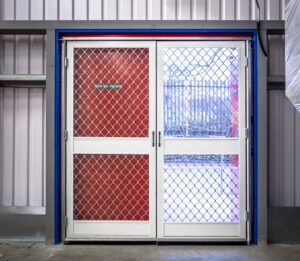
Commercial Fly Screens
Fly screens for businesses require a more robust solution to enduring constant use in busy commercial environments. Premier Screens have developed a specialist range of fly screens that will stand the test of time for many years in commercial premises, along with the security that all our insect screens are approved by the Food Standards Agency keeping you and your business compliant.
The fly screens can be supplied ready assembled for quick installation, in kit form for self-assembly, our kits can be ordered pre-cut to your dimensions so there’s no need to reach for the saw, or we offer a national fitting service.
Commercial Fly Screen Doors
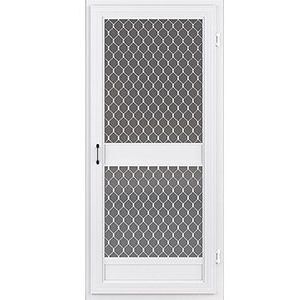


Commercial Fly Screen Windows
Food Hygiene and Compliance
If you’re reading this, it’s usually one of two situations. Either you’ve got an inspection coming and you’re checking your kitchen windows won’t be a problem, or an inspector has already been and screens are now on a list you need to clear.
Either way, you want the same two answers: what’s actually required, and how quickly we can get screens onto your openings.
We manufacture commercial insect screens here in the UK and supply them nationwide — to major retailers, universities, utilities and a lot of independent kitchens. Here’s the honest version of both answers.
What the law actually says
Food hygiene law doesn’t say “install a fly screen.” What it says is more specific, and more useful to you.
Under Regulation (EC) No 852/2004, Annex II, Chapter II — enforced in England through the Food Safety and Hygiene (England) Regulations 2013, with equivalents in Scotland, Wales and Northern Ireland — windows and openings in rooms where food is prepared, treated or processed must be constructed to prevent the accumulation of dirt. Those that open to the outside must, where necessary, be fitted with insect-proof screens which can be easily removed for cleaning. Where an open window would result in contamination, the window has to stay closed and fixed during production.
Three things worth pulling out of that:
“Where necessary” is a judgement, not a blanket rule. Anyone who tells you screens are legally mandatory on every opening is overselling it. Your inspector decides whether a given window needs screening based on what’s below it, what’s outside it, and whether you actually open it during production. A sealed window in an air-conditioned prep room may need nothing at all.
“Easily removed for cleaning” is the part most people miss. A screen that’s permanently fixed into the reveal, or one you’d need a screwdriver and twenty minutes to get out, doesn’t really satisfy this. Mesh in a kitchen collects grease. If it can’t come out and go in a sink, it becomes the hygiene problem it was meant to solve.
The alternative to screening is closing the window. That’s the trade the regulation offers. If you want the window open in summer — and in most kitchens you do — screening it is the practical route.
You can read the regulation in full on legislation.gov.uk.
What an inspector actually looks at
In our experience it’s rarely the whole building. It’s a short list of openings:
- Openable windows in prep and cooking areas — the most common flag by a distance
- Back doors propped open for heat, deliveries or bin runs
- Goods-in and delivery bays where the shutter is up for long stretches
- Serveries and hatches opening onto an outdoor or semi-outdoor area
- Waste and bin store doors, where anything you attract stays close to the kitchen
If you’ve had a written report, it will normally name the specific openings. Send us that list and we’ll price against it directly.
Which screen suits which opening
Different openings need genuinely different products. This is where a lot of money gets wasted — a domestic-grade screen on a delivery door will last one season.
Kitchen and prep room windows
Hinged panel screens or ready-assembled panel screens with a subframe. These are the ones that answer the “easily removed for cleaning” requirement properly: the panel lifts out, goes in the sink, goes back. Aluminium frame, no fabric to sag.
For windows where you’d rather not have a permanent panel, roller fly screens for windows retract into a cassette when you don’t need them. From £62 + VAT.
For sash and sliding windows, vertical sliding fly screens and horizontal sliding fly screens move the way the window itself moves, so half the opening stays usable with the screen in place. From £169 and £181 + VAT.
Where you want the simplest option for a run of similar windows, ready assembled panel fly screens arrive made up and ready to fit, from £60 + VAT.
Back doors and staff entrances
Chain fly screens are the workhorse for a door that’s constantly in use, especially with hands full. Anodised aluminium chain, no moving parts to fail, staff walk straight through, and they push aside on a means of escape. From £140 + VAT.
For a back door taking heavier traffic than that, see the commercial doors further down.
High-level windows, vents and awkward openings
Canopy fly screens fit on the outside of the building: a steel canopy frame holding a removable mesh panel over the opening. They’re for the windows an internal screen can’t handle, such as inward-opening windows with no reveal, high-level windows nobody can reach, rooftop vents and centre-pivot windows. They also suit kitchens where you can’t rely on staff to open and close a screen every day. The panel lifts out for cleaning, and they arrive as a pre-cut flat pack for assembly on site. From £210 + VAT.
Delivery bays and goods-in
PVC strip curtains and perforated PVC strip curtains for high-traffic openings where trolleys and pallet trucks are going through all day. Perforated strip lets air move while still forming a barrier — useful where a solid strip curtain would make the space unworkable.
Heavy-duty strip mesh doors where you want insect protection with more airflow than solid PVC allows.
Openings that take a beating
Commercial heavy-duty double-action fly screen doors — swing both ways, self-closing, built for a door someone shoulders through forty times a shift. This is the one to specify if a domestic screen has already failed on that opening.
What it costs, and how we quote
Published starting prices, so you can budget before you speak to anyone:
| Product | From |
|---|---|
| Hinged panel fly screens for windows | £35 + VAT |
| Ready assembled panel fly screens for windows | £60 + VAT |
| Roller fly screens for windows | £62 + VAT |
| Ready assembled fly screens with subframe | £96 + VAT |
| PVC strip curtains for doors | £113 + VAT |
| Chain fly screens for doors | £140 + VAT |
| Perforated PVC strip curtains | £140 + VAT |
| Vertical sliding fly screens | £169 + VAT |
| Heavy-duty strip mesh fly screen doors | £179 + VAT |
| Horizontal sliding fly screens for windows | £181 + VAT |
| Canopy fly screens | £210 + VAT |
| Commercial fly screen door | £420 + VAT |
| Commercial heavy-duty fly screen doors | £508 + VAT |
| Commercial heavy-duty double-action fly screen doors | £671 + VAT |
Price moves with size, mesh specification and fixing method. Everything is made to your measurements, so a multi-opening site gets quoted per opening — send us a list of sizes, or the inspector’s report, and we’ll come back with a line-by-line price.
Commercial customers can order supply only, or supply and install — tell us which you want and we’ll price accordingly. We invoice on account for established commercial customers and work to purchase orders. If you need a formal quotation for procurement, ask and we’ll issue one in the format you need.
Lead times — including the urgent ones
Everything is made to order in our own UK factory, which is the reason we can move quickly rather than the reason we can’t. Lead times run from 2 to 10 working days from confirmed measurements, depending on which product you choose. The lead time for each item is shown on its own product page, so you can check before you commit rather than after.
If you’re working to an inspection deadline or a re-visit date, tell us the date when you enquire. We’d rather know up front than find out afterwards that we’ve missed it. Email us at sales@premier-env.co.uk with the date and we’ll tell you straight whether we can hit it.
Who we supply
We manufacture for national retailers and large institutional sites as well as independent kitchens. Marks & Spencer, Morrisons, United Utilities and UK universities have all specified our screens.
That matters here for one reason: those customers have their own compliance teams, and the screens had to satisfy them before they satisfied anyone else.
Measuring and site surveys
Most commercial customers measure their own openings — it takes a tape measure and five minutes per opening, and our guides walk you through it.
For each opening, measure the width in three places (top, middle, bottom) and take the smallest figure. Do the same for the height. Buildings are rarely square, and the smallest measurement is the one the screen has to fit.
Download the measuring guide for your product, or send us photographs of the openings and we’ll tell you what we’d need.
Spares, re-meshing and keeping them compliant
A screen only counts if it’s intact. We supply replacement strips for mesh doors, replacement chain, door closers and re-meshing for frames that are sound but tired — usually a fraction of the cost of replacing the unit.
If you’ve inherited screens from a previous supplier or a previous tenant, send us a photo. If the frames are serviceable we’ll tell you, even though we’d make more money telling you they aren’t.
Antibacterial mesh on the window screens
Our window screens — hinged panel, roller, and both vertical and horizontal sliding — carry an antibacterial treatment as standard, whichever mesh you specify. Titanium dioxide is worked into the mesh during weaving rather than coated on afterwards, so it doesn’t wash off during cleaning, and in daylight it breaks down bacteria settling on the mesh surface.
Two honest caveats. It applies to the window screens, not to the strip curtains, chain screens or commercial doors. And it is not a substitute for cleaning — an inspector wants screens that are intact and clean, and a treated mesh still has to come out and be washed on the same schedule.
Questions we get asked
Are fly screens a legal requirement?
Not unconditionally. The regulation requires insect-proof screens on openable windows in food rooms where necessary, and requires that they can be easily removed for cleaning. Your local authority decides what’s necessary for your premises. In practice, if you open windows during production, expect to need them.
Can I put a screen on a fire exit?
Carefully, and not every type. Anything on a means of escape must not impede escape. Chain screens and strip curtains push straight through and are usually acceptable. A hinged or panel screen on a fire door is a different conversation — talk to us and to whoever holds your fire risk assessment before ordering.
Will screens affect kitchen ventilation?
Any mesh reduces airflow to some degree; that’s physics, and we won’t pretend otherwise. In a kitchen relying on mechanical extraction the practical effect is usually small, but if your ventilation is marginal already, mention it — mesh specification makes a difference and we can advise on the most open weave that still does the job.
Do you fit them?
Either, depending on what suits you. Most customers order supply only and fit the screens themselves or hand them to their existing maintenance contractor. For commercial customers we also offer supply and install — mention it when you enquire and we’ll quote for both so you can compare.
Can existing screens be cleaned rather than replaced?
Yes, and they should be. Panel and hinged screens come out and can be washed. That’s the whole point of the removability requirement — build cleaning them into your kitchen schedule and they’ll last years.
What if I only need one opening done?
That’s fine. We take single-screen orders as readily as multi-site ones.
Tell us about your openings
Send the inspector’s report, a list of sizes, or just photographs of the openings you need covered. We’ll come back with a priced schedule and a realistic lead time.
Email sales@premier-env.co.uk — send your opening sizes, your inspector’s report, or simply photographs of the openings, and tell us whether you want the screens supplied only or supplied and installed.