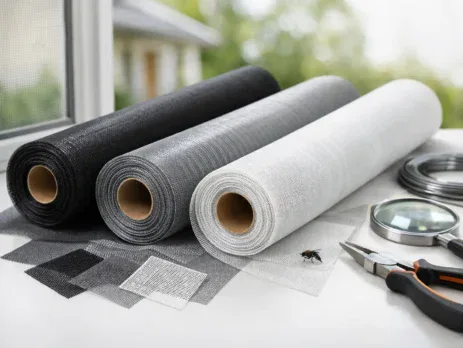
When a window is open above a sink, beside a patio, or in a busy prep area, insects do not need much of an invitation. A fly mesh roll gives you a practical way to screen openings without blocking airflow, which is why it remains one of the most useful starting points for both home and commercial insect control.
Unlike a fully assembled screen, mesh on a roll gives you flexibility. It can be used for repairs, retrofits, custom screen builds and specialist applications where standard sizes are not suitable. For landlords, homeowners, trade buyers and facilities teams, that matters. You are not paying for unnecessary framing or fittings if the job only requires replacement mesh, and you can match the material to the environment more closely.
What a fly mesh roll is actually for
A fly mesh roll is a continuous length of insect screening material supplied ready to cut to size. In straightforward terms, it is designed to create a barrier that keeps flying insects out while still allowing natural light and ventilation in. That basic function sounds simple, but the right mesh can make a noticeable difference to comfort, cleanliness and day-to-day usability.
In a domestic setting, that might mean making a kitchen window usable in summer without inviting flies indoors. In a commercial environment, it can be part of a more hygiene-conscious approach to doors, hatches and screened openings. Where food preparation, stock control or customer-facing cleanliness is a concern, screening is less about convenience and more about maintaining standards.
The main advantage is adaptability. A roll can be trimmed for individual window frames, used to replace worn sections in existing systems, or fitted into made-to-measure frames and panels. That makes it useful for one-off repairs as well as larger, repeat projects.
Choosing a fly mesh roll by application
The first question is not material. It is where the mesh is going and what it needs to cope with.
For a typical household window, the priority is often simple insect exclusion with good visibility and airflow. A lightweight but durable mesh usually suits this well, especially where the screen is not being handled constantly. For doors, especially those opening on to gardens or patios, wear becomes more of a factor. The mesh may need to tolerate frequent movement, occasional impact and more regular cleaning.
Commercial and hospitality settings are different again. In kitchens, service areas and prep spaces, the mesh needs to support hygiene without becoming difficult to maintain. Depending on the opening, there may also be a need for a tougher grade that stands up to heavier daily use. In these environments, a cheaper general-purpose mesh can become a false economy if it stretches, tears or degrades too quickly.
This is where a made-to-measure approach often proves more sensible than trying to adapt a generic product to an awkward opening. If the frame, system and mesh are selected together, the result tends to last longer and fit better.
Aluminium, fibreglass and specialist mesh options
Not all mesh rolls perform in the same way. Material choice affects durability, visibility, flexibility and how easy the mesh is to work with during installation.
Fibreglass fly mesh roll
Fibreglass mesh is a common option because it is lightweight, cost-effective and easy to handle. It is often a sensible choice for domestic windows and lower-stress applications. It cuts cleanly, sits neatly in many frame systems and offers a good balance between airflow and insect protection.
Its limitation is that it is not always the best option for areas where the mesh may be knocked, pressed or exposed to harder wear. If the location gets regular traffic or more demanding use, a stronger material may be worth considering.
Aluminium fly mesh roll
Aluminium mesh offers more rigidity and can be a better fit where extra durability is needed. It is often chosen for projects that call for a stronger screening material or where a more robust finish is preferred. It also suits some customers who want a longer-term replacement rather than a basic repair.
The trade-off is that aluminium can be less forgiving to handle than softer mesh types. If the installation involves tight corners, complex fitting or repeated handling during assembly, that is worth bearing in mind.
Specialist mesh options
Some environments benefit from more specialist screening. Fine mesh variants can help where smaller insects are a concern, while pet-resistant or heavy-duty options may be better where claws, impact or commercial wear are likely. There is no single best choice for every opening. The right mesh depends on whether your priority is insect exclusion, toughness, visibility or a balance of all three.
Mesh size, airflow and visibility
Customers often assume that finer mesh is automatically better. In practice, it depends.
A tighter weave can improve protection against smaller insects, but it may slightly reduce airflow and alter outward visibility. For many applications that trade-off is minor and well worth it. In others, particularly where maximum ventilation is important, a more standard mesh can be the better fit.
This matters in kitchens, utility rooms and commercial workspaces where airflow is part of day-to-day comfort. It also matters in living areas where people want the screen to be unobtrusive. If you are screening a frequently used window, the difference between a mesh that feels barely noticeable and one that feels restrictive can affect how often the opening is actually used.
The best approach is to match the mesh grade to the problem you are solving. If your main issue is standard household flies and wasps, a general insect mesh may be entirely suitable. If smaller insects are getting through, a finer specification may justify the change.
Where fly mesh rolls work best
A fly mesh roll is especially useful when the opening is awkward, non-standard or part of a repair job. It lends itself well to replacement panels in existing aluminium frames, bespoke timber frames, garden outbuildings, service hatches and utility windows. It is also a practical stock item for trade users who carry out repeated maintenance across multiple sites.
For landlords and property managers, keeping mesh rolls available can simplify seasonal repairs between tenancies or during routine upkeep. For commercial buyers, the benefit is continuity. If a section is damaged, replacing mesh from roll stock is often faster than replacing a complete system.
That said, mesh rolls are not always the answer on their own. If the opening has no frame, no fixing channel, or needs frequent access, a complete fly screen system is usually the more effective solution. A roll gives you the screening material. It does not automatically solve fitting, access or long-term usability.
Installation considerations before you buy
Before ordering any fly mesh roll, measure carefully and think beyond the opening size itself. You need to account for fixing method, tension, overlap and how the mesh will sit once fitted. A mesh panel cut too close can leave gaps, while over-tensioning may distort the weave or shorten its service life.
You should also consider the surrounding environment. Sun exposure, moisture, grease, cleaning frequency and contact from pets or equipment all affect what type of mesh makes sense. A screen fitted to a quiet bedroom window does not face the same demands as one installed in a back-door area of a catering space.
If you are replacing old mesh, check what failed. If it sagged, tore or became difficult to clean, that gives you a useful clue about whether the original material was wrong for the application. Buying the same thing again is not always the right move.
Why quality matters more than the lowest price
On paper, many mesh rolls can appear similar. In use, the difference tends to show up later. Better-quality mesh is generally more consistent in weave, easier to fit neatly and more dependable over time. It is less likely to fray, distort or disappoint once exposed to regular use.
That is particularly relevant when insect control is linked to hygiene. In homes, poor mesh quickly becomes an annoyance. In commercial spaces, it can create avoidable maintenance issues and undermine the purpose of the screening in the first place.
Buying from a specialist manufacturer also tends to give you a clearer idea of what the mesh is designed to do. That matters when comparing options that look broadly alike but are intended for different levels of use.
Premier Screens works with customers who need that kind of clarity, whether they are replacing a single panel at home or specifying screening products for ongoing site use. The value is not only in supply. It is in getting a mesh that suits the opening, the environment and the expected wear.
A fly mesh roll is a simple product, but choosing the right one is rarely just about width and price. If it keeps insects out, lets fresh air in and continues to do its job after a full season of use, you have chosen well.