Fly Net vs Fly Screen
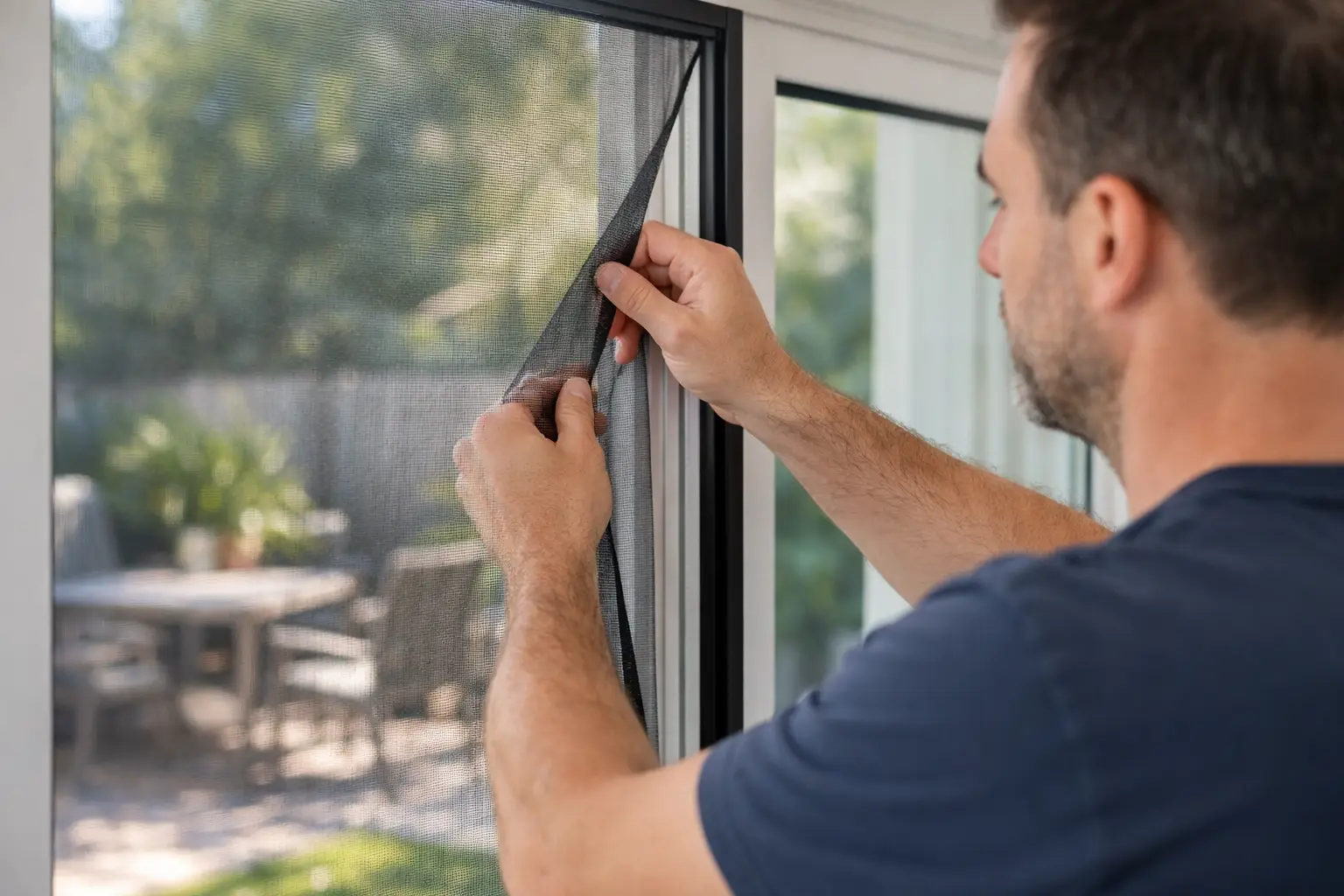
Fly Net for a Door: What You’re Looking For (And What Actually Works)
If you’ve typed “fly net for door” into Google, you’re not alone — and you already know exactly what you want. You want to leave your door open in summer without your kitchen turning into a fly convention. What you might not be sure about is what to call it, or which type of product will actually do the job.
Let’s settle both questions, clearly.
What People Usually Mean by “Fly Net for Door”
“Fly net” is one of several names people use to describe door insect barriers. Others include a fly curtain, an insect net, a mosquito net for the door, and a fly screen. They’re all trying to solve the same problem — but they’re not all the same product, and the differences matter.
When customers call us asking for a “fly net for a door,” they’re usually describing one of four things:
1. A hanging mesh curtain — a lightweight fabric or synthetic net that hangs across a doorway, often held up by a tension rod or adhesive strips. You walk through the middle, and the two panels close behind you. These are the cheapest options and the most widely sold on marketplaces.
2. A magnetic mesh panel — a single or double panel of fine mesh with magnetic strips sewn along the centre join. It seals itself shut after you walk through. Marketed as a hands-free solution.
3. A chain fly screen — vertical chains of beads or metal links that hang down from a header rail and act as a physical deterrent to flies. Popular in commercial kitchens and food businesses.
4. A framed fly screen door — a rigid aluminium-framed screen, made to the exact size of your door frame, fitted with hinges and a magnetic catch. This is what most people end up needing.
The first three are what most people picture when they say “fly net.” The fourth is what most people ultimately need.
The Honest Difference Between a Fly Net and a Fly Screen
A hanging net or magnetic mesh panel has one significant weakness: it doesn’t seal. The edges rely on the net draping against your door frame, which means gaps — at the sides, the top, and at floor level. Flies don’t knock and wait. They find those gaps, especially in a breeze.
If you’ve tried a magnetic mesh door curtain from a marketplace and found yourself still swatting flies, this is why. The product did what it was sold to do. It just wasn’t built to seal a doorway properly.
A framed fly screen door works because it fits the frame. The aluminium surround sits flush against your door reveal on all four sides. There are no gaps at the edges because there are no edges — just frame meeting frame. The mesh itself is tensioned inside that frame so it can’t sag or pull away from the sides.
The mesh grade matters too. Standard insect mesh (18×16 strands per square inch) keeps out flies, wasps, bees, hornets and moths. Midge mesh runs to 30×20 — necessary if you’re in Scotland or anywhere midges are a problem. A hanging net uses whatever generic mesh the manufacturer chose; a framed screen lets you specify the mesh to match the insects you’re actually dealing with.
When a Fly Net Is the Right Answer
We’re a fly screen manufacturer, so you might expect us to say framed screens win every time. They don’t — and we’d rather you buy the right thing than the wrong thing from us.
A hanging fly net or magnetic mesh is worth considering if:
– You’re renting and can’t fit anything permanently — an adhesive or tension rod net leaves no marks
– You need a very short-term solution (a few weeks for a summer holiday let, for example)
– You have a non-standard shaped opening — a round arch or irregular opening where a rigid frame can’t be made to fit
– Budget is the only constraint, and imperfect coverage is acceptable to you
For these cases, a good magnetic mesh panel (not the cheapest one you can find — the magnets matter) will do a reasonable job.
A framed fly screen door is the right answer if:
– You want insects out reliably, not approximately
– Your door gets regular use — repeated walking through a hanging net degrades it within one season
– You have a standard-shaped door opening (which almost all UK homes do)
– You want something that fits your door properly the first time and lasts several years
If that’s you, the next question is which type of framed door screen is right for your door.
Which Type of Door Fly Screen Fits Your Opening?
The right screen depends on how your door works and how much space you have around the frame.
Hinged fly screen door — the most common solution for a single outward or inward opening door. Fits into the door reveal on hinges, with a magnetic catch to hold it closed. Made to measure for your exact frame width and height. Suits front doors, back doors, and kitchen doors.
Roller fly screen door — the screen retracts into a cassette at the side of the frame when not needed. The cleanest-looking option and popular for bifold doors, where you want the screen to disappear when the doors are fully open.
Pleated fly screen door — a folding concertina screen that pulls across the opening, suited to wide sliding door openings and bi-fold frames.
Chain fly screen — best for commercial use (food businesses, workshops, warehouses) rather than domestic doorways. The chains deter flies but don’t seal the opening — they’re not appropriate if you need proper insect exclusion.
Why the Size Matters More Than You’d Expect
This is where a lot of DIY fly net purchases go wrong. Most mesh curtains and magnetic panels are sold in fixed sizes — 90×210cm is typical, with 100×220cm at the larger end. If your door opening is 96cm wide, you’re choosing between a net that’s too narrow or one that drapes 5cm past the frame on each side.
Neither fits. Neither seals.
English and Welsh door frames are notoriously varied. Victorian terraces, 1930s semis, 1970s extensions and modern new-builds all have different reveal dimensions. We’ve been manufacturing custom fly screens for over 30 years, and we rarely see two identical openings in the same street, let alone the same house.
A screen made to your measurements fits. That’s not a premium feature — it’s the minimum requirement for a screen that actually works.
What Does a Door Fly Screen Cost?
The honest answer is: it depends on the type of screen and the size of your opening.
A hinged-framed screen for a standard back door starts at around £300, supplied and ready for you to fit. A roller or pleated screen for a patio door opening will cost more — typically £200–£500, depending on width. These are manufacturer-direct prices, which means no distributor or retailer margin added on top.
What you’re paying for is a screen that fits your actual door, made from aluminium and quality mesh, with a usable life of 10 years or more with basic maintenance. Compare that to replacing a cheap magnetic net every season.
If you’re not sure which type you need or want a quote for your specific opening, our team can advise based on a few simple measurements. We’ve been asked about every door type imaginable over the years — there’s very little that surprises us.
The Straightforward Answer
A fly net for a door — in the loose sense — will keep some insects out some of the time. A fly screen door made to fit your frame will keep insects out reliably, every time you use it.
If you’ve already tried the cheap option and found yourself still swatting flies with the door open, you’ve already answered the question.
See our door fly screens and get a quote for a door fly screen