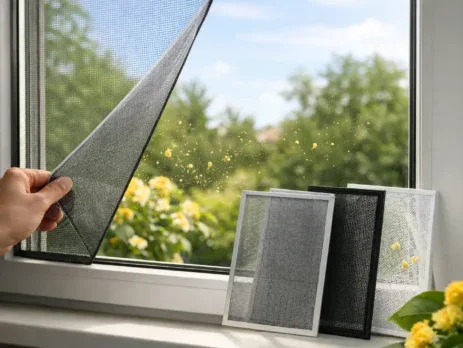
If opening the bedroom window in spring leaves you sneezing by bedtime, a pollen screen for windows is not a luxury add-on. It is a practical way to keep fresh air moving through the property while cutting down the amount of pollen entering the room in the first place.
That balance matters. Shutting windows can make rooms feel stuffy, warmer and less comfortable, particularly in bedrooms, kitchens and workspaces. Opening them without any barrier can invite in pollen, insects and general airborne debris. A properly specified screen helps manage both problems at once, but the right result depends on the mesh, the frame type and how accurately it fits the opening.
What a pollen screen for windows actually does
A pollen screen is designed to reduce the amount of airborne pollen passing through an open window. Unlike a standard insect mesh, which is primarily there to stop flies, mosquitoes and wasps, pollen mesh is finer and intended to catch a higher proportion of smaller particles.
That does not mean it creates a sealed environment or removes every allergen from the room. Pollen can still enter on clothing, through doors, or from ventilation elsewhere in the building. What it does do is lower the direct flow of pollen through the window itself, which can make a noticeable difference in day-to-day comfort during high pollen periods.
For many households, that is the real advantage. You can ventilate naturally without feeling as though you are inviting the outdoors straight into the room. In commercial settings, particularly places that still need airflow but want cleaner internal conditions, a specialist mesh can also support a more controlled environment.
Why off-the-shelf options often disappoint
The weak point with many retail screens is not always the mesh. It is the fit. If there are gaps around the perimeter, air and pollen will simply bypass the material. A loosely attached screen may also sag, rattle or detach over time, particularly on frequently used windows.
That is why made-to-measure screens tend to perform better. A screen built to the actual opening gives cleaner edges, better coverage and a more reliable finish. It also looks neater, which matters if the screen is going into a front-facing bedroom, kitchen or office.
There is also the question of durability. Thin frames, weak corner joints and low-grade fixings do not stand up well to repeated use or cleaning. If the goal is long-term everyday use rather than a short seasonal fix, the construction matters just as much as the mesh specification.
Choosing the right pollen screen for windows
The best option depends on how the window is used and who uses the room. A fixed frame can be a good choice where regular access through the opening is not needed. It gives a stable, tidy installation and can be highly effective when measured correctly.
For windows that need more frequent opening, cleaning access or occasional removal, a magnetic or easy-remove screen may make more sense. In homes, this can be helpful in bedrooms and upstairs rooms where practical access matters. In commercial premises, ease of cleaning and maintenance often carries more weight.
Roller and hinged systems can also be suitable in some settings, but they are usually chosen more often for convenience of operation than purely for pollen control. The decision comes down to how often the screen will be handled, how visible it is, and whether the opening serves only as ventilation or also as an access point.
Mesh type matters more than most buyers realise
If the main concern is hay fever rather than insects alone, standard fly mesh may not be enough. It will stop larger pests effectively, but finer pollen particles require a more specialist material.
This is where buyers need to be realistic. A tighter mesh can improve filtration, but it may also reduce airflow compared with a more open insect screen. That is not necessarily a problem, especially if the screen is fitted to a reasonably sized window, but it is a trade-off worth understanding before ordering.
In practical terms, the right mesh is usually the one that gives a useful reduction in pollen while still allowing enough ventilation for the room to remain comfortable. Bedrooms often benefit from that compromise, as do living spaces where windows stay open for long periods in warmer weather.
For kitchens, utility areas and food-related workplaces, the decision may be more specific. If insect exclusion is the top priority, a standard insect-control mesh may remain the main requirement. If pollen sensitivity is also an issue, a more specialist solution may be worth discussing so the screen addresses both concerns as far as possible.
Where pollen screens make the biggest difference
Bedrooms are usually the first place people notice the benefit. Sleeping with the window open can help temperature and comfort, but it can also make hay fever symptoms worse overnight. Reducing pollen at the window can help create a more manageable sleeping environment.
Home offices are another obvious case. If you are working beside an open window through spring and summer, constant airborne irritation is more than an inconvenience. A screened opening can help maintain airflow without making the room harder to work in.
For landlords and property managers, pollen screens can also be a sensible addition in rental homes where tenants want ventilation without the drawbacks of open, unprotected windows. They are practical, low-maintenance and easier to justify when they also provide insect control.
In commercial buildings, the case is a little different. Facilities managers are often balancing comfort, hygiene and ease of upkeep across multiple rooms. A properly specified screen can contribute to cleaner ventilation routes while still supporting day-to-day operational needs.
Installation and fit are not minor details
Even a high-quality screen can underperform if it is poorly measured or badly installed. The screen needs to sit securely, with consistent contact around the edge and no obvious bypass gaps. It should also operate in a way that suits the window, rather than interfering with handles, restrictors or routine cleaning.
This is one reason bespoke manufacture has clear value. Different window styles call for different fixing methods and frame depths. What suits a straightforward domestic casement may not suit a commercial opening or a deeper reveal. Measuring to the actual window rather than relying on a general size makes the finished product more dependable.
Ease of removal should also be considered before purchase, not after. Some users want a screen left in place throughout the season. Others will want to take it out for cleaning, winter storage or occasional access. There is no single correct answer, but there is a correct answer for each window.
Cleaning, maintenance and lifespan
Pollen screens do need cleaning. That is not a sign of failure. It is evidence that the mesh is catching airborne material instead of letting it pass through freely.
In most domestic settings, a gentle clean at sensible intervals is enough to keep the screen performing well and looking presentable. In commercial environments or properties close to busy roads, cleaning may need to be more frequent because dust and grime can build up alongside pollen.
Frame quality plays a big part in long-term value. Aluminium-framed systems are generally better suited to repeated use than flimsy temporary alternatives, particularly where the screen may be removed and refitted over time. A durable frame, suitable mesh and accurate manufacture usually work out more cost-effective than replacing poor-quality screens every season.
Is a pollen screen enough on its own?
Sometimes yes, sometimes no. If the main source of irritation is pollen entering through open windows, a screen can make a worthwhile difference immediately. If symptoms are severe, it is more realistic to see the screen as one part of a wider approach that may also include cleaning routines, bedroom management and controlling when windows are opened.
That does not reduce the value of the screen. It simply puts it in the right category. This is a practical control measure, not a miracle cure. Buyers who understand that tend to be more satisfied because they are choosing the screen for what it does best – reducing direct pollen entry while preserving airflow.
For anyone comparing options, the best place to start is not price alone. It is the actual use case. Which room needs protection, how often the window is opened, whether insect control is also required, and how neat and durable the result needs to be. That is where a specialist supplier such as Premier Screens has an advantage, because the product can be matched to the opening rather than forced to fit it.
A well-made screen should feel like part of the window, not a compromise hanging off it. Get the mesh right, get the fit right, and spring air becomes far easier to live with.