

A familiar summer problem arrives the moment the weather improves. You open the windows to cool the house, get a bit of airflow through the kitchen, and within minutes the room fills with flies, midges, and whatever else was waiting outside. If hay fever is part of the picture, you can add pollen to the list.
That trade-off gets old quickly. Shut the windows and the room feels stuffy. Leave them open and you spend the evening swatting insects, wiping surfaces, or listening to buzzing near the light fitting.
Magnetic fly screens for windows solve that problem neatly when they’re specified properly. They let you keep the ventilation, daylight, and view, but stop the usual stream of unwanted visitors. The important part is “specified properly”. A screen that fits exactly, uses the right mesh, and suits the window style behaves very differently from a cheap one-size-fits-all kit.
Over the years, the same questions come up again and again. Will it fit my windows? Which mesh do I need? Is a DIY kit good enough? Will it last in the UK climate? Those are the questions that matter, because the cost of a screen isn’t just the initial purchase. It’s how well it performs through damp weather, repeated use, cleaning, and the next few summers.
Enjoy Fresh Air Without Unwanted Guests
Many individuals don’t start by searching for a technical product. They start with a nuisance.
It might be a bedroom that’s too warm to sleep in unless the window stays open. It might be a kitchen where the back window needs to be open during cooking, but every fly in the area seems to find it. In some homes, the issue is tiny midges in the evening. In others, it’s pollen drifting in just when the house needs fresh air most.
A good magnetic screen changes the daily routine because it removes the compromise. You don’t have to choose between airflow and protection. You open the window when you want to, and the screen does the quiet work in the background.
Where people notice the difference first
For homeowners, the first benefit is usually comfort. Rooms feel easier to live in because windows can stay open longer without inviting insects indoors. The second benefit is practical. Less mess on sills, fewer interruptions, and less dependence on sprays.
For businesses, the problem is sharper. If a kitchen, café, or food prep area needs ventilation, an open window without proper screening creates an obvious hygiene risk. In those settings, screening isn’t an extra. It’s part of running the site properly.
Practical rule: If you regularly open a window for airflow, that opening needs to be treated as an active entry point. Insects don’t care whether it’s a country cottage, a city flat, or a commercial kitchen.
What makes one screen worth buying and another not worth the hassle
The difference usually comes down to four things:
- Fit matters most. If the frame leaves gaps, insects will find them.
- Mesh choice changes performance. Standard mesh, midge mesh, pollen mesh, and pet-resistant mesh all solve different problems.
- Materials determine lifespan. UK damp, sun, cleaning, and repeated handling expose weak corners quickly.
- Installation quality affects everyday use. A screen has to be easy to remove, refit, and live with.
That’s where many buyers go wrong. They compare only on price, then find the screen doesn’t sit square, the corners lift, or the mesh isn’t suited to the problem they were trying to solve in the first place.
How Magnetic Fly Screens Create a Perfect Seal
A magnetic screen should work like a removable seal for the window opening. The principle is simple. The frame is made to the opening, the mesh is tensioned inside it, and magnets hold the screen securely in position so it sits flush without awkward clips or bulky fixings.
In UK use, magnetic fly screens for windows typically use high-strength neodymium or ferrite magnets set within polyester-coated aluminium or PVC frames, which keeps the screen secure in wind gusts up to 40 km/h while still allowing 80-90% airflow retention for natural ventilation, as outlined in this technical overview of magnetic window screen performance.
Why the seal works better than older clip-on approaches
Older removable screens often relied on fiddly tabs, spring clips, or loose push-fit arrangements. They could work, but they were often awkward to remove for cleaning and easy to refit slightly out of line. Once that happened, small gaps appeared around the edge.
Magnets improve that in two ways. First, they pull the frame into position consistently. Second, they make removal and refitting simple, so people keep using the screen as intended instead of abandoning it after the first awkward clean.
The seal also depends on frame rigidity. A well-made aluminium frame resists twisting better than lightweight flexible alternatives. That matters more than many people realise, especially on wider windows where a weak frame can bow and lose contact at the corners.
What to look for in the build
When assessing magnetic fly screens for windows, check these points:
- Frame finish. A polyester-coated frame is better suited to regular use and general UK weather exposure.
- Magnet quality. Strong, consistent magnetic contact helps the frame seat correctly every time.
- Clean corners. The corner assembly tells you a lot about the overall standard of manufacture.
- Ease of removal. If it’s difficult to take off and refit, it won’t stay convenient for long.
A magnetic screen should feel deliberate, not temporary. If it behaves like a stopgap, it usually performs like one too.
The best systems disappear into daily life. Open the window, leave the screen in place, clean it when needed, and carry on. That simplicity is a large part of their appeal.
Choosing the Right Mesh for Your Home or Business
The frame holds the screen in place, but the mesh determines how the screen behaves. It often dictates whether many people properly solve the problem or end up disappointed.
A standard insect mesh is often the right starting point for general household use. It keeps out common flying insects while preserving airflow and visibility. But standard mesh isn’t always enough. If your problem is very small insects, pet damage, or seasonal pollen, the mesh needs to match that specific use.
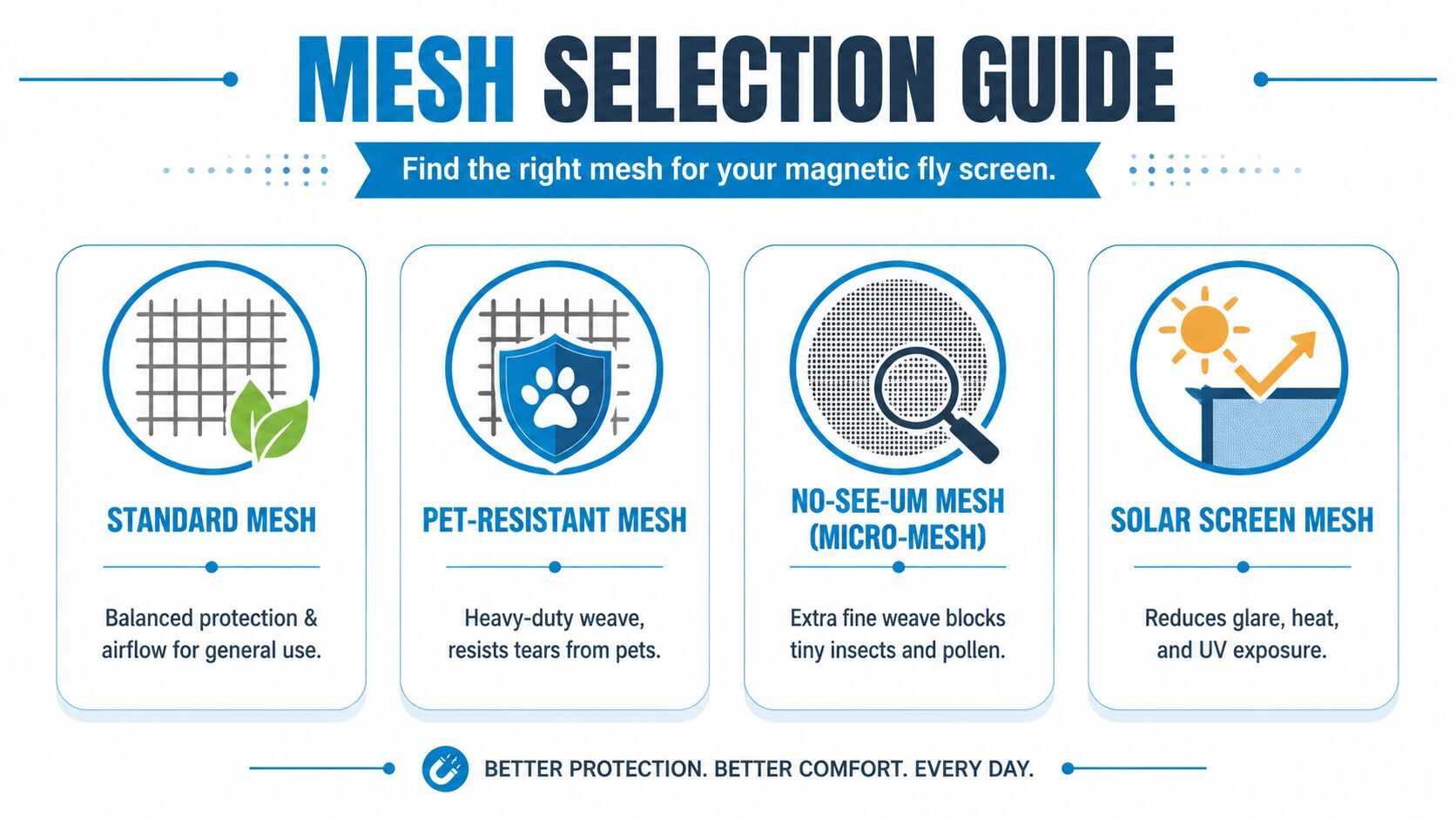
For UK households, mesh choice has a real effect on comfort. This background on window screens notes that optional pollen-filtering meshes can reduce allergy symptoms by 40-50%, while 68% of households in southern England report increased midge activity due to warmer summers.
Mesh Type Comparison
| Mesh Type | Primary Use | Best For | Consideration |
|---|---|---|---|
| Standard Mesh | Everyday insect protection | Most homes with general fly and wasp problems | Best balance of airflow and visibility |
| Pet-Resistant Mesh | Extra toughness against claws and pushing | Homes with cats or dogs near open windows | Heavier material can slightly change the feel of the screen |
| No-See-Um Mesh (Micro-mesh) | Blocking very small insects | Midge-prone areas and homes bothered by tiny biting insects | Finer weave needs careful specification to avoid overdoing restriction |
| Solar Screen Mesh | Cutting glare and solar gain | Sunny rooms, offices, and spaces that overheat | Prioritises light and heat control as well as screening |
How to choose without overcomplicating it
If your main issue is the usual mix of flies and general insects, standard mesh is often enough. It’s the simplest answer and usually the most visually discreet.
If you live in an area where tiny insects are a primary concern, go finer. Midge-prone locations need a mesh designed for that job. In such instances, a generic off-the-shelf option often disappoints, because “insect mesh” and “midge mesh” aren’t the same thing in practice.
For allergy sufferers, pollen mesh can make day-to-day living more manageable during the season when windows would otherwise stay shut. The value isn’t abstract. It’s the difference between getting airflow into the room and regretting it an hour later.
Matching mesh to the way the room is used
A few common scenarios make the decision easier:
- Bedroom windows. Prioritise airflow, visibility, and quiet reliability. Individuals often prefer a screen they forget is there.
- Kitchen windows. Choose a practical mesh that’s easy to remove and clean regularly.
- Homes with pets. A tougher mesh can save repeated repairs where claws, leaning, or pawing are likely.
- Garden-facing rooms near planting or water. Finer mesh is often worth it if small insects gather outside at dusk.
The right mesh doesn’t just block pests. It changes whether the screen still feels like a good decision after a full season of living with it.
The mistake is choosing by product label alone. Choose by the problem you need to solve.
Will a Magnetic Screen Fit Your Windows
The short answer is yes in most cases, but the details matter. “Bespoke” isn’t marketing language for fly screens. It means the screen is built around the actual opening, the frame condition, and the way the window operates.
One of the most important points is where the screen will sit. Some screens fit within the opening, while others mount onto the face of the frame or surrounding area. If you’re not sure what counts as the opening itself, this guide on what a window reveal is helps clarify the terminology.
Common UK window types
uPVC casement windows are usually the most straightforward. The main checks are handle clearance, hinge position, and whether there’s a clean, consistent fixing area for the magnetic frame.
Timber sash windows need a more careful eye. Timber frames can have paint build-up, slight movement over time, or decorative details that affect how and where the screen sits. They’re very suitable for bespoke screening, but they shouldn’t be approached as if every opening is perfectly square.
Tilt-and-turn windows can work well with magnetic systems when the opening mode is considered from the outset. The screen has to sit in a position that doesn’t interfere with operation or access.
Aluminium-framed windows are often clean-lined and tidy to work with, but tolerances still matter. Small measurement errors can be obvious on crisp modern frames.
What decides whether the fit will be clean
These checks matter more than the label on the window:
- Clear fixing space around the perimeter
- Projection of handles and vents
- How square the opening is
- Whether the screen needs an in-reveal or face-fit approach
A made-to-measure screen is often the right answer because real windows aren’t as uniform as they look from a distance. A house can have three similar windows in one elevation and all three may measure differently enough to matter.
Signs a one-size kit may struggle
Watch for these warning signs:
- Deep handles that sit proud of the frame
- Uneven reveals in older properties
- Decorative beads or trims that interrupt the seating surface
- Sills or edges with worn paint, dust, or grease that affect adhesion on tape-based products
When a buyer says, “my windows are standard,” that’s often only partly true. Standard styles are common. Standard measurements and fixing conditions are not. Good fit starts with careful surveying, not guesswork.
DIY Kits vs Professionally Installed Bespoke Systems
DIY magnetic screens have an obvious appeal. They’re quick to buy, they look simple, and the lower upfront price can seem sensible if you only want to screen one or two windows. For some situations, a supply-only approach can work perfectly well.
The trouble starts when people assume the cheapest route is the most economical one over time. It often isn’t. The better question is what the screen will cost you across several seasons of use, cleaning, adjustment, and possible replacement.

One point buyers should know is that long-term UK durability data on DIY magnetic kits is lacking. There’s little coverage of how magnetic strips perform after repeated freeze-thaw cycles or how fibreglass mesh degrades under British UV patterns, which makes replacement frequency and total lifecycle cost harder to judge.
Where DIY kits can work
DIY has a place when the window is simple, the fixing surface is clean and flat, and the buyer is comfortable measuring accurately. It can also suit short-term needs, occasional-use rooms, or situations where a basic improvement is enough.
If you take this route, preparation matters more than people expect. Clean, dry surfaces and careful measuring make a significant difference. That same principle turns up in adjacent home improvement jobs too. If you’re comparing how moisture, seals, and attachment methods affect performance overhead, these waterproofing skylight tips are a useful reminder that weather exposure punishes rushed installation details.
Where cheaper options usually come unstuck
Problems tend to cluster around the same issues:
- Measurement drift. A small error on paper becomes a visible gap on the window.
- Poor frame stability. Flexible or lightweight components can sit unevenly over time.
- Weak adhesive performance. Damp, temperature shifts, and imperfect preparation expose weak attachment methods.
- Wrong mesh selection. Buyers often choose what’s cheapest rather than what suits the actual insect problem.
Those issues don’t always appear on day one. That’s why cheap kits can feel like a bargain at first. The true test comes after repeated removal for cleaning, the first warmer spell, the first colder spell, and ordinary use through a British year.
Why bespoke systems usually cost less trouble
A professionally specified screen is less about luxury and more about control. The window is measured properly, the mesh is chosen for the actual use case, and the finished screen is built to fit that opening rather than a theoretical standard size.
That matters for longevity. A screen that sits square, seals correctly, and uses durable materials is less likely to need constant adjustment or premature replacement. In practical terms, that means fewer callbacks, less frustration, and less money spent correcting an avoidable compromise.
Premier Screens Ltd supplies made-to-measure magnetic fly screens for windows in polyester-coated aluminium frames with mesh options including pet, pollen, and midge variants, either as supply-only units or for commercial installation where required.
Buy once for the opening you actually have, not for the opening the packaging assumes you have.
If your priority is the lowest initial spend, DIY may still appeal. If your priority is long-term value in the UK climate, bespoke usually wins because it reduces the hidden costs that sit behind “cheap”.
Fly Screens for Commercial Kitchens and FSA Compliance
For commercial kitchens, the conversation changes immediately. This isn’t mainly about comfort. It’s about hygiene, operational standards, and protecting the business from preventable risk.
Windows in food environments often need to stay open for ventilation, especially during service and prep. But an unscreened opening creates an obvious route for flying insects into a space where food is handled, stored, or plated. That’s why screen choice in commercial settings needs to be practical, durable, and easy to maintain.
That figure matters because pest issues rarely stay contained. A single hygiene concern can become a staff issue, an inspection issue, a customer complaint, and then a reputation issue. Business owners feel the cost long before they think about the cost of a screen.
What commercial buyers should prioritise
A domestic-style purchase mindset doesn’t work well in a kitchen or food prep environment. Commercial buyers should focus on:
- Cleanability. Screens need to be removed or accessed for routine cleaning without fuss.
- Reliable fit. If staff can’t refit a screen properly after cleaning, the system becomes vulnerable.
- Durable frames and mesh. Service environments are harder on products than most homes.
- Compatibility with site operations. The screen must work around opening patterns, cleaning routines, and staff movement.
In a commercial kitchen, a fly screen isn’t there to look tidy. It’s there to close off a hygiene risk while still allowing the ventilation the site needs.
The trade-off that matters
Commercial buyers sometimes worry that adding screens will make kitchens feel more enclosed or reduce workable airflow. That concern is understandable, but the primary trade-off is between controlled ventilation and uncontrolled exposure. A proper magnetic screen keeps the opening usable while reducing pest ingress and supporting the site’s hygiene procedures.
For facilities teams, caterers, cafés, and restaurants, that makes magnetic screening part of the building’s operating standard, not an afterthought.
How to Order Your Bespoke Magnetic Fly Screen
Once you know the window type, the mesh you need, and whether you want supply-only or a more managed route, ordering becomes much simpler. The important thing is to approach it like a fit-for-purpose product, not an impulse add-on.
The first check is always the opening. Measure carefully, note any handles or vents that project, and decide where the screen will sit. If there’s any doubt about whether the screen should fit within the reveal or onto the surrounding face, pause and confirm that before ordering. Most mistakes happen before the order is placed, not after it arrives.
A simple checklist before you buy
Use this list to avoid the usual false starts:
- Confirm the window style. Casement, sash, tilt-and-turn, and aluminium frames each have slightly different fitting considerations.
- Choose the mesh for the actual problem. General insect control, tiny midges, pollen reduction, or pet resistance all call for different priorities.
- Check the fixing area. Look for clean, uninterrupted contact points and note anything that could obstruct the screen.
- Decide how hands-on you want to be. Some buyers are happy to measure and fit. Others would rather remove uncertainty from the process.
What a sensible ordering process looks like
A good ordering journey should feel precise, not complicated. You should be able to provide dimensions, choose the mesh, confirm the frame finish or configuration, and understand what you’re receiving.
For homeowners, that usually means getting the measurements right and selecting the mesh appropriately based on how the room is used. For businesses, it means adding the site-specific checks that affect compliance, cleaning, and repeated daily use.
The smoothest jobs start with accurate measurements and a realistic brief. “I need to stop flies” is only the starting point. “I need a removable screen for a timber kitchen window with limited handle clearance” is the useful version.
Why bespoke is often the calmer option
Bespoke ordering removes a lot of avoidable friction. Instead of trimming a generic kit and hoping the frame tolerances work out, you receive a screen built for the opening you have. That tends to produce a better fit, a better finish, and fewer compromises once the screen is in daily use.
If you’ve reached the point where opening the window has become a nuisance because of insects, pollen, or hygiene concerns, the next step is straightforward. Define the opening, define the problem, and order a screen that matches both.
Magnetic screens are one of seven window options we make — see the full range of fly screens for windows.
