A torn fly screen usually starts as a small nuisance and quickly turns into a bigger one. Once the mesh has split, stretched or pulled away from the frame, it stops doing the one job you need it to do – keeping insects out while still letting fresh air in. If you are wondering how to replace fly screen mesh, the good news is that many framed screens can be re-meshed without replacing the whole unit.
The key is getting the right mesh, handling the frame carefully and fitting the new material under even tension. Done properly, a replacement panel can restore the screen’s performance, improve appearance and extend the life of the frame for years.
When replacing fly screen mesh makes sense
If the frame is still square, the corners are sound and the spline channel is in good condition, replacing the mesh is usually the most cost-effective option. This is common with window screens, hinged door screens and some sliding screen panels where the aluminium frame remains perfectly serviceable.
It is not always the right fix, though. If the frame is bent, heavily corroded or the corners have loosened to the point where the screen no longer sits properly, new mesh alone will not solve the problem. The same applies if the screen was poorly fitted in the first place or if the existing design is not suited to the opening. In those cases, a made-to-measure replacement can be the better long-term choice.
What you need before you start
For most standard framed screens, the job is straightforward. You will usually need replacement fly screen mesh, the correct spline or rubber cord if the old one is brittle, a spline roller, scissors or a sharp trimming knife, a flat work surface and a tape measure. A small flat screwdriver can help lift the old spline out of the groove.
The choice of mesh matters. Standard fibreglass mesh is common for domestic use because it is flexible and easy to work with. Aluminium mesh can offer a firmer finish, while stronger pet-resistant mesh suits homes where screens take more wear. In kitchens, food preparation areas or other hygiene-sensitive spaces, the mesh specification should match the level of use and the need for reliable, durable insect control.
How to replace fly screen mesh step by step
Start by removing the screen from the window or door and placing it flat on a clean, stable surface. A table or workbench is ideal. Avoid working on rough paving or decking, as the frame can twist or scratch and the new mesh can pick up dirt before it is fitted.
Next, locate the spline. This is the flexible cord pressed into the frame channel that holds the mesh in place. Using a small flat tool, gently lift one end and pull it out. Take care not to gouge the channel. Once the spline is removed, the damaged mesh will lift away easily.
Before fitting the new material, inspect the frame thoroughly. Clear out any debris from the groove, wipe the frame clean and check the corners. This is the point to decide whether the old spline can be reused. If it has gone hard, cracked or lost its shape, replace it. Reusing worn spline often leads to loose mesh and an untidy finish.
Lay the new mesh over the frame, making sure it overlaps the edges by several centimetres on all sides. Do not cut it to the exact size first. You need enough excess material to hold it square and keep tension even as you work.
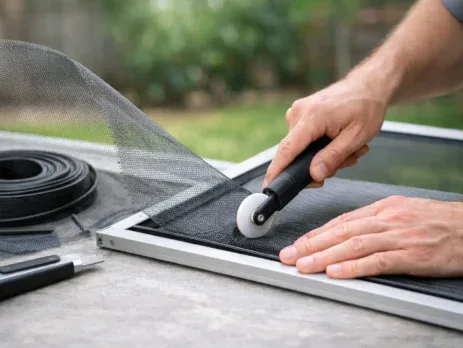
With the mesh laid flat, press one side gently into the channel and begin rolling the spline in with the convex wheel of the spline roller if needed, followed by the grooved wheel to seat it fully. Some installers prefer to start on one long side, then move to the opposite side, then finish the shorter ends. That approach helps keep the tension balanced.
As you roll the spline in, keep the mesh taut but do not pull it drum-tight. Too little tension leaves wrinkles and sagging. Too much can bow the frame inward, especially on lighter window screens. The aim is a smooth, flat panel with no ripples and no distortion in the frame.
Once all four sides are secured, trim the excess mesh carefully with a sharp knife, keeping the blade close to the outer edge of the spline. Take your time here. A rushed cut can nick the new mesh or jump into the gasket channel.
Finally, refit the screen and check that it sits correctly in the opening. The mesh should look even, the frame should remain square and the screen should operate as before.
Common problems when replacing fly screen mesh
The most frequent issue is wrinkling. This usually happens because the mesh was not tensioned evenly or because one side was fully fixed before the opposite side was aligned. If the wrinkles are minor, you may be able to remove one section of spline and refit it. If the distortion runs across the whole panel, it is usually quicker to start again before trimming too closely.
Another common problem is frame bowing. This is especially likely with large door screens or older lightweight frames. If the frame curves while you are fitting the mesh, you are pulling too hard or using spline that is too thick for the channel. The screen may still look tight on the bench but fit badly once rehung.
Loose mesh after fitting often points to worn spline, incorrect spline diameter or mesh that has not been seated properly into the groove. In some cases, a replacement mesh with a different thickness also changes how firmly the spline holds. That is why matching components matters.
Choosing the right replacement mesh
Not all fly screen mesh is interchangeable. For a bathroom or bedroom window, standard insect mesh may be perfectly suitable. For a back door that gets heavy daily traffic, you may need something more durable. If pets push at the screen, a tougher mesh can save repeated repairs. If visibility and airflow are the priority, a finer or more open weave may suit better, but there can be a trade-off with strength.
In commercial settings, the decision is more functional. A screen in a staff kitchen, café, food preparation area or service entrance needs to support hygiene standards as well as day-to-day use. Durability, fit and ease of cleaning become more important than simply patching a tear as cheaply as possible.
This is where made-to-measure supply can make a difference. A well-sized replacement mesh or complete screen system reduces fitting issues and helps ensure proper coverage of the opening, especially where standard off-the-shelf sizes fall short.
When a full replacement is the better option
Knowing how to replace fly screen mesh is useful, but there are times when the better decision is to replace the whole screen. If the frame no longer sits flush, if the opening is awkward, or if access points have changed over time, a fresh made-to-measure unit can save repeated maintenance.
That is often the case with older patio doors, heavily used commercial entrances or windows that need a more suitable screen type altogether. A magnetic screen, hinged frame, roller unit or sliding screen may be more practical than trying to keep an unsuitable old frame going. Premier Screens manufactures bespoke options for exactly those situations, where fit, durability and reliable insect control matter more than a short-term patch.
A few practical tips for a cleaner result
Work in good light so you can spot ripples early. Keep the frame fully supported while fitting, especially on larger screens. If the old mesh failed because of pets, repeated handling or strong sun exposure, upgrade the mesh rather than replacing like for like. And if you are replacing mesh on more than one screen, measure and check each frame individually. Screens that look similar are not always identical.
If you are dealing with a door screen rather than a small window panel, expect the job to be less forgiving. Larger spans show up uneven tension more quickly, and heavier use means the finished screen needs to be secure, not just neat.
Replacing fly screen mesh is a practical repair when the frame is still sound and the right materials are used. Take your time, keep the tension even and do not force worn components back into service. A properly re-meshed screen should do exactly what it is meant to do – keep flies, wasps and other insects out while letting clean air move freely through the property.