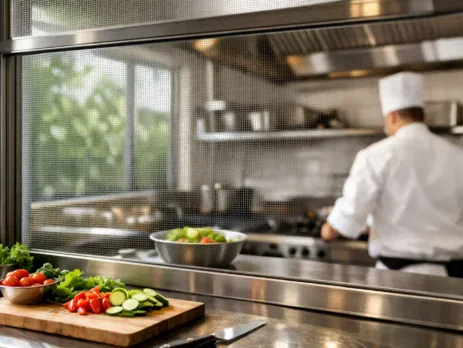
A food preparation space only needs one open window or frequently used doorway for flies to become a problem. That is why food prep area fly screens are not a minor add-on but a practical part of keeping working areas cleaner, better ventilated and easier to manage in warm weather.
In kitchens, prep rooms, bakery areas, staff canteens and home food businesses, the balance is always the same. You need fresh air, but you cannot leave openings unprotected. A well-made fly screen solves that issue without darkening the room or making daily access awkward. The key is choosing the right screen type for the opening, the level of traffic and the way the space is used.
Why food prep area fly screens matter
Where food is handled, insect control is about more than comfort. Flies, wasps and other airborne pests can quickly compromise hygiene standards, interrupt service and create a poor impression for staff, inspectors or customers. Even in domestic settings, they can turn a warm kitchen into an irritation during summer.
Food prep area fly screens allow windows and doors to remain usable for ventilation while forming a physical barrier against insects. That matters in spaces where heat, steam and odours build up quickly. Closing everything may reduce insect entry, but it can also make the room uncomfortable and affect airflow. Screens let you avoid that trade-off.
There is also a durability point to consider. In food environments, fittings tend to be used hard. Doors open repeatedly, cleaning is frequent and surfaces need to stand up to regular contact. A flimsy off-the-shelf screen might seem cheaper at first, but poor fit, weak frames and low-grade mesh usually show up quickly in the form of gaps, tears or inconvenient operation.
The best types of fly screens for food prep areas
The right choice depends on whether you are screening a window, a single door, a serving hatch or a larger access point. There is no single answer for every site.
Hinged fly screens for doors
For many commercial and back-of-house food preparation areas, hinged door screens are a reliable option. They suit doors that need regular access but not constant two-way traffic. An aluminium-framed hinged screen gives a solid, long-lasting barrier and is straightforward to open, close and clean.
This type of screen works well where staff need quick access to bins, stores or yard areas without leaving a doorway exposed. If the door is in frequent use all day, the quality of hinges, frame strength and closing action matter. A made-to-measure fit is especially important here because even small gaps around the frame can reduce effectiveness.
Roller fly screens for windows
For opening windows in kitchens and prep rooms, roller fly screens are often the neatest choice. They allow the screen to be pulled down when needed and retracted when not in use, which suits spaces where access to the window is still required for cleaning, serving or occasional maintenance.
They are particularly useful where a permanent fixed screen would get in the way. In a domestic kitchen or lighter-duty commercial prep area, a roller system offers good protection with a tidy finish. The main consideration is whether the opening is used heavily enough to justify a more fixed solution.
Fixed and removable screens
Some windows in food preparation areas are opened mainly for airflow and rarely used as access points. In that case, a fixed or removable fly screen can be the most practical answer. It does the job without unnecessary moving parts and can offer a very clean, secure fit.
This tends to suit prep rooms, storerooms and higher-level windows where the aim is simple ventilation and insect exclusion. If regular cleaning access is needed, a removable version is usually better than a fully fixed frame.
Sliding and heavy-duty options
Larger openings, patio-style doors or wider access points may need sliding screens or more heavy-duty commercial systems. These are useful where standard domestic-style screens are not built for the opening size or the usage level.
In busier commercial environments, heavier-duty systems are often worth the extra outlay. They are better suited to repeated daily use and are more likely to hold alignment over time, especially where doors are opened often or where the screen is part of a long-term hygiene control setup.
Mesh choice is not a small detail
When people think about fly screens, they often focus on the frame or opening style first. In food prep settings, the mesh matters just as much.
Standard insect mesh is suitable for many applications and gives a good balance of airflow, visibility and protection against common flying insects. In some locations, finer mesh may be preferred if smaller insects are a concern. The trade-off is that finer mesh can reduce airflow slightly compared with a more open weave.
This is where the space itself should guide the decision. A hot kitchen that relies heavily on natural ventilation may need the most airflow possible, while a hygiene-sensitive room with less dependence on open ventilation may justify a finer screen. There is no benefit in choosing the finest mesh available if it makes the room less workable in summer.
Frame material matters too. Aluminium-framed systems are usually the better option for food-related environments because they are durable, stable and suited to regular cleaning. They also hold their shape better than lighter plastic alternatives, which is important for maintaining a proper seal.
Why made-to-measure screens are usually the better investment
Food prep areas are not always built around standard openings. Older properties, commercial kitchens, side doors, service windows and retrofit spaces often have slight irregularities that make generic screens a poor match.
A made-to-measure screen is designed to fit the opening properly, which improves insect control and day-to-day use. A better fit means fewer gaps, smoother operation and less strain on the frame. It also tends to look more professional, which matters in customer-facing food businesses and in well-kept domestic kitchens alike.
For landlords and facilities managers, bespoke sizing can also reduce the risk of repeated replacements. If a cheap standard screen twists, catches or leaves gaps, it often ends up being replaced long before a properly manufactured unit would have reached the end of its service life.
That is one reason many buyers prefer direct-from-manufacturer supply. A specialist maker such as Premier Screens can match the screen type to the opening rather than forcing the opening to suit a limited stock size.
What to consider before choosing food prep area fly screens
It helps to think about use before style. Start with the opening itself. Is it a window that stays open for long periods, or a door used constantly by staff? Is the area lightly used, or exposed to heavier traffic and wear?
Then consider cleaning. In food preparation spaces, anything fitted near working areas needs to be easy to wipe down and maintain. Screens with awkward tracks or poorly finished frames can become inconvenient quickly. A simple design with durable materials is often the better long-term option.
Access is another practical point. If the opening is part of a regular workflow, the screen must not slow people down or encourage them to leave it open. That is often where a hinged or sliding system makes more sense than a fixed panel. On the other hand, if the window is there purely for ventilation, a fixed or roller screen may be ideal.
Finally, think about longevity rather than purchase price alone. In a home kitchen, a basic but well-made system may be perfectly adequate. In a commercial prep environment, heavier-duty hardware and stronger frames are usually the sensible choice.
Installation and everyday use
A good fly screen should not become a project in itself. Once fitted correctly, it ought to do its job quietly in the background. The best systems allow windows and doors to remain functional, keep airflow moving and stand up to repeated use without constant adjustment.
Ease of installation matters, especially for trade buyers, landlords and competent homeowners who want a straightforward fitting process. Clear sizing, solid components and accurate manufacturing all make a difference here. A badly fitted screen will never perform as well as one built for the opening from the start.
Ongoing maintenance is usually simple. Routine cleaning of the frame and mesh, along with occasional checks on moving parts, is enough in most cases. In prep areas where grease or dust builds up more quickly, regular wiping helps preserve airflow and keep the screen looking presentable.
The right screen should feel like part of the room rather than an obstacle. If it is easy to use, easy to clean and fitted properly, staff and householders are far more likely to keep it in place and get the full benefit.
Food preparation spaces need practical answers, not makeshift fixes. When the screen type, mesh and fit are chosen properly, you can keep insects out, let fresh air in and keep the room working as it should.
Browse our commercial fly screens range for food-safe options built for busy kitchens.