When the back door is open for five minutes and the kitchen suddenly fills with flies, the appeal of a hinged fly screen door becomes fairly obvious. For many homes and commercial premises, it is one of the simplest ways to keep insects out without shutting off airflow, daylight or easy access.
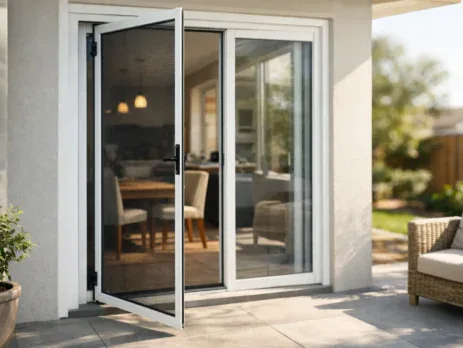
A hinged fly screen door is exactly what it sounds like – a framed insect screen fitted on hinges so it opens and closes like a conventional door. That straightforward design is a large part of its appeal. It suits regular traffic, works well on single door openings, and gives dependable day-to-day protection in places where doors are used frequently, especially in warmer months.
Why a hinged fly screen door remains a practical choice
Some fly screen systems are designed to retract, slide or fold away. Those options can be the right answer in some settings, but a hinged system still makes strong sense when reliability and ease of use come first. There are fewer moving parts, the opening action is familiar, and the frame stays properly tensioned across the mesh.
In practical terms, that means a hinged screen door is often a good fit for back doors, side entrances, utility rooms, kitchen doors and garden access points. In commercial settings, it can also suit staff entrances, food preparation areas and service doors where ventilation matters but insect control cannot be treated as optional.
The main advantage is consistency. If a door is being opened many times a day, users generally want something immediate and obvious. A hinged screen gives that. Open it, walk through, let it return to position, and the opening is protected again.
Where a hinged fly screen door works best
The best place for a hinged fly screen door is usually a standard single doorway with clear swing space. If the opening is used regularly and people need to carry shopping, trays, laundry or equipment through it, a hinged design is often more convenient than a screen that needs guiding along a track or retracting carefully.
For domestic customers, this often means rear kitchen doors and garden doors. These are the openings most likely to be left open during warm weather, and they are also the ones most likely to attract flies and wasps from bins, patios and outdoor eating areas.
For landlords and facilities managers, hinged screens can be especially useful in communal kitchens, staff rooms and service access points where ease of use matters. In hospitality and food-related environments, the case is even stronger. Ventilation supports comfort and working conditions, but hygiene standards still need to be maintained. A properly fitted screen provides a physical barrier without turning the space into a closed box.
That said, suitability does depend on the opening. If the doorway is very wide, opens onto tight external steps, or has limited clearance because of walls, handrails or other doors, a different screen format may be the better option.
What to look for in a hinged fly screen door
Not all screen doors are built to the same standard. The difference usually shows up in the frame, the fit and the mesh.
A made-to-measure aluminium frame is important because door openings are rarely as standard as people expect. Even a few millimetres out can leave gaps, affect closing performance or create rubbing points over time. A bespoke fit gives cleaner installation, neater lines and more reliable insect protection.
The frame itself needs to be durable enough for repeated use. This matters in a family home, but even more so in a busy commercial environment. Lightweight or poorly assembled units may look acceptable at first, then twist, sag or loosen at the corners after regular opening and closing.
Mesh choice also deserves more attention than it often gets. Standard insect mesh is suitable for many domestic uses, but there are situations where a tougher or more specialised material makes better sense. Homes with pets may benefit from stronger mesh options. Commercial settings may need heavier-duty materials depending on traffic levels and the demands of the environment.
The closing action matters too. A door that does not return cleanly into place is not doing its job properly. Good hinge placement and accurate manufacturing make a clear difference here.
Hinged fly screen door or another door screen type?
This is where a straightforward answer becomes slightly more nuanced. A hinged fly screen door is not automatically the best choice for every opening.
If you have a standard back door and want something sturdy, easy to use and always ready, hinged is often the strongest option. It feels familiar, it suits regular foot traffic, and it tends to cope well with everyday use.
If you have patio doors, bifolds or a wider opening, sliding or plissé systems may be more practical. They can cover a broader span without requiring the swing space of a hinged panel.
If the opening is only used occasionally, a roller screen may appeal because it can retract out of the way when not needed. The trade-off is that retractable systems can involve more careful operation and may be less suited to constant traffic.
So the real question is not which screen type is best overall. It is which screen type fits the way the door is actually used.
Why bespoke sizing matters more on doors than windows
Window screens can sometimes tolerate a little compromise. Door screens usually cannot. A door is a moving access point, and any weakness in fit becomes obvious very quickly.
A poorly sized hinged fly screen door can catch on the threshold, fail to align with the frame, or leave small perimeter gaps that insects exploit straight away. It can also become frustrating to use, which is often the point where people stop using it properly and leave it ajar.
Made-to-measure sizing helps avoid those problems. It allows the frame to be produced for the real opening rather than an assumed standard size, and it takes account of how the door will swing within the available space. For older properties, extensions and commercial buildings with non-standard dimensions, this is particularly valuable.
For buyers comparing off-the-shelf options with a bespoke screen, this is usually where the difference becomes clearest. One is designed to roughly fit a category of opening. The other is built for the opening you actually have.
Installation and day-to-day use
A hinged screen door should be straightforward to live with. Once fitted correctly, the aim is simple: open the main door, use the screen as needed, and keep air moving through the property without inviting insects in.
Ease of installation matters because it affects long-term performance. If the frame is square, secure and correctly aligned, the door will operate as intended. If the fitting is rushed or adjusted badly to compensate for a poor match, even a decent product can underperform.
In everyday use, maintenance is minimal. The frame can be wiped down, and the mesh can be cleaned gently as needed to remove dust, pollen and general debris. In commercial environments, more frequent cleaning may be sensible for hygiene reasons, especially in food-related areas.
Durability is also tied to sensible use. Any screen door will last better if it is not being slammed, forced against an obstruction or fitted where it is likely to take constant impact from trolleys or equipment. That is not a weakness of the product. It is simply part of matching the right screen to the right opening.
Who should choose a hinged fly screen door?
For many customers, the answer is simple. If you want fresh air through a single doorway, need regular access, and prefer a solid, obvious, easy-to-operate solution, a hinged fly screen door is usually a very good place to start.
It is especially well suited to homeowners who are tired of insects entering through an open kitchen or garden door, landlords looking for practical improvements in rental properties, and commercial operators who need dependable insect control in hygiene-sensitive spaces.
It is not the right answer for every layout, and a specialist supplier should say so when another configuration would perform better. That is part of making a good buying decision. The strongest result usually comes from choosing a screen around the opening, the traffic level and the environment, rather than choosing on appearance alone.
For customers who want a dependable, made-to-measure option backed by practical manufacturing experience, Premier Screens focuses on exactly that kind of problem-solving. The product matters, but the fit and suitability matter just as much.
If your door is used every day and you want to keep insects outside where they belong, a hinged screen is often the most sensible answer – simple, durable and easy to rely on when the weather finally turns warm.
See the full range of fly screens for doors we manufacture.