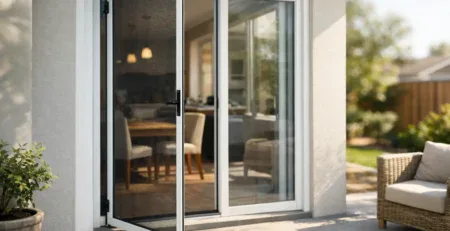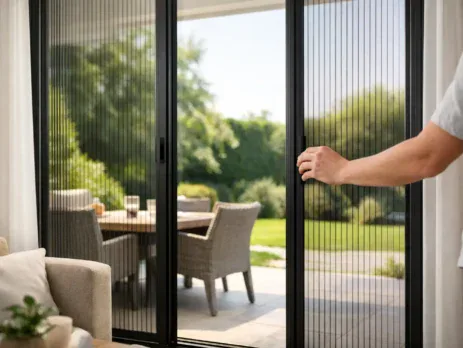
If a standard hinged screen feels awkward on a patio opening or a busy kitchen doorway, plisse fly screen doors are usually the better answer. They are designed for frequent use, wide openings and spaces where you want reliable insect control without a rigid door leaf swinging in or out. For homes and commercial settings alike, that combination of ventilation, access and tidy operation is exactly what makes this style so popular.
A plisse screen works differently from a roller or hinged system. Instead of retracting into a spring-loaded cassette or opening on hinges, the mesh folds back on itself in a concertina pattern and slides smoothly across the opening. When not in use, it stacks neatly to the side, keeping the doorway clear. That makes it especially practical for French doors, bifolds, patio doors and other access points where people, pets or staff are moving through regularly.
What makes plisse fly screen doors different?
The main difference is how they handle day-to-day traffic. Hinged doors are dependable, but they need swing space. Roller systems can be effective, but on a door opening they may be less convenient when you are constantly passing through. Plisse fly screen doors are built for that in-between requirement – frequent access, a low visual impact and proper insect protection.
The pleated mesh is held within an aluminium frame and guided across the opening in a controlled way. Because the mesh folds rather than rolls, the system suits wider spans and can feel more stable in use. It also gives a cleaner, more architectural finish on modern door sets, which matters to homeowners who do not want a screen to look like an afterthought.
That said, the right product still depends on the opening. A plisse system is excellent for broad patio access and everyday movement, but a hinged screen may still be the better option on a simple single back door where budget and simplicity come first. Good specification starts with how the door is used, not just how it looks.
Where plisse fly screen doors work best
In domestic settings, these screens are often chosen for patios, conservatories and garden-facing doors. They allow the door to stay open during warm weather while helping keep out flies, wasps and mosquitoes. For households that want more airflow in kitchens and living areas, that can make a noticeable difference to comfort without relying entirely on fans.
They are also well suited to homes where there is regular movement between inside and outside. Children running in and out, pets needing garden access, or simply a busy family using a patio opening throughout the day can all make a swing door feel cumbersome. A side-sliding plisse screen is easier to live with because it opens where you need it and retracts neatly when you do not.
Commercial environments benefit for slightly different reasons. In food preparation areas, hospitality settings and service zones, the priority is often hygiene as much as comfort. Keeping insects out while allowing ventilation can support a cleaner, more workable environment. Where staff need to pass through quickly, a screen that does not obstruct the opening is often the more practical choice.
Why made-to-measure matters
A fly screen door only performs properly if it fits properly. Gaps at the edges can undermine the whole purpose of the screen, particularly during peak insect season. That is why made-to-measure manufacture is not a luxury on door screens – it is the difference between a product that merely covers an opening and one that actually helps protect it.
With plisse fly screen doors, accurate sizing also affects how well the screen travels. A bespoke frame gives the mesh the correct tension and alignment, helping the system slide and stack as it should. On larger openings, that precision becomes even more important because minor inaccuracies are more obvious in day-to-day operation.
This is one reason many buyers prefer dealing with a specialist manufacturer rather than choosing a generic cut-to-fit product. The frame, mesh and running components need to work together over time. A made-to-measure system is built around the opening rather than forcing the opening to adapt to the screen.
Practical benefits in daily use
The strongest selling point of a plisse system is convenience. If a screen is awkward to open, difficult to close or intrusive when not needed, people stop using it. Plisse fly screen doors are popular because they are straightforward. Slide them across when insects are active, stack them away when access is the priority.
They also preserve natural light well. The mesh provides a barrier against insects without turning the doorway into a solid visual obstruction, which is important on glazed patio doors and large rear elevations. Homeowners usually want protection that does not spoil the feeling of openness, and this style achieves that better than heavier door formats.
There is also a durability benefit in the frame construction. Quality systems use aluminium rather than lightweight plastic components, which gives better long-term stability and a more dependable finish. In a domestic setting that means fewer problems with warping and wear. In a commercial setting, it means a door screen better suited to repeated use.
Installation and specification points to consider
The best screen is not always the most complex one. Before choosing a plisse system, it helps to look at the width of the opening, the amount of traffic, the mounting surface and whether the screen will be fitted internally or externally. These points affect both practicality and finish.
Threshold design is particularly important. On some openings, a low threshold is preferred to reduce trip risk and improve access. This can be especially relevant for older occupants, wheelchair users or sites where equipment needs to pass through the doorway. The balance is between ease of passage and the structural guidance the system needs to run correctly.
You should also consider the surrounding frame condition. A good screen can only perform as well as the surface it is fixed to. If the reveal is uneven or there are obstructions such as handles, trims or projecting sills, these need to be accounted for before manufacture. This is where an experienced supplier adds value by identifying the right configuration at the ordering stage.
Are plisse fly screen doors right for every property?
Not always, and that is worth saying plainly. If the opening is small and lightly used, a hinged or roller option may offer a more economical route to the same basic result. If the location is exposed to very heavy commercial use, a more specialist heavy-duty solution may be worth considering depending on the environment.
Even so, plisse designs cover a wide middle ground extremely well. They are one of the most practical choices when an opening is too busy for a hinged screen to feel convenient, but still needs a tidy, user-friendly insect barrier. For many households and commercial premises, that is exactly the requirement.
Another point is maintenance. Pleated systems are not difficult to look after, but like any moving screen they benefit from sensible use and occasional cleaning. Dust, grease and debris can affect any door mechanism over time, particularly in kitchens or external areas exposed to windblown dirt. A well-made system should be easy to maintain, but it should not be treated as fit-and-forget hardware.
Choosing a supplier, not just a screen
There is a clear difference between buying a screen online and buying the right screen online. The first is a transaction. The second depends on product knowledge, manufacturing accuracy and clear guidance on measuring and fitting.
For buyers who need dependable insect control, especially on non-standard openings, range depth matters. A supplier that understands hinged, roller, sliding and plisse systems can advise on what genuinely suits the opening rather than forcing every customer towards the same format. That is particularly relevant for landlords, trade buyers and facilities managers who may be specifying across different properties.
UK manufacturing matters too. It usually means better control over sizing, shorter supply chains and a more direct route to replacement parts or product support if needed. For a product that is expected to last and perform properly through repeated seasonal use, that is not a minor detail. It is part of the value.
Premier Screens has built its offer around that specialist approach – made-to-measure production, practical advice and durable screen systems designed for real openings rather than idealised showroom spaces.
When the goal is simple – keep insects out, let fresh air in and avoid turning a doorway into a nuisance – plisse fly screen doors are often one of the smartest options available. The best results come from choosing a system that matches the opening, the traffic and the level of use, so the screen feels like part of the doorway from day one rather than an add-on you learn to tolerate.
See our plisse fly screens range for full specifications and pricing.