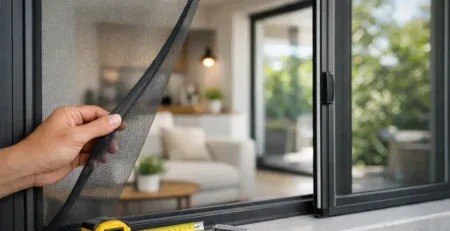
Most of the fly screens we make leave the workshop headed for people’s homes — but every year a bigger share goes out to offices, cafés, schools and care homes. The problem is the same one you have in your own kitchen, just with higher stakes: you need the windows open, and the moment you open them, everything with wings invites itself in. Here’s how the right screens protect a business, sector by sector.
Offices
British summers are getting warmer, and warmer summers mean more flying insects and stuffier offices. Running the air conditioning flat out all July is one answer, but it’s an expensive one — and plenty of buildings don’t have it at all. Fitting fly screens to opening windows and doors lets you ventilate the office properly without the afternoon wasp panic. Your energy bills come down, and your staff keep their minds on the job rather than on whatever just flew past the monitor.
Restaurants, cafés and food businesses
If you prepare or serve food, insect control isn’t optional. Food hygiene law requires food businesses to have effective pest prevention in place, and flying insects are a genuine hazard — they carry bacteria, including salmonella, from wherever they’ve just been to wherever they land next.
Screens on kitchen windows and doors deal with both halves of the problem at once: hot kitchens get the ventilation they desperately need, while food preparation and dining areas stay physically sealed against insects. They’re easy to clean, low maintenance and a one-off cost rather than an ongoing one. For doorways with constant foot traffic, have a look at our commercial heavy-duty fly screen doors, or read our guide to commercial fly screens for doors.
Schools, nurseries, colleges and universities
Anyone who has tried to teach thirty children on a hot July afternoon knows that classroom ventilation is not a luxury. Screens let classrooms breathe without letting in wasps and bees — which matters well beyond comfort when a pupil is allergic to stings. School kitchens and university laboratories benefit for the same hygiene reasons as restaurants: open windows, nothing airborne coming through them.
Care homes and retirement homes
Fresh air makes an enormous difference to residents’ quality of life — and residents are exactly the people most vulnerable to a bad reaction from a sting or from the bacteria flies carry. Screened windows and doors give rooms a steady supply of fresh air, insect-free, day in and day out.
Hotels and guest rooms
Guests rarely mention a good night’s sleep in a review, but they will absolutely mention the mosquito that kept them up until two in the morning. Screens on guest room windows cost a great deal less than the bad reviews they prevent, and they let guests sleep with the window open on warm nights.
One honest caveat
A fly screen won’t cool a room by itself. What it does is let you open your windows and doors properly, so that airflow — or your ventilation system — can do its job without insects tagging along. In our experience that’s usually exactly what a hot, stuffy building is missing.
Every screen we supply is made to measure at our workshop in Lancashire, and we’ve fitted them everywhere from village cafés to university campuses. If you’d like advice on the right solution for your premises, email us at sales@premier-env.co.uk and we’ll talk you through the options.