If you are weighing up magnetic vs hinged fly screens, the real question is usually simpler: do you need quick, low-effort access, or a more solid, long-term screen for frequent use? Both options keep insects out while letting fresh air in, but they suit different doors, different buildings and different levels of daily traffic.
That matters more than many buyers expect. A screen that works well on a quiet back door in a home may not be the right choice for a busy kitchen entrance, a rental property, or a doorway used constantly through summer. The best result usually comes from matching the screen type to the opening, the people using it and how much wear it will need to handle.
Magnetic vs hinged fly screens: the basic difference
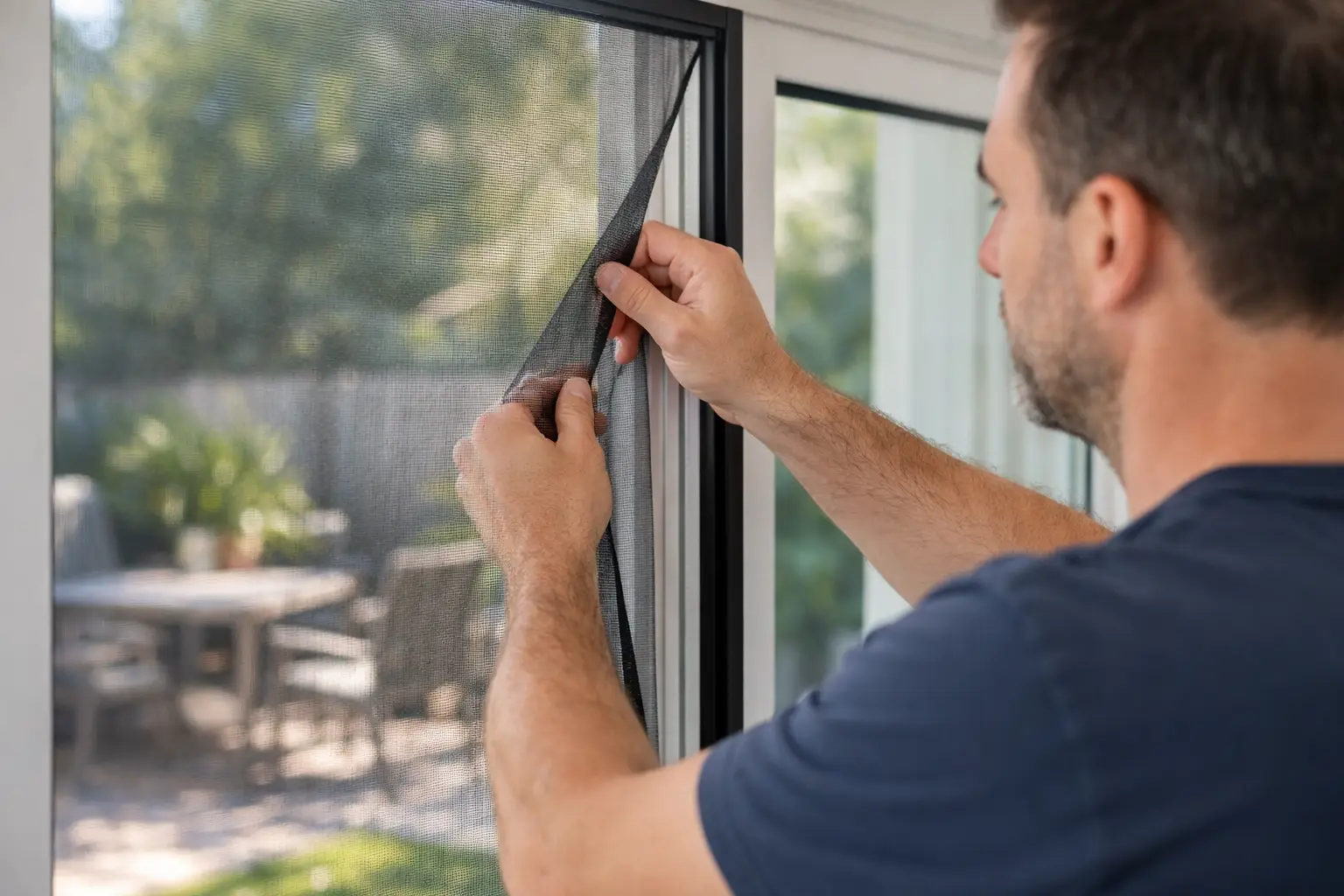
A magnetic fly screen is designed to open and close through magnetic fastening. Depending on the style, it may use magnetic strips or a centre-opening arrangement that closes itself after someone walks through. The main appeal is convenience. It is simple to operate, fast to pass through and often attractive for homes where easy access matters.
A hinged fly screen uses a rigid aluminium frame mounted on hinges, so it opens like a conventional secondary door. This gives it a firmer structure and a more permanent feel. In many settings, especially where durability and reliable positioning matter, that framed design is the stronger choice.
Both screen types are intended to maintain airflow and reduce the nuisance of flies, mosquitoes and wasps. The difference is less about whether they work and more about where each one works best.
Where magnetic fly screens make most sense
Magnetic fly screens are often chosen for domestic doors where convenience is the priority. If you have children moving in and out to the garden, or you are regularly carrying washing, food or shopping through a doorway, magnetic opening can feel more forgiving than a rigid door leaf.
They can also suit households that want insect protection without making the doorway feel more enclosed. Because the action is lighter and less formal, they are often seen as an accessible option for everyday use during warmer months.
Another advantage is that magnetic screens can be a practical answer where the door opening does not suit a more substantial framed screen, or where the buyer wants a straightforward product that does the job without overcomplicating the installation.
That said, convenience comes with limits. A magnetic screen is generally less rigid than a hinged design, so if the doorway gets heavy use, repeated knocks or rough handling, longevity may become a factor. It also depends on the exact opening and how securely the system can be fitted. In short, magnetic screens are often best where use is regular but not punishing.
Best domestic uses for magnetic screens
For many UK homes, magnetic fly screens are well suited to rear doors, patio access points and garden-facing openings used casually throughout the day. They are especially useful where the aim is to stop insects entering the kitchen or living area without making access awkward.
They can also work well in rental properties or seasonal spaces where ease and practicality carry more weight than a heavy-duty specification. If the opening is used mainly by household members rather than constant visitors, deliveries or staff, a magnetic option can be a sensible fit.
Where hinged fly screens come into their own
Hinged fly screens are usually the stronger option when you need structure, repeatability and longer-term durability. Because the frame is rigid and the screen is fixed on hinges, the opening action is controlled and dependable. That makes a difference on doors that are used a lot, or in places where the screen needs to feel secure every day rather than just convenient in summer.
This is one reason hinged screens are a common choice for kitchens, utility doors, side entrances and commercial premises. In hygiene-sensitive areas, a properly fitted hinged screen provides a more robust barrier while still allowing ventilation. For food preparation environments and workplaces, that dependable framed construction can be far better suited to the demands of the site.
A hinged screen also tends to offer a neater, more integrated appearance on the right doorway. When made to measure in aluminium, it can feel like a proper part of the opening rather than an add-on.
The trade-off is that it needs clearance to open correctly, and it is a more defined fixture. If your doorway is awkward, very narrow or constantly used by people carrying items through with both hands, the convenience of magnetic access may still appeal more.
Best uses for hinged screens in commercial and busy settings
Where doors are opened and closed repeatedly, hinged fly screens usually make better sense. Staff entrances, kitchen doors, bin store access points and prep-area doors all benefit from a screen that holds its shape and performs consistently.
They are also a strong option for domestic buyers who simply want a more solid product. Landlords, for example, often favour solutions that can cope with a range of users over time, and a hinged aluminium-framed screen is often better suited to that than a lighter magnetic arrangement.
Durability, maintenance and day-to-day wear
If durability is your main concern, hinged screens usually have the edge. Their framed construction is designed to cope with repeated opening and closing, and made-to-measure aluminium systems generally stand up well to ongoing use. They are particularly suitable where the screen will be in place for the long term rather than treated as a lighter seasonal solution.
Magnetic screens can still provide effective insect control, but they are more dependent on the condition of the fastening points and the way the opening is used. In a calm domestic setting, this may be perfectly acceptable. In a doorway where pets charge through, children pull at the screen or traffic is constant, wear may show sooner.
Maintenance for both types is usually straightforward. Mesh should be kept clean and the frame or fixing points checked periodically. The key difference is that a hinged product is generally built around a more substantial mechanical action, while a magnetic system relies more heavily on alignment and closure performance.
Which is better for pets and children?
This is one of those areas where it depends on the household. Magnetic screens can be easier for children to pass through because they do not need to manage a hinged door in the same way. For busy family life, that ease of use can be a genuine benefit.
With pets, the answer is less universal. Some homes find magnetic access more practical because movement through the doorway is simpler. Others prefer the controlled structure of a hinged screen, particularly if a more durable mesh option is needed or if the screen must stay properly positioned after repeated use.
If the screen is likely to be pushed, scratched or hit regularly, it is worth thinking beyond the opening style and considering the mesh specification as well. The right mesh can make a significant difference to service life.
Installation and fit matter more than people think
In the magnetic vs hinged fly screens decision, made-to-measure fit is often what separates a screen that performs well from one that becomes a frustration. Poorly fitted insect screens leave gaps, interfere with operation and reduce confidence in the product.
Doorways are rarely as standard as they first appear. Frame depth, handle projection, thresholds, reveals and surrounding obstructions all affect what can be installed successfully. A hinged screen may be the better product in principle, but if the opening cannot accommodate it properly, a magnetic alternative may be the smarter choice. Equally, if the doorway allows for a rigid frame, the extra durability can be well worth it.
This is where specialist manufacturing experience matters. A bespoke screen designed for the actual opening is far more likely to give reliable insect protection and easier everyday use than a generic off-the-shelf option.
Cost versus value
Price matters, but so does replacement cycle. A magnetic screen may look like the cheaper answer at first glance, and for some domestic uses it probably is the right value choice. If it suits the doorway and the level of traffic, there is no reason to over-specify.
A hinged screen usually represents better long-term value where the opening is used heavily or where reliability is critical. For commercial operators, landlords and homeowners planning to keep the screen in place for years, spending more on a stronger configuration can be the more economical route overall.
The right choice is not always the least expensive one up front. It is the one that fits properly, works consistently and does not need replacing before it should.
How to choose between magnetic vs hinged fly screens
Start with the doorway itself. Is there enough room for a hinged frame to operate cleanly, and would that suit the way the entrance is used? Then think about traffic. A lightly used garden door and a busy kitchen entrance place very different demands on a screen.
After that, consider who is using it. Families, tenants, staff and customers do not all treat doorways in the same way. Finally, think about how permanent you want the solution to be. If you want a stronger, more fixed and durable screen, hinged is often the safer option. If speed, simplicity and lighter-touch access are more important, magnetic may be the better fit.
Premier Screens manufactures both bespoke domestic and commercial insect screen solutions, so the deciding factor should never be guesswork or a one-size-fits-all assumption. The better approach is to choose the screen that matches the opening, the environment and the workload it needs to handle.
If you are still uncertain, treat the doorway like any other working part of the building: the right screen is the one that will be used properly every day, not the one that only looks right on paper.