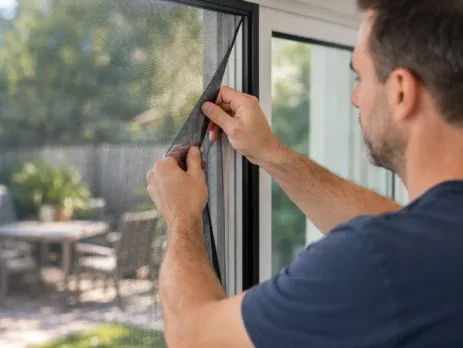
A door fly screen only works properly when it fits the opening it is meant to protect. Too tight, and the frame can twist or bind. Too loose, and you leave gaps for flies, wasps and other insects to get through. If you are looking into how to fit door fly screens, the first job is not drilling or fixing – it is making sure you have the right screen type for the doorway and the correct measurements for a clean, reliable fit.
For most UK homes and commercial premises, the fitting process is straightforward when the screen has been made to suit the opening. The method changes slightly depending on whether you are installing a hinged door screen, a sliding system, a roller screen or a magnetic option, but the principle stays the same. You need a square opening, accurate dimensions, sound fixing points and enough clearance for the screen to operate freely day after day.
How to fit door fly screens: start with the right screen type
Not every doorway needs the same solution. A back door used a few times a day has different demands from a patio opening, a kitchen serving hatch or a commercial access point with frequent traffic. Choosing the right style before you fit anything saves time and avoids poor performance later.
Hinged fly screens suit single external doors where you want a rigid aluminium frame and a familiar opening action. They are popular on kitchen and utility doors because they are durable and simple to use. Sliding fly screens are often the better option for patio doors and wider glazed openings because the panels move laterally without taking up swing space.
Roller door fly screens work well where you want the screen available when needed but neatly retracted when not in use. Magnetic screens are commonly chosen for lighter domestic use and can be a practical solution where drilling is not ideal, although they do not offer the same rigid finish or long-term durability as framed made-to-measure systems. In commercial or hygiene-sensitive settings, heavy-duty doors or strip-style solutions may be more appropriate, especially where traffic levels are high.
Measure before you fit
When people ask how to fit door fly screens, what they often mean is how to avoid ordering the wrong size. That matters more than any other part of the process. Measure the structural opening carefully and check whether the screen will be face-fixed onto the surrounding frame or reveal-fixed within the opening.
Take the width in three places – top, middle and bottom – then use the smallest figure. Do the same for the height on the left, centre and right. If the opening is out of square, made-to-measure manufacturing can usually account for that, but you need to know it in advance. Measure the available fixing surface as well. A screen frame may fit the opening itself but still clash with handles, trickle vents, cills, tiles or projecting brickwork.
You should also check the door swing and threshold area. On hinged and sliding screens, smooth operation depends on enough clearance around the frame and along the track line. On roller systems, make sure there is room for the cassette and side channels without obstructing the main door. It is worth taking a few extra minutes here. A correct measure leads to a much easier installation and a better seal against insects.
Prepare the doorway properly
Before fitting, clean the fixing surface and inspect it closely. Loose paint, old sealant, dust and uneven surfaces can all affect how securely the screen sits. Aluminium frames need a stable, level contact point. If the surrounding timber or masonry is damaged, sort that first rather than trying to pull the frame straight with fixings.
Offer the screen up dry before drilling anything. This lets you confirm orientation, handle position, hinge side and clearance. On made-to-measure products, the fit should be close and intentional, not forced. If something looks wrong at this stage, stop and recheck the dimensions and the opening rather than trying to adapt the frame on site.
A spirit level, tape measure, drill, suitable screwdriver bit and the correct fixings for the substrate will usually cover most installations. Timber, uPVC, aluminium and masonry all require slightly different care. The right fixing is part of a durable fit, particularly on doors that will see repeated use through the warmer months.
Fitting a hinged door fly screen
A hinged fly screen is usually one of the most straightforward rigid options to install. Start by positioning the outer frame or hinge side exactly where it needs to sit, making sure the screen will open cleanly without fouling the main door, the reveal or the threshold. Check it for level and plumb before marking the fixing points.
Fix the hinge side first, then test the swing before securing the remaining sides. Do not fully tighten everything at once. Leave a little movement so you can make small adjustments. Once the door panel is opening and closing evenly, tighten the fixings and check the latch or magnetic catch alignment.
The key detail with hinged screens is consistency around the edges. An even gap and a true frame help prevent rubbing and improve insect exclusion. If the opening itself is slightly irregular, minor packing may be needed to keep the frame square. That is normal, especially in older properties.
Fitting sliding and roller door fly screens
Sliding screens rely on track alignment more than anything else. The top and bottom tracks must run parallel, otherwise the panel will drag, jump or fail to close properly. Mark out carefully, fix the top track first if required by the system, then line up the bottom track directly beneath it. Once the panel is in place, test the travel several times before final tightening.
Roller door screens need accurate side channel positioning so the mesh runs smoothly without creasing or pulling to one side. The cassette must sit level, and the channels need to be fixed straight from top to bottom. If the channels pinch inward, the mesh can bind. If they sit too far apart, you may not get the tidy edge seal you want.
With both systems, take your time on alignment. The fitting itself is not usually difficult, but precision matters. A few millimetres out can affect how the screen operates every day.
What about magnetic door fly screens?
If you are fitting a magnetic screen, the process is simpler, but there are trade-offs. These products are generally attached with hook-and-loop strips, pins or other light fixings, depending on the door surround. Clean the surface thoroughly first, then centre the mesh panel so the weighted or magnetic closure falls naturally into place.
This type of screen can be useful for rented properties, temporary summer use or low-cost insect control, but it is less rigid than an aluminium-framed door screen and usually less suitable for heavy traffic, pets or commercial settings. If the priority is a long service life and a neater, more reliable finish, a bespoke framed screen is normally the better investment.
Common fitting mistakes to avoid
Most problems come back to one of three issues: poor measuring, rushing the alignment or choosing the wrong screen type for the doorway. A screen fitted to an uneven surface can twist. Tracks fixed out of line can wear quickly. Hinged doors installed without enough clearance can catch on the threshold or surrounding frame.
It is also easy to overlook how the doorway is actually used. A family back door with regular foot traffic, children or pets needs a more durable setup than a lightly used side entrance. In a food preparation area or commercial kitchen, the standard of fit matters even more because hygiene, ventilation and pest control all need to work together.
For that reason, off-the-shelf sizes can be hit and miss on door openings that are not perfectly standard. A made-to-measure screen removes much of the guesswork. That is one reason many buyers choose a specialist manufacturer such as Premier Screens rather than trying to adapt a generic product on site.
After fitting: check operation and seal
Once the screen is fixed, open and close it repeatedly. The action should feel clean, with no dragging, excessive resistance or visible gaps. Check the perimeter seal in daylight and inspect the bottom edge carefully, as thresholds are a common place for insects to find an entry point.
If the mesh is under uneven tension, revisit the frame alignment before assuming the product is at fault. On roller and sliding systems, small adjustments often make a noticeable difference. On hinged screens, catch position and hinge alignment usually resolve any final issues.
A properly fitted door fly screen should allow fresh air in while helping keep flying insects out without fuss. If you measure carefully, match the screen to the doorway and fit it squarely, the result is a practical improvement you notice every day – particularly in kitchens, patio areas and busy workspaces where ventilation and hygiene matter.