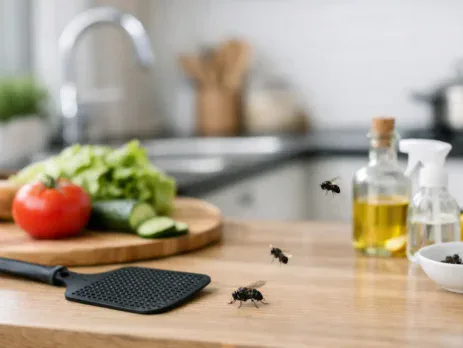
You usually notice a fly problem in the kitchen at the worst possible moment – when food is out, windows are open and you are trying to keep the room clean. If you are looking for how to stop flies in kitchen spaces properly, the answer is rarely one quick fix. In most homes and commercial kitchens, it comes down to removing what attracts them, closing off the routes they use to get in, and doing both without turning the room into a hot, stuffy box.
Why flies keep returning to the kitchen
Flies are drawn to kitchens for obvious reasons. Food smells, fruit bowls, bins, drains, pet food and warm air all make the space attractive. In summer, open windows and back doors add easy access. In food preparation areas, the problem is not just nuisance. It is a hygiene issue.
What makes flies frustrating is that surface-level cleaning is not always enough. A kitchen can look tidy and still offer exactly what they want. A sticky patch beneath a bin lid, residue around a recycling caddy, or moisture around a sink trap can be enough to keep the problem going.
This is why short-term sprays and swatters rarely solve the cause. They deal with the flies you can see, not the reason more are appearing.
How to stop flies in kitchen spaces at the source
The first step is to reduce the things that attract them. That means being stricter about food storage, waste handling and hidden residue rather than only wiping visible worktops.
Keep ripe fruit either covered or refrigerated if the room is particularly warm. Empty kitchen bins regularly, especially food waste and recycling, and wash the bin itself rather than just changing the liner. If you have a caddy for compostables, it needs frequent cleaning because odours build quickly in warm conditions.
Drains are another common source that gets overlooked. Organic matter can collect inside sink wastes and create both smell and moisture. Cleaning the drain and trap thoroughly can make a noticeable difference, particularly where small flies seem to gather near the sink.
Pet bowls also matter. If animals are fed in the kitchen, do not leave wet food out longer than necessary. The same goes for crumbs under appliances, spills behind kickboards and residue around handles, hinges and seals.
In domestic kitchens, these changes often reduce the problem. In busy workplaces, staff consistency is what matters. One missed bin, one open rear door or one poorly cleaned prep area can undo the rest.
Entry points matter more than most people think
Even a clean kitchen will attract flies if there is a simple route inside. This is where many people get stuck. They want ventilation, but they also want insects out. If windows and doors are left open during warmer weather, flies will keep getting in no matter how often the room is cleaned.
That trade-off is exactly why physical screening works so well. It deals with the access point rather than chasing the insects after they have entered. For kitchens, that is usually the most reliable long-term answer.
A fly screen allows fresh air in while creating a barrier at the window or door. Unlike temporary deterrents, it does not depend on scent, chemicals or frequent reapplication. It simply blocks the route.
The most effective long-term fix for kitchen flies
If you want a practical answer to how to stop flies in kitchen areas without losing airflow, a properly fitted fly screen is usually the best option. The key point is properly fitted. Gaps around the frame, poor-quality mesh and unsuitable fixings can undermine the whole purpose.
Made-to-measure screens are generally the better choice for kitchens because openings vary more than people expect. Window reveals are not always square, older properties can be awkward, and off-the-shelf products often leave small gaps at the edges. Those gaps are exactly where insects get through.
For kitchen windows, a fixed or hinged screen can work well where access is occasional and straightforward. Roller screens are useful where the screen needs to be operated regularly. If the kitchen opens onto a garden or patio, a door screen becomes just as important as the window itself.
For back doors and patio openings, the right style depends on traffic. A hinged screen suits many domestic doors. Sliding or plissé systems can be better where there is a wider opening or frequent use. In busier commercial settings, chain screens, strip curtains or heavy-duty screening solutions may be more appropriate because they cope better with repeated access.
The choice is not only about stopping flies. It is about how the opening is used every day.
Choosing the right screen for a kitchen
Not every kitchen needs the same screen system. A small domestic window above a sink has different demands from a rear servery door or a catering access point.
For homeowners, ease of use and appearance are often the deciding factors. The screen needs to be unobtrusive, easy to clean and simple to live with through the warmer months. Aluminium-framed made-to-measure options tend to last longer than lightweight temporary alternatives, particularly where there is regular opening and closing.
For landlords and facilities managers, durability is usually the bigger issue. A screen in a rental property or shared kitchen needs to stand up to repeated use with minimal maintenance. In those settings, a stronger frame and a dependable fitting system often save money over time.
For food-related businesses, hygiene and workflow come first. Staff need ventilation and access, but insect control cannot be left to chance. A bespoke screen system allows the opening to remain usable while helping support cleaner, more controlled conditions.
Mesh choice can also matter. Standard insect mesh suits many kitchens, but some environments call for specialist options depending on visibility, airflow or wear. It depends on whether the priority is a discreet domestic installation, a more robust commercial setup or a screen that needs to cope with pets and heavier handling. Our website shows all the different types available fly screens for windows
What about sprays, traps and home remedies?
They have their place, but they are not equal.
A fly spray may help with a sudden problem, though it is less appealing in food preparation areas and it does nothing to stop the next fly entering through an open window. Sticky traps can reduce visible numbers, but most people do not want them hanging near a kitchen table or prep space. Home remedies such as cloves in lemons, vinegar traps or essential oils might deter certain flies in some situations, but results are inconsistent.
That does not mean they are useless. They can support a broader approach, especially during peak season. But if the kitchen remains attractive to flies and open to them, deterrents are only partial measures.
Physical prevention is more dependable because it tackles access directly.
Common mistakes that keep the problem going
One common mistake is focusing only on the bin. Bins are a major attractant, but they are not the only one. Drains, fruit, pet food and hidden residue often play a part.
Another is relying on a screen that does not fully fit the opening. A screen is only effective if it seals the route properly. Loose edges and poorly aligned frames create weak points.
The third is forgetting doorways. Many people protect the kitchen window but leave the back door open for long periods. In that case, the screen on the window is doing very little of the real work.
Finally, some people wait until the hottest part of summer to act. By then, flies are already active and breeding conditions are ideal. It is better to sort access points before the season peaks.
A practical approach for homes and businesses
The best results usually come from combining hygiene measures with screened ventilation. Clean thoroughly, manage waste properly and remove obvious attractants, then deal with the entry points that let flies in day after day.
For a home kitchen, that may mean a made-to-measure screen on the main window and a suitable screen door at the back entrance. For a commercial kitchen, it may mean matching different screen systems to different openings so staff can keep air moving without compromising hygiene.
That is where specialist supply makes a difference. A bespoke product built for the actual opening will nearly always outperform a generic option that needs trimming, taping or constant adjustment.
When you need to stop flies without shutting out fresh air, the sensible answer is not to choose between ventilation and protection. It is to fit the kitchen with a screening solution that does both properly.