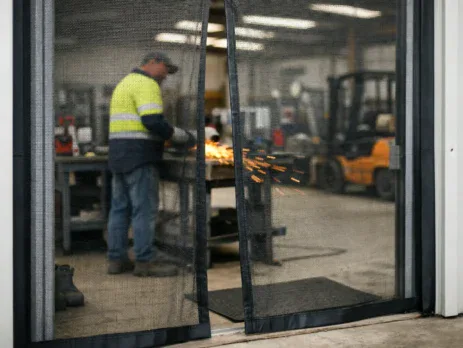
A flimsy screen might cope with a spare bedroom window, but it will not last long on a back door that opens all day, a kitchen serving hatch, or a commercial entrance with constant traffic. That is where heavy duty fly screens make sense. They are built for tougher use, better longevity and more demanding environments where standard screening can quickly become a false economy.
For many customers, the decision is not simply about keeping flies out. It is about maintaining ventilation in a busy kitchen, protecting food-preparation areas, reducing wear from repeated use, and choosing a screen system that fits properly rather than one that needs replacing after a season. In domestic settings, that might mean a patio door used by children and pets. In commercial premises, it often means entrances, pass-through points and windows that need to stay open without compromising hygiene.
What makes heavy duty fly screens different?
The main difference is not just thicker mesh or a stronger frame, although both matter. Heavy duty fly screens are designed around repeated use, greater impact resistance and a longer service life. That usually means aluminium-framed construction, more durable components, and a screen design suited to larger openings or more demanding access points.
In practice, the right specification depends on where the screen will be used. A screen for a domestic French door has different demands from one fitted in a catering environment. A homeowner may prioritise strength and ease of use, while a facilities manager may be more concerned with hygiene, durability and suitability for daily operation.
This is why made-to-measure matters. A poorly fitting off-the-shelf product can leave gaps, bow under tension or struggle with repeated opening and closing. A properly sized screen is easier to install, performs better and tends to last longer because it is not fighting against the opening it is meant to fit.
Where heavy duty fly screens are most useful
Heavy-duty screening is especially useful anywhere that combines ventilation with regular activity. That includes family homes, rented properties and a wide range of commercial sites.
In the home, back doors and patio doors are the most common pressure points. These openings are larger, used more often and more likely to be exposed to knocks, draughts and seasonal wear. If pets are part of the picture, durability becomes even more important. A light domestic screen can be enough for occasional use, but high-traffic doorways usually benefit from something stronger and more stable.
In commercial settings, the case is even clearer. Kitchens, food-preparation rooms, cafés, takeaways, farm shops and hospitality premises often need airflow without allowing flies and wasps indoors. In these environments, the screen is not a decorative extra. It is part of day-to-day practical control. The wrong product can become a maintenance issue, while the right one supports cleaner working conditions and a more dependable setup overall.
Choosing the right format for the opening
Not every heavy-duty solution looks the same, and the best format depends on how the space is used. Hinged fly screens are a strong option where straightforward access is needed and the opening is used frequently. They suit many single and double door applications because they offer a familiar, reliable method of entry and exit.
Sliding systems are often a better fit for patio and wider doorways where swing clearance is limited. They keep the screen stable, neat and easy to operate, especially where there is already a sliding door arrangement in place. For some customers, plissé systems are also worth considering because they combine a more substantial build with convenient retraction, although suitability depends on the width of the opening and the type of use expected.
For service areas, hatches and some commercial access points, fixed or hinged aluminium-framed screens often provide the best balance of strength and simplicity. If the opening is mainly for ventilation rather than regular passage, a fixed screen can be highly effective. If staff need routine access, a hinged option is usually more practical.
Frame strength matters as much as the mesh
Customers often focus first on mesh type, but frame quality is just as important. A heavy-duty screen relies on a stable structure that can handle movement, repeated use and day-to-day wear without twisting or loosening over time.
Aluminium frames are a common choice for good reason. They are strong, lightweight and suitable for made-to-measure construction. They also provide a cleaner, more durable finish than many low-cost alternatives. In settings where hygiene matters, a properly finished aluminium frame is easier to keep clean and better suited to long-term use.
The hardware also deserves attention. Corners, hinges, runners, handles and closing mechanisms all affect how the screen performs after installation. A screen may look acceptable on day one, but if the operating parts are weak, it will not stay that way for long. For commercial buyers in particular, durability is not only about surviving knocks. It is about reducing ongoing replacement and maintenance.
Mesh options and why they affect performance
Mesh selection should always be tied to the job. Standard insect mesh may be suitable for many domestic windows and lighter-use doors, but heavy-duty applications sometimes call for something more specialised.
A stronger mesh can improve resistance to tears, pressure and repeated handling. In some cases, pet-resistant mesh is worth considering for households where claws or pushing at the screen are likely. In commercial environments, the priority is often dependable insect exclusion combined with airflow and visibility. A tighter or more durable mesh may be appropriate, but there is always a balance to strike.
That balance matters because heavier or denser mesh can change the feel of the screen. Airflow, visibility and ease of operation can all vary depending on the specification. The best choice is not automatically the thickest one. It is the one that meets the demands of the opening without creating unnecessary compromise.
Heavy duty fly screens in hygiene-sensitive environments
Where food is stored, prepared or served, insect control is a practical necessity. Opening windows and doors can make staff more comfortable and help manage heat, but it also creates an obvious route for flying insects. Heavy duty fly screens help address that problem while allowing the premises to remain workable in warm conditions.
For kitchens and food businesses, reliability is the key issue. A loose, damaged or badly fitted screen quickly stops being a control measure at all. A stronger screen system, correctly sized and properly installed, is far better suited to busy openings and regular cleaning routines.
This is one reason many commercial customers buy direct from a specialist manufacturer rather than relying on generic products. They need options that reflect real-world use, including different frame types, opening styles and mesh variants. Premier Screens has built its range around that kind of requirement, supplying made-to-measure systems for both domestic and commercial settings where durability is not optional.
Installation and long-term value
A heavy-duty screen should still be practical to fit. Bespoke sizing usually makes installation more straightforward because the product arrives designed for the opening rather than needing extensive adjustment on site. That is useful for homeowners carrying out a straightforward fitting, but it is equally important for landlords and trade buyers who need a reliable result with minimal delay.
Long-term value comes from performance over time. A cheaper screen can look attractive at the point of purchase, but not if it sags, tears or starts sticking after regular use. A stronger made-to-measure system often costs more upfront, yet it tends to justify that cost through better fit, longer life and fewer replacements.
It is also worth thinking about seasonality. Many customers only look for insect screening once the warmer months arrive and the flies are already a problem. In reality, choosing the right system earlier gives more time to measure properly, select the best configuration and have protection in place before demand peaks.
How to decide if you need a heavy-duty option
If the opening is large, used daily or exposed to knocks, a heavy-duty screen is usually worth considering. The same applies if the space is hygiene-sensitive, if pets are likely to test the mesh, or if previous lightweight screens have failed too quickly.
That said, not every opening needs the strongest available solution. A small upstairs window that is opened occasionally may be perfectly well served by a lighter screen system. The right approach is to match the screen to the level of use. Over-specifying can add unnecessary cost, while under-specifying often leads to disappointment.
A dependable fly screen should feel like part of the opening rather than a temporary add-on. When the fit is right, the frame is strong and the mesh is suited to the job, you get the benefit people actually want – fresh air in, insects out, and one less practical problem to deal with through the warmer months and beyond.
If you are choosing for a busy doorway, a food-preparation area or any opening that has to work hard every day, it is worth buying once and buying properly.