A badly fitted fly screen usually fails in the same two ways – gaps at the edges, or a frame that never quite sits square. Both let insects through, and both are avoidable. If you are looking at how to install window insect screens, the job is usually straightforward once you match the screen type to the window and take accurate measurements from the start.
For most homes and workplaces, installation is less about complicated tools and more about choosing the correct fixing method. A made-to-measure screen will always make the process easier, particularly where hygiene, regular window use or a neat finish matter. Off-the-shelf kits can work in some settings, but they often struggle with non-standard openings, older properties and commercial areas where a secure, long-lasting fit is important.
How to install window insect screens correctly
Before fitting anything, identify what kind of window you have and how the screen is meant to operate. A magnetic screen, a fixed frame, a hinged unit and a roller screen all install differently. The right product for a bedroom window may not be the right one for a kitchen, and a domestic sash window has different practical demands from a commercial food prep area.
Think first about how often the window opens, whether you need quick removal for cleaning, and whether the opening sits flush enough for a frame. It is also worth considering the environment. In a kitchen or commercial setting, durability and ease of cleaning tend to matter more than keeping the initial cost to an absolute minimum.
Start with accurate measurements
This is the part that makes or breaks the installation. Measure the clear opening width and height in millimetres, then check again at a couple of points in case the reveal is slightly out of square. Older timber windows and some uPVC installations are not always perfectly consistent from top to bottom.
You also need to measure the available fixing surface. Some screens fit within the reveal, while others mount on the face of the frame. Handles, trickle vents and projecting seals can all affect whether the screen will sit properly. If there is not enough flat area, you may need a different frame profile or a different screen style altogether.
For made-to-measure products, follow the supplier’s measuring instructions exactly rather than making assumptions. Different systems allow for different tolerances, and adding or deducting a few millimetres without guidance can leave you with a loose or over-tight fit.
Check the fixing surface
A clean, sound fixing surface matters more than many people expect. Dust, grease and flaking paint reduce adhesion on self-fix products and can prevent a frame from sitting flush. Wipe down the area thoroughly before installation and allow it to dry.
Also check for obstructions. Window handles that project too far inward can interfere with a fixed or hinged screen. In some cases, a slimmer frame or a roller system is the better option because it clears the handle and allows the window to operate normally.
Choosing the right screen type before installation
Installation becomes much simpler when the screen suits the opening. For straightforward domestic use, magnetic and fixed-frame screens are often the quickest to fit. Where regular access to the window is needed, hinged or roller screens are often more practical over time.
Magnetic screens tend to suit light-duty domestic applications and are popular where drilling is best avoided. They are usually quicker to fit, but they are not always the best long-term answer for high-use windows, stronger air movement or areas where a more rigid finish is needed.
Aluminium-framed fixed screens offer a more durable and secure result. They are well suited to kitchens, bedrooms and utility rooms, particularly where the goal is reliable insect control without affecting ventilation or daylight. If the screen will stay in place for most of the season, this type often gives the neatest finish.
Roller insect screens are useful where you want the option to retract the mesh when not required. They take a little more care during installation because the cassette and side channels need to be level and aligned, but they are often the best fit for windows that are opened and closed frequently.
Fitting a fixed-frame window screen
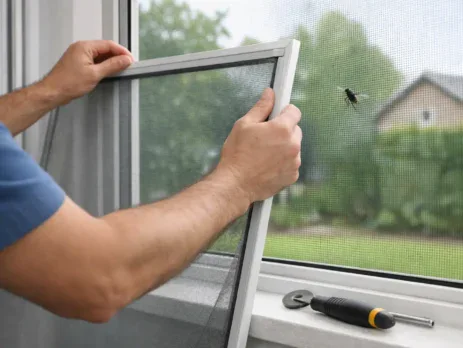
A made-to-measure fixed frame is generally one of the easiest systems to install neatly. Most are designed either to clip into place, use turn buttons, or screw to the surrounding frame depending on the design.
Start by dry-fitting the frame before securing it. This tells you immediately whether the measurements are correct and whether handles or seals will interfere. The frame should sit evenly without force. If it needs pushing hard into position, stop and check the sizing rather than trying to make it fit.
If the screen uses clips or brackets, mark the fixing points carefully and keep the frame square while you work. A spirit level helps here, but visual alignment against the window frame is often just as important. Tighten fixings firmly, but do not overtighten into uPVC or aluminium as this can distort the frame or strip the fixing point.
Once fitted, check the perimeter closely. The mesh itself stops insects, but the real protection comes from the frame sealing the opening properly. Even a small gap in one corner can make the whole installation less effective.
Installing magnetic window insect screens
If you are fitting a magnetic system, preparation is especially important. Clean the frame thoroughly so the magnetic strip or adhesive backing bonds properly. Any dust, condensation residue or kitchen grease will weaken the hold.
Apply the fixing strip in straight lines and press it down evenly, taking care at the corners. If the strip runs off line, the mesh panel may not sit flat, which creates ripples and gaps. Offer the screen up gradually rather than trying to force the whole panel on in one movement.
This type of installation is quick, but it does have limits. In stronger sunlight, humid conditions or high-use areas, adhesive-based systems may need more maintenance than a rigid aluminium-framed screen. That does not make them a poor option – only one better suited to lighter-duty applications.
Installing roller window screens
Roller systems need the most precision, but they give a very tidy and practical result. Begin by checking that the cassette width matches the opening and that both side channels can sit plumb. If either channel is even slightly off, the mesh may not travel smoothly.
Fix the cassette first if that is the manufacturer’s method, then align the side channels carefully before securing them. Measure both diagonals if you can. This helps confirm the assembly is square, particularly on larger windows.
Once installed, test the screen several times. The mesh should pull down or across evenly and return without snagging. If it catches, check alignment before assuming there is a fault with the product. Minor installation errors are usually the cause.
Common fitting mistakes to avoid
Most installation problems come from rushing the measuring stage or choosing a screen that does not suit the window. A cheap universal kit can look like the quickest answer, but awkward reveals, sash horns, deep handles and uneven frames can all turn a simple job into a compromise.
Another common mistake is ignoring how the window is used day to day. A fixed panel may be ideal in one room and frustrating in another. In kitchens and commercial spaces, access for cleaning and regular ventilation should be considered before ordering, not after fitting.
It is also worth paying attention to mesh choice. Standard fibreglass mesh is suitable for many domestic settings, but stronger or more specialist mesh may be a better fit where pets, heavier use or stricter hygiene demands are involved. Installation is only part of the result – the screen also needs to perform properly once in service.
When a bespoke screen makes more sense
If your windows are non-standard, older, frequently used or part of a hygiene-sensitive area, a bespoke screen is usually the more reliable option. A properly made screen reduces fitting time, improves appearance and gives better long-term insect control because the frame and mesh are designed for the exact opening.
That is particularly relevant in the UK, where window styles vary widely between newer uPVC installations, timber casements, sash windows and commercial units. A one-size-fits-all approach often leads to compromises around fit, appearance and durability.
For homeowners, that means fewer draughty edges and less seasonal replacing. For landlords and facilities managers, it means a more dependable installation with less maintenance. For kitchens, hospitality settings and food-related premises, it means better day-to-day protection while still allowing airflow.
A specialist manufacturer such as Premier Screens will also usually offer more practical configuration options, including different frame styles and mesh types, which makes installation easier because the product has already been specified for the job.
If you are unsure how to install window insect screens, the safest approach is not to overcomplicate it. Measure carefully, choose the screen type around how the window is actually used, and do not treat fit as an afterthought. A well-installed screen should do its job quietly – keeping insects out, letting fresh air in, and staying dependable long after the warmer months begin.