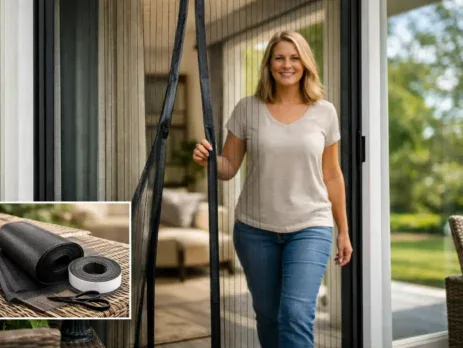
A door left open for airflow shouldn’t become an open invitation to flies, wasps and mosquitoes. Our roller fly screen doors solve that problem with a full-height magnetic closing system, giving you hands-free access while keeping insects out and fresh air moving through the property. For homes, that usually means a more comfortable kitchen, patio or back door. For commercial settings, it can also mean a cleaner, more practical route in and out of working areas.
What matters is choosing the right size and configuration for the way the doorway is actually used. Not every opening has the same traffic level, the same width, or the same requirement for durability, so this guide covers what the magnetic closing system actually does, where it fits best, and how to choose between our single and double cassette versions.
What is a magnetic closing fly screen door?
Our roller fly screen doors use a retractable mesh screen that pulls out from a slim cassette fitted to one side of the door opening, with magnetic strips running the full height of the closing edge. Walk through and the screen parts easily; let go, and the magnets pull it firmly shut behind you. That makes it especially useful where people are carrying shopping, moving between kitchen and garden, or passing through frequently without wanting to handle a rigid door panel each time.
The main appeal is straightforward. You keep the doorway open for ventilation and natural light, but you reduce the number of flying insects entering the building. In domestic settings, that improves comfort during warmer months. In food preparation or hospitality environments, it can also support cleaner day-to-day operation where open access points would otherwise attract pests.
Single or double cassette: which fits your opening?
The most common use is on back doors, French doors and patio access points in houses and flats — the openings people tend to leave open in warm weather, especially near kitchens and dining areas where insects are more likely to gather.
Our single cassette roller fly screen door suits a standard single door opening, with one cassette and one retractable screen. Wider openings — French doors, double doors, or a patio run — are better served by our double roller fly screen doors, which use two cassettes meeting in the middle so each screen only has to span half the width. That keeps the magnetic seal tighter and the screen easier to operate than trying to stretch a single mesh panel across a wide gap.
It can also suit some light commercial settings, particularly where staff need quick pedestrian access. That said, higher-traffic or more demanding commercial environments are often better served by our hinged fly screen doors or heavier-duty systems — it depends on the volume of use, the level of hygiene control required, and how much impact the screen will need to withstand over time.
Why made-to-measure matters
A good fit isn’t a minor detail with fly screens. It’s the difference between a screen that closes cleanly along the full magnetic strip and one that leaves gaps around the frame or catches at the threshold. Off-the-shelf products are often designed around broad standard sizes, but real door openings vary more than many people expect.
Our roller fly screen doors are built to your exact opening dimensions, which helps the cassette sit correctly and the magnetic seal close as intended. That matters for insect control, but it also affects appearance and lifespan — a screen under constant strain because it’s too tight, or hanging loose because it’s too large, will rarely give consistent results.
This is particularly relevant for older UK properties where openings aren’t always perfectly square, and for trade buyers who need a reliable fit across multiple installations. Buying to the exact size reduces compromise.
Roller doors versus other fly screen door systems
The right question is not whether a magnetic closing roller door is good, but whether it’s the best fit for the opening.
A roller fly screen door is often chosen for its convenience. It’s easy to pass through, retracts neatly out of the way when not in use, and suits domestic doorways where comfort and ventilation are the priority. Installation is straightforward, and the retractable format makes it a practical choice for many everyday access points.
Alternatives such as our hinged fly screen doors, chain fly screens and strip mesh fly doors usually offer a more rigid or heavy-duty structure, and may suit situations where a permanent commercial-grade solution is needed. If the doorway is in constant commercial use, exposed to rough handling, or part of a stricter hygiene regime, one of these may be the better long-term option.
There’s no single answer for every property. A roller system with magnetic closing is often the sensible choice where easy access and flexible use matter most. A hinged, chain, or strip mesh system is often stronger where traffic levels are higher or the opening demands a more substantial build.
Choosing the right mesh
Mesh choice affects more than insect control. It influences airflow, visibility, strength and how the screen performs in a particular setting.
Standard insect mesh is suitable for many domestic uses and is designed to stop common flying insects while still allowing air to circulate. If the opening is in a busy household, mesh durability becomes more important, especially where children and pets are involved. In some settings, a stronger mesh may be worth considering simply because it stands up better to repeated contact.
For customers concerned about finer insects or additional environmental factors, specialist mesh options can also be relevant. In commercial premises, the selection may be driven by hygiene expectations, cleaning needs or the type of activity taking place near the doorway.
What to check before you buy
Before ordering, take a practical look at how the door is used through a normal week. If it opens onto a garden and is mostly used by family members during summer, a single cassette roller door is often ideal. If the opening is wide, or serves staff carrying stock in and out all day, the double cassette version — or a heavier-duty alternative — may suit better.
Measure carefully and check whether the fixing area is sound, clean and suitable for installation. Consider the direction of traffic, whether there’s shelter from strong draughts, and whether the threshold area is clear. Think about pets as well — some households manage very well with a magnetic closing screen, but determined claws or repeated pushing can shorten the life of any mesh product over time.
Appearance matters too, though usually in a practical sense. A well-fitted screen should sit neatly within the doorway and not obstruct daily use. If the opening is prominent, a made-to-measure product generally gives a cleaner result than an off-the-shelf one.
Installation and day-to-day use
One reason our roller fly screen doors remain popular is that they’re simple to live with. Once fitted correctly, the cassette and magnetic strips allow regular access without much thought — you walk through, the magnets pull the screen back into place, and the opening stays protected without making the space feel enclosed.
Installation standards still matter. The cassette needs to be aligned properly so the magnetic strips meet cleanly along the full height of the closing edge. If it’s fitted unevenly, the seal — and the insect control — suffers. Careful measurement and secure fixing matter far more than speed.
For businesses, ease of use is just as important as initial fitting. Staff are far more likely to keep a screen in place if it doesn’t slow them down, which is one of the strongest arguments in favour of a magnetic closing roller door in the right environment.
Durability, maintenance and value
Customers often focus first on purchase price, but value comes from service life and reliable performance. A cheaply made screen that tears, sags or stops closing properly after one season is rarely economical. A better-built product with the right mesh and a proper fit usually gives better value over time.
Maintenance is generally straightforward. Mesh should be kept clean, and the magnetic closing edge should remain free of debris so the strips can meet properly. Regular inspection is sensible in both homes and workplaces, particularly during periods of frequent use.
For buyers who want a dependable result, the advantage of buying direct from a UK manufacturer like Premier Screens is that each door is made to measure for your actual opening, rather than fitted around a generic standard size.
Is a magnetic closing roller fly screen door the right choice?
If your priority is easy access, natural ventilation and everyday insect control, our roller fly screen doors are often a very practical answer. They work particularly well on domestic back doors and patio access points where people are moving in and out regularly and don’t want the hassle of a rigid door each time.
If the opening faces heavy use, rough treatment or stricter commercial requirements, it’s worth weighing that convenience against the greater structure of a hinged, chain, or strip mesh alternative. The best result usually comes from matching the screen type to the doorway, not choosing on price alone.
A well-made screen should feel like part of the building rather than a seasonal compromise. Get the fit, mesh and configuration right, and you can keep the door open for air without giving insects the same welcome.