
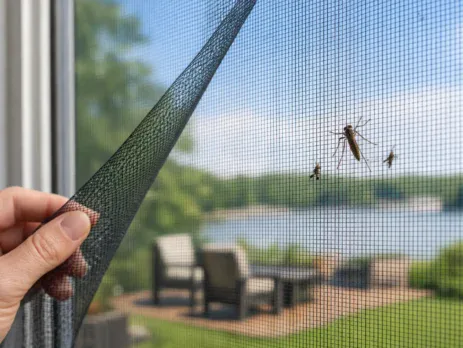
You notice the problem properly at dusk. The window is open, the room is finally cooler, and then the tiny insects start coming through standard screening or straight through an unprotected opening. Midge mesh for windows is designed for exactly this issue – stopping much smaller insects than ordinary fly mesh while still allowing ventilation and natural light.
For many UK homes and workplaces, that difference matters more than people expect. Midges are small enough to get through coarser mesh that would stop larger flies and wasps without any trouble. If your property is near water, woodland, fields or damp ground, or if summer evenings regularly bring biting insects indoors, the type of mesh you choose is not a minor detail. It is the part that determines whether the screen solves the problem or only improves it slightly.
What makes midge mesh for windows different?
The main difference is the aperture size. Standard insect mesh is suitable for general flying insects, but midge mesh is woven more tightly to reduce the gaps. That finer weave is what helps block very small insects that would otherwise pass through a regular screen.
There is a trade-off, and it is worth being clear about it. A finer mesh will normally reduce airflow slightly more than a standard mesh. In practice, many customers are happy to accept that because the benefit is obvious – fewer midges indoors, fewer bites, and better comfort in bedrooms, kitchens, conservatories and work areas. If you are choosing between maximum airflow and finer insect control, the right answer depends on your location and how severe the midge problem is.
This is also why made-to-measure fitting matters. Even the best mesh will underperform if the frame leaves gaps around the edge. A properly sized screen gives the mesh a fair chance to do its job, particularly with smaller insects that will exploit any opening.
Where midge mesh is most useful
Midge protection is not only for remote rural properties. It is often most noticeable in homes and commercial spaces that need windows open at specific times of day, especially in warmer weather. Bedrooms are a common example because people want cooler air overnight but do not want insects entering after sunset.
Kitchens are another obvious area. In domestic and commercial settings alike, open windows help with heat and ventilation, but insect control is part of keeping the area comfortable and hygienic. In food preparation spaces, a screen has to do more than improve comfort – it supports cleaner operating conditions without shutting off fresh air.
Ground-floor rooms usually see the greatest benefit, although upper floors are not exempt. Properties near gardens, streams, hedgerows, parks and agricultural land can all experience persistent midge activity. Landlords often look at this from a maintenance and tenant-comfort perspective, while facilities managers tend to focus on consistent performance, ease of cleaning and suitability for regular use.
Choosing the right window screen with midge mesh
The mesh matters, but the screen format matters as well. Different window types call for different approaches, and the best option is usually the one that suits how the window is used every day.
For straightforward domestic use, fixed or magnetic window screens are often a practical choice where the main goal is seasonal insect protection with simple operation. They can work well when you want a clean appearance and reliable coverage over the opening. Hinged options are useful where regular access is needed, while roller systems suit customers who want the screen available when required but neatly retracted at other times.
There is no single best format for every property. A bedroom casement window, a kitchen window above a sink, and a commercial opening in a busy food area all place different demands on the screen. The right specification depends on access, cleaning, frequency of opening, and how permanent you want the installation to be.
A bespoke screen usually gives the strongest result because the fit is tailored to the opening rather than forced into an off-the-shelf size. That tends to improve both appearance and performance, and it avoids the common problem of buying a screen that is almost right but not quite secure around the edges.
Frame quality matters as much as mesh
Customers sometimes focus entirely on the weave and forget the structure holding it in place. A durable aluminium frame is important because windows are used repeatedly and screens need to remain square, stable and neat over time. A weak frame can twist, loosen or sit poorly against the reveal, which creates the very gaps that smaller insects can exploit.
For domestic buyers, this is mainly about long-term value. For commercial settings, it is about dependable daily use. In both cases, a well-made frame and properly tensioned mesh usually make the difference between a screen that lasts and one that becomes a short-term fix.
Is midge mesh always the right choice?
Not always. If your main issue is larger flies, bees or wasps, a standard insect mesh may be sufficient and may allow marginally better airflow. Midge mesh is most worthwhile when tiny insects are the problem, or when you want the extra reassurance of a finer barrier.
That decision can also vary room by room. Some customers choose midge mesh for bedroom windows and standard mesh elsewhere. Others use finer mesh throughout because the local insect pressure is high enough to justify it. There is nothing unusual about mixing specifications across a property if that gives a better balance of cost, airflow and protection.
For commercial premises, the choice is more likely to be driven by operational need. If small flying insects are affecting hygiene-sensitive areas, the finer mesh option is often the sensible route. In these environments, consistency and suitability generally matter more than shaving a little resistance from the airflow.
Installation and everyday use
A good window screen should not create hassle. It should allow the window to do what it is supposed to do – bring fresh air in – without creating a new maintenance problem. That means secure fixing, straightforward operation and materials suited to regular cleaning.
Ease of installation matters for homeowners and trade buyers alike. A product that is clearly made for the opening and supplied in the correct size removes much of the guesswork. It also reduces the risk of uneven fitting, which is one of the main reasons insect screens disappoint.
Cleaning is usually simple, but it should not be overlooked. Finer mesh can collect dust and airborne debris over time, particularly in kitchens or high-traffic commercial settings. Routine cleaning helps preserve airflow and keeps the screen looking presentable. This is less about intensive maintenance and more about basic care at sensible intervals.
What to check before ordering
Before choosing a screen with midge mesh, check how the window opens, whether there are handles or fittings that affect clearance, and whether the screen needs to be removable, hinged or retractable. Also consider who will use it. A landlord may prioritise durability and straightforward replacement, while a homeowner may care more about discreet appearance and ease of cleaning.
It is also worth thinking seasonally. If the screen will stay in place for long periods, durability becomes even more important. If it will be removed and refitted during the year, convenient handling and secure refitting matter just as much.
Why made-to-measure usually performs better
Small insects expose poor fitting very quickly. A generic screen may cover most of the opening, but if it bows, leaves edge gaps or does not sit cleanly against the frame, midges can still get through. That is why made-to-measure products are often the better investment, particularly where insect pressure is persistent.
For many customers, the attraction is not only better control but better usability. A bespoke screen tends to look neater, fit more securely and require fewer compromises. That is especially useful for awkward openings, older properties, and commercial environments where a reliable fit is part of day-to-day practicality.
As a UK manufacturer supplying direct, Premier Screens works with customers who need that level of fit and specification rather than a one-size solution. For homes, rentals and commercial premises alike, the value is in getting a screen that suits the opening properly and performs as expected.
If you are tired of choosing between a stuffy room and a room full of biting insects, midge mesh is one of those upgrades that earns its keep very quickly – especially when it is fitted to the right window, in the right frame, for the way the space is actually used.
Prefer a ready-made kit? All the mesh types above are available in our fly screens for windows, pre-cut to your sizes.

