What Is a Linear Metre? Your Actionable Guide to Ordering Custom Materials
A linear metre is a simple measurement of length. If you're buying rope, you care about how long it is, not how wide. That's a linear metre in action—a one-metre measurement in a straight line that ignores width and depth, giving you total clarity on what you're ordering.
A Practical Guide to the Linear Metre
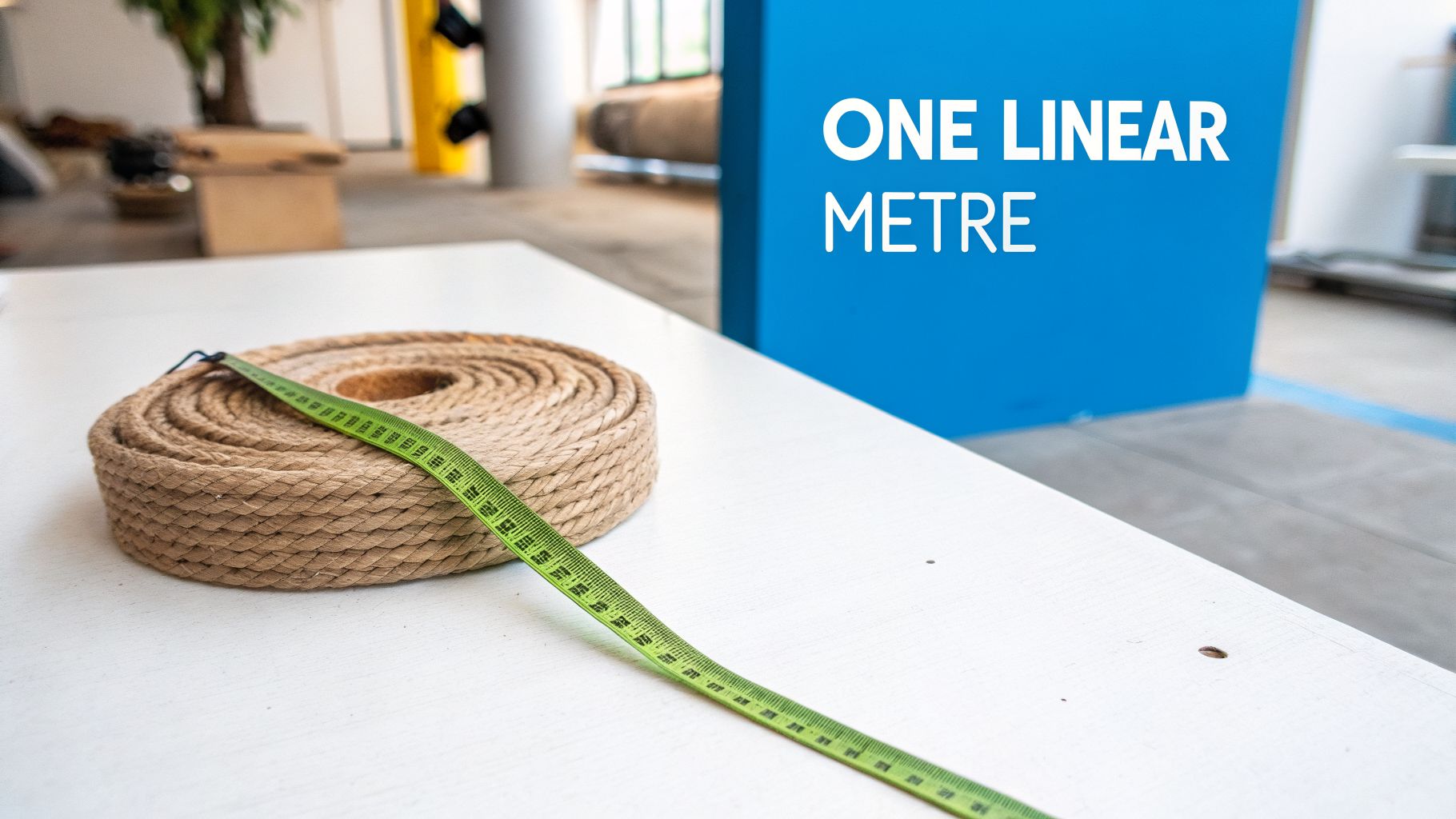
When a product is sold by the linear metre, you're buying it by its length. The width is already fixed. This is the go-to measurement for materials sold on a roll or in long sections, like timber, fabric, or piping. It simplifies costing and ensures you only pay for what you need.
This method is the backbone of fair pricing in custom manufacturing. When you order from a specialist like Premier Screens, the aluminium profiles for your bespoke fly screens are priced this way. Why? Because the primary cost driver is the total length of material used to build your frame.
How Linear Metres Empower Your Projects
For any made-to-measure item, pricing by length is the most logical and transparent system. At Premier Screens, we use linear metres to price our fly screen frames because it directly reflects the materials used. It means the cost is tied to the size of your window or door, not a vague, one-size-fits-all estimate.
Actionable Insight: You only pay for the exact length your project requires. A small cloakroom window screen won't cost the same as a large patio door screen, and pricing by the linear metre ensures that fairness is built-in.
In the UK construction and manufacturing sectors, the linear metre is essential for accurate quotes and material management. As a UK manufacturer of bespoke fly screens for homes and commercial kitchens, Premier Screens relies on this standard to deliver precise, custom-fit solutions that meet your exact specifications.
This principle isn't unique to us. If you've ever tackled a sewing project, understanding how to calculate drapery yardage uses the same logic of one-dimensional measurement. Mastering this concept empowers you to order any custom-length material with confidence.
Linear Metres vs. Square Metres: What You Need to Know
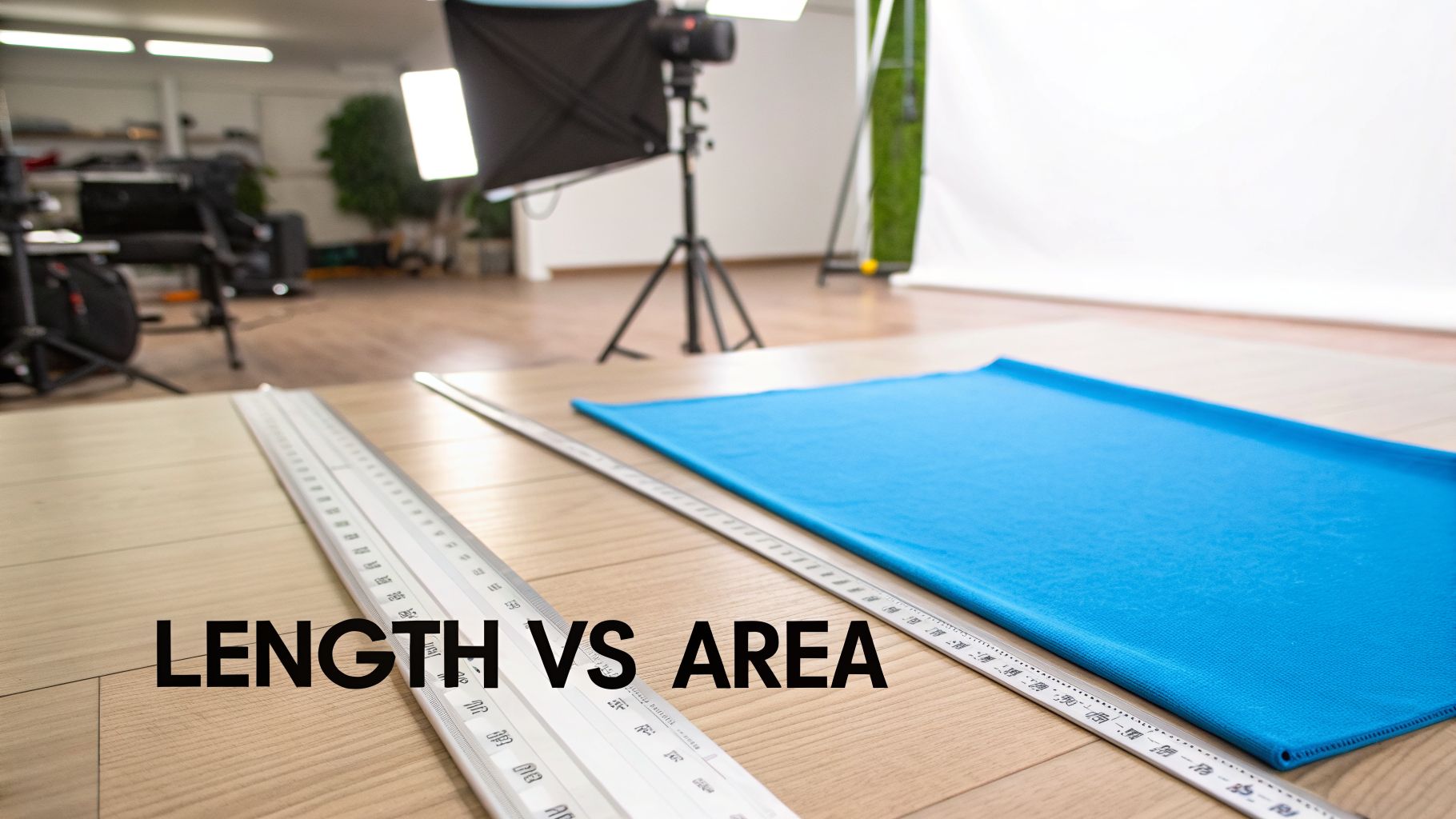
Understanding the difference between a linear metre and a square metre (m²) is crucial for budgeting your project correctly. Mixing them up is a common mistake that can lead to costly errors.
A linear metre measures one dimension: length. In contrast, a square metre measures two dimensions—length multiplied by width—to determine the total surface area.
From Frame to Filling: A Practical Example
Think of a picture frame versus the artwork inside it.
The frame itself is constructed from lengths of wood or metal. You would buy this material based on the total length needed—in linear metres. The artwork, however, fills the area within the frame, so you measure it in square metres.
This distinction is vital when ordering from Premier Screens. The durable aluminium frame of your fly screen is priced by the linear metre, as we manufacture it from long, continuous profiles. However, the insect mesh that fills the frame is priced by the square metre (m²), because it needs to cover the entire two-dimensional area of your opening.
Actionable Insight: A linear metre (m) is for the "outline," like a fence. A square metre (m²) is for the "infill," like the turf inside it. Getting this right is key to accurate project planning and budgeting.
This dual-pricing model ensures total transparency. You are charged for the precise length of the frame and the exact area of the mesh—no guesswork, no hidden costs. It's a clear, honest system that puts you in control.
Linear Metre (m) vs. Square Metre (m²): At a Glance
| Attribute | Linear Metre (m) | Square Metre (m²) |
|---|---|---|
| Dimension | Measures one dimension (length) | Measures two dimensions (length x width) |
| Purpose | For items sold in a continuous length | For covering a flat surface area |
| Common Use | Skirting boards, timber, pipes, fencing | Flooring, tiles, paint coverage, lawn turf |
| Premier Screens Example | The aluminium frame of a bespoke fly screen | The insect mesh that fills the fly screen frame |
Remembering this simple distinction will help you plan, budget, and order materials for any project with much greater accuracy.
Why Premier Screens Prices by the Linear Metre
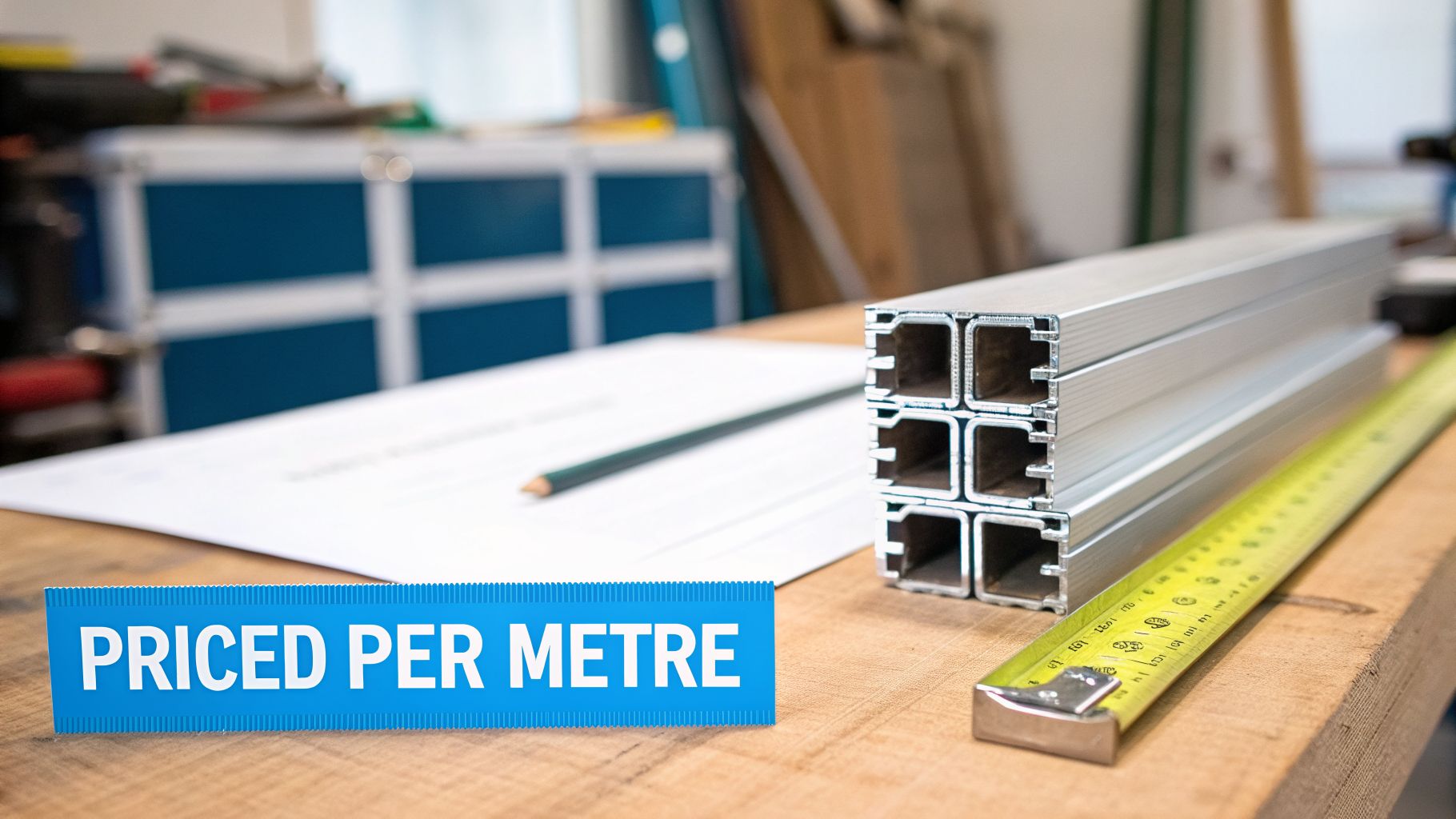
When you invest in a made-to-measure product, you expect the price to reflect its exact size. That’s the core principle behind our pricing at Premier Screens. We price our bespoke fly screen frames by the linear metre because it is the fairest, most transparent way to charge for a custom-built product.
This isn’t just an industry term; it's a commitment to our customers. For our high-grade aluminium frames, the main cost is the raw material length. Pricing by the linear metre ensures you only pay for the precise amount of profile needed for your specific window or door.
A Customer-First Pricing Model That Delivers Value
This straightforward method offers you two key benefits. First, it enables our website to provide an instant, accurate quote. Whether you need a small screen for a bathroom or a large system for bifold doors, our online calculator determines the exact material required and gives you a price on the spot. No waiting, no surprises.
Second, it eliminates the unfairness of "one-price-fits-all" systems. With a fixed price per screen, customers with small windows would unfairly subsidise those with larger ones. Our model guarantees that a smaller project always costs less than a larger one—as it should.
Our Brand Promise: The Premier Screens linear metre model is built on transparency. It empowers homeowners and trade partners by ensuring every order is priced fairly based on the exact materials used—nothing more, nothing less.
This means you can plan your project with complete confidence, knowing the price you see is a true reflection of your unique dimensions. From a single kitchen window to an entire commercial installation, the cost is directly linked to what it takes to manufacture your bespoke screen. It's a simple, honest system designed for total clarity.
How to Measure Your Space for an Accurate Quote
The single most important step in ordering a bespoke screen is getting your measurements right. A precise measurement ensures a perfect fit, while a mistake can be frustrating and costly. Our rule is simple: measure twice, order once.
Whether you're screening a small kitchen window or a large set of patio doors, the process is straightforward. Here’s how to measure like a pro.
Reveal Fit vs. Face Fit: Your First Decision
Before touching a tape measure, decide how you want the screen to be installed. This choice determines what you need to measure.
- Reveal Fit (Inside the Frame): The screen sits neatly inside the window or door recess. For this, measure the height and width of the opening from one internal edge to the other.
- Face Fit (On the Wall Surface): The screen is mounted onto the flat wall surface around the opening. Measure the opening first, then add a small margin on all sides for the frame to sit.
Often, your existing window or door frames will dictate the best fit. If you have protruding handles or an uneven frame, a face fit is usually the most practical solution.
Actionable Tip: Always take three measurements for both height and width—at the top, middle, and bottom, and again at the left, centre, and right. Use the smallest of the three measurements for both height and width when placing your order. This pro trick accounts for any imperfections in the opening and guarantees your screen will fit perfectly.
Common Mistakes to Avoid
A small error with the tape measure can result in a screen that doesn't fit. Here are the most common mistakes our customers make:
- Forgetting to account for obstructions like handles, vents, or deep sills.
- Using an old, stretched, or bent tape measure.
- Measuring only once—always double-check your numbers.
- Guessing the measurements instead of taking a precise reading.
Getting this right is crucial for any bespoke product priced by the linear metre, including our retractable roller and sliding fly screens. This industry-standard practice is becoming more widespread, with CIOB data projecting that by 2026, 67% of contractors will adopt digital linear metre tools like the instant quote system we use at Premier Screens.
Once you have your accurate dimensions, our online tool instantly calculates the linear metres for the frame and the square metres for the mesh. If you're building your own frame, you may find it useful to learn more about ordering fly screen mesh on a roll.
Applying Linear Metres in Commercial Projects
For our trade partners in construction, facilities management, and food service, mastering the linear metre is fundamental to business success. It's the unit that underpins accurate project bids, efficient material orders, and compliance with crucial industry regulations.
When pricing a commercial job, a shared unit of measurement is essential. Using linear metres to quantify materials like pipework, skirting, or the frame for a bespoke fly screen eliminates guesswork and ensures everyone from the architect to the installer is aligned.
This graphic shows how simple the process is—from on-site measurement to online ordering.
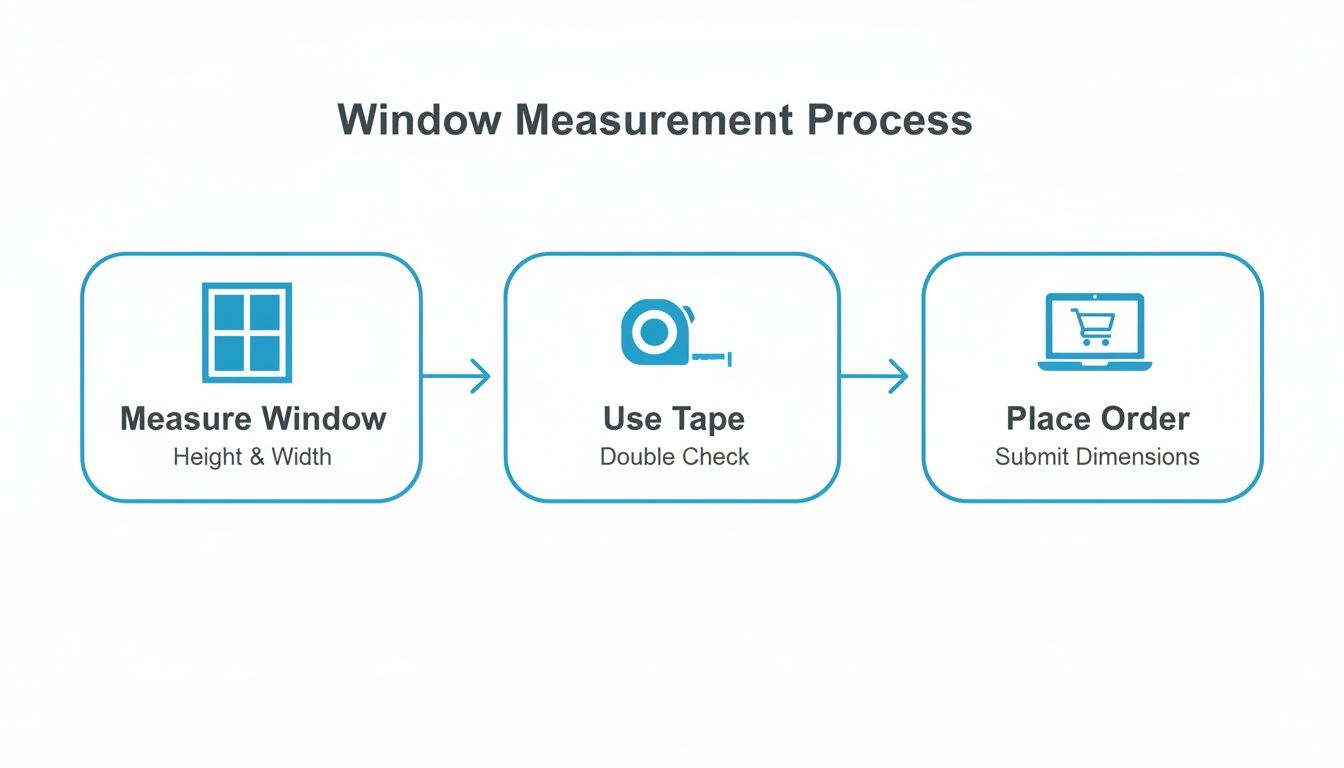
It truly is that straightforward. Accurate initial measurements are the key to a smooth ordering process, saving you time and preventing costly errors.
Ensuring Compliance and Durability with Premier Screens
In commercial kitchens, compliance is non-negotiable. The Food Standards Agency (FSA) has strict guidance on pest control, and properly fitted fly screens are a critical component. At Premier Screens, we use the linear metre to specify and price our commercial fly screens for large businesses, ensuring a perfect, compliant fit every time.
This standardisation is vital across the construction industry. The UK government anticipates 4,000 higher-risk buildings over 18m will require retrofits by 2026, where precise material quantification will be essential. You can explore the details in this comprehensive over-18m guide.
Actionable Insight for Professionals: The structural integrity of our robust aluminium frames, often assessed per linear metre, delivers the durability required for high-traffic commercial environments. This gives professionals confidence in the long-term performance and compliance of Premier Screens products.
Whether you're ordering fly screens or other custom-sized goods, the principle remains the same. Understanding how to apply linear metre measurements is crucial, and you can see similar principles in resources like this Your Guide to Branded Greaseproof Paper in the UK. Ultimately, this consistent unit brings clarity and predictability to every project.
Your Guide to Ordering from Premier Screens
Now that you understand what a linear metre is and why it matters, let's put that knowledge into action. Ordering a bespoke screen from Premier Screens is designed to be simple and transparent, precisely because we price our custom-made frames by the linear metre.
As the manufacturer, we cut out the middleman, delivering a high-quality, made-to-measure screen directly to you. Here’s your step-by-step guide to creating a healthier, insect-free home or business with us.
A Simple Four-Step Process to Your Perfect Screen
Our website is designed to make ordering your ideal screen effortless, providing an instant, accurate price based on your exact dimensions.
Here’s how to do it:
- Measure Your Opening: Using a reliable tape measure and our clear guides, get the precise height and width for your window or door. Remember to measure twice!
- Get Your Instant Quote: Enter your dimensions into our online calculator. It automatically works out the frame length (in linear metres) and mesh area needed to give you a clear, honest price.
- Customise Your Screen: Choose the right system and mesh for your needs. We offer everything from standard insect mesh to tough pet-resistant and specialised pollen-blocking options. You can also explore options like our fly mesh available by the metre.
- Place Your Order: Once you're happy with your selections, complete your purchase online. We’ll then manufacture your custom screen and ship it with our fast UK delivery.
The Premier Screens Brand Promise: We combine expert UK manufacturing with honest, transparent pricing. Our goal is to provide every customer with a high-quality, bespoke solution without the confusion, and our process is designed to deliver just that.
Your Questions, Answered
Here are a few common questions we get about ordering bespoke screens. These quick answers will help you order with total confidence.
Do I Need to Calculate Linear Metres Myself?
Absolutely not. Our online quote tool does all the work for you. Simply enter the height and width of your opening in millimetres.
The system instantly calculates the total length of the aluminium frame required and gives you a precise, on-the-spot price for your custom-made screen. It’s designed to save you time and ensure 100% accuracy.
Is the Screen Mesh Also Priced by the Linear Metre?
A great question. While the aluminium frame is priced per linear metre (by its length), the mesh is priced by its area in square metres (m²).
However, our online quote tool bundles these costs together seamlessly. The price you see on the screen is the final, all-inclusive figure for your complete, custom-built screen, with no hidden charges.
Actionable Takeaway: You don't need to do any complex maths. The Premier Screens website presents one clear, fully-inclusive price for the finished product, so you know exactly what you’re paying for.
Why Not Just Have a Standard Price Per Screen?
Because every screen we manufacture at Premier Screens is bespoke, a standard price wouldn't be fair. A one-price-fits-all model doesn't work when every order is unique.
A small bathroom window uses far less material than large bifold doors. Pricing by the linear metre is the most transparent and honest method for custom-made products, guaranteeing you only pay for the exact materials used to build your screen.
Ready to create a healthier, insect-free space? Get your instant, no-obligation quote from Premier Screens Ltd today and see how easy ordering a bespoke screen can be. Visit us at https://www.premier-env.co.uk.