Finding Suppliers of Durable Mesh for High Traffic Door Screens
When you're searching for suppliers of durable mesh for high-traffic door screens, you need to look beyond standard DIY options and partner with a specialist. It’s about sourcing a robust, made-to-measure solution that will actually last. A brand like Premier Screens Ltd is a UK-based manufacturer, not just a reseller. This means we have direct control over the quality of our materials, like PVC-coated polyester, which are specifically engineered for the daily grind of busy doorways in homes and businesses.
Choosing the Right Mesh for High Traffic Doors
Picking the right mesh for a busy doorway isn’t just about stopping flies; it’s a strategic investment in a system that won’t fail you in six months. The demands of a "high-traffic" café patio are a world away from a family home with two energetic dogs, and each needs a tailored approach to prevent costly, frequent replacements.
With over 30 years in this trade, we’ve seen it all. Standard fibreglass mesh, the kind you’ll find on most off-the-shelf screens, just doesn't stand a chance against constant pushing, scratching, or the general abuse of a commercial entrance. This is where a professional supplier proves their worth, by offering materials designed for the job.
Actionable Tip: Match Mesh to Your Environment
The key to a long-lasting screen is to match the mesh to its specific environment. A screen door for a restaurant kitchen has to handle being opened a hundred times a day, wiped down with strong chemicals, and maybe even take a knock from a trolley. A residential patio door, on the other hand, might just need to hold its own against a cat's claws or a toddler leaning on it.
A genuinely durable system requires you to evaluate these key factors:
- Material Strength: Are you choosing basic fibreglass, or a much tougher, PVC-coated polyester that we recommend for durability?
- Use Case: Is this for a commercial kitchen needing FSA compliance, or a home with a very determined Labrador?
- Frame Integrity: Will the frame itself resist warping and keep the mesh taut, even when under pressure?
This quick decision tree helps you take action by visualising how to select the right mesh for your home or commercial space.
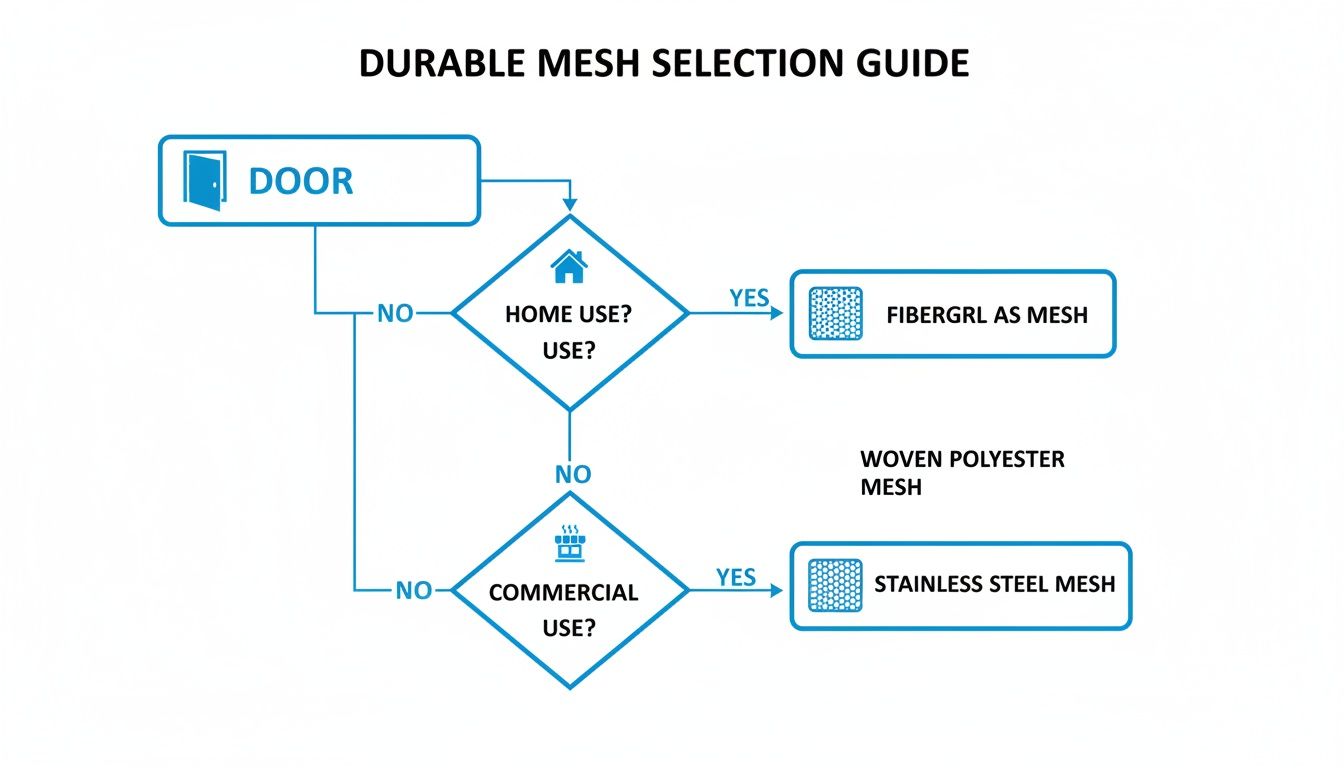
As the flowchart shows, commercial settings often demand the most robust options like stainless steel, while heavy-duty residential needs can usually be met with woven polyester or toughened fibreglass.
To make things even clearer, here’s a quick-glance guide to the main options for busy areas.
Quick Guide to High Traffic Mesh Types
| Mesh Type | Primary Material | Best For | Key Benefit |
|---|---|---|---|
| Woven Polyester | Polyester with PVC coating | Commercial kitchens, busy back doors, homes with pets | Excellent tear and puncture resistance |
| Toughened Fibreglass | Heavy-gauge fibreglass | Residential patio doors, moderate commercial use | Stronger than standard mesh, good visibility |
| Stainless Steel | 304 or 316 grade steel | Food production areas, high-security environments | Maximum durability and security |
| Midge Mesh | Fine-weave polyester | Rural and coastal properties | Blocks tiny insects like midges |
This table simplifies the choice, but your action plan must include the frame and fittings, which are just as important as the mesh itself for overall longevity.
Choosing the right mesh is always a balance between visibility, airflow, and brute strength. For most high-traffic situations, a PVC-coated polyester mesh offers the best blend of all three, providing excellent tear resistance without making a room feel dark or stuffy.
This demand for tougher solutions is something we're seeing across the board. The UK door market, valued at a massive £2.41 billion in 2023, is seeing a real shift towards more durable screen systems. This is partly driven by a boom in residential renovations (which make up 45% of market activity) and the rise of composite doors, now accounting for 56% of the market. People are investing in better doors and want screens to match.
At Premier Screens Ltd, we are at the forefront of this trend, manufacturing bespoke solutions like our hugely popular pet-resistant and midge-proof meshes.
Ultimately, finding the right suppliers of durable mesh for high traffic door screens comes down to partnering with a manufacturer who truly gets these details. To see how these materials hold up in the real world, take a look at our guide on heavy-duty fly screens for doors. It will give you the foundation you need to ask the right questions and specify a product that won't let you down.
Decoding Mesh Specifications for Maximum Durability
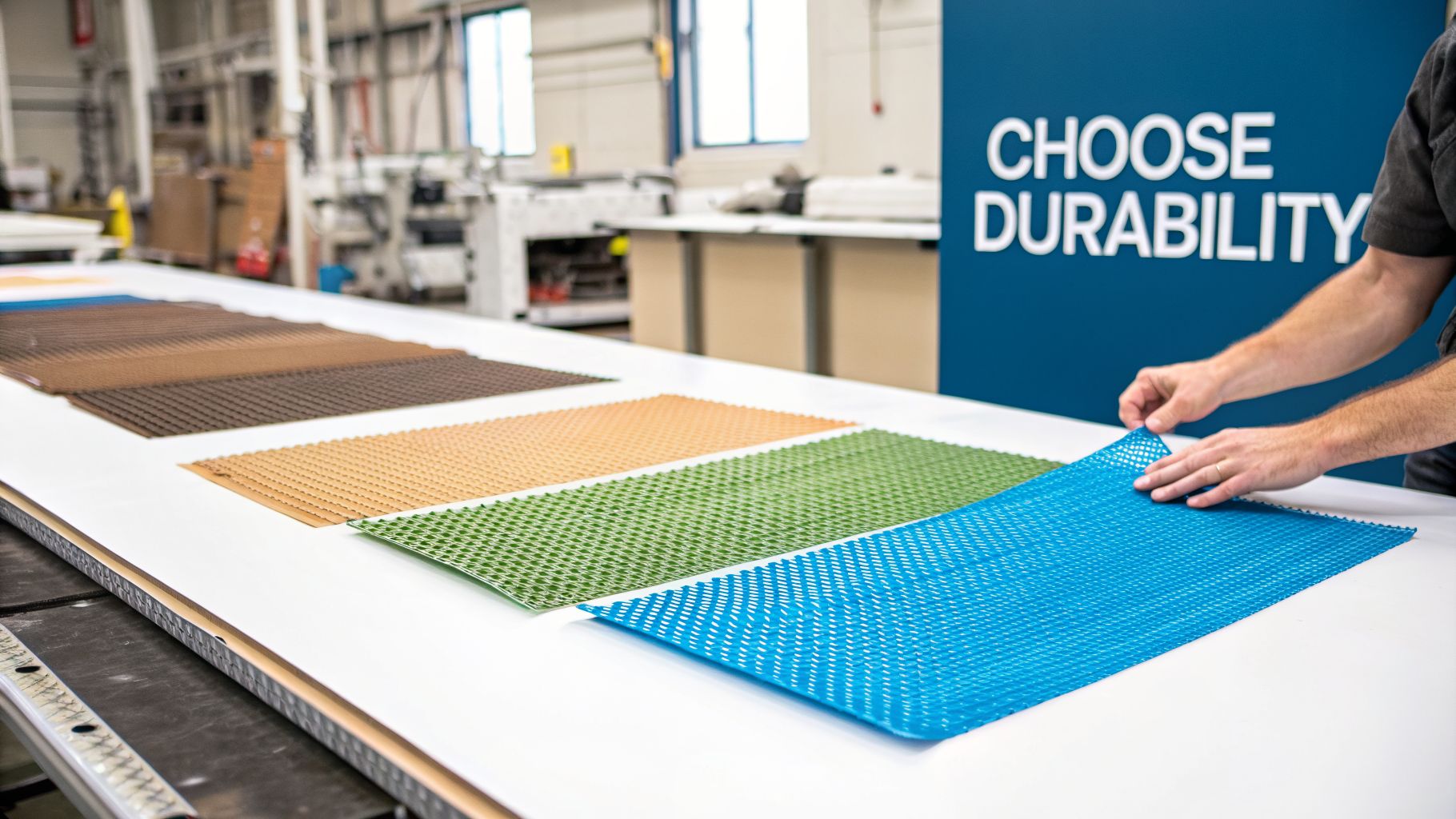
To ensure you get a mesh that genuinely lasts, you must look beyond marketing fluff and get to grips with the technical specs. This knowledge empowers you to tell a supplier exactly what you need with confidence, separating a screen that’s torn by summer's end from one that performs for years.
First things first: you need to match the mesh to your biggest challenge. A busy coastal pub dealing with constant foot traffic and salt spray has completely different needs from a veterinary clinic where sharp claws are the main problem. There’s no single "best" mesh—only the best one for the job at hand.
Material Weave and Composition
The biggest factor in any mesh's durability is what it's made from. Standard fibreglass just isn't cut out for high-traffic doorways. For real-world toughness, the industry benchmark is PVC-coated polyester. This material is specifically engineered for much higher tear and puncture resistance.
Think of it like this: fibreglass is, at its core, glass. It's strong in certain ways but also brittle. Polyester, on the other hand, is a flexible, strong fabric that's made even tougher with a protective PVC coating. This combination shrugs off the kind of daily abuse that would shred a lesser material in weeks. In fact, some tests show it’s up to seven times stronger than standard insect screening.
When you see a spec sheet mention "pet-resistant" or "toughened" mesh, it’s almost certainly referring to PVC-coated polyester. This should be your baseline when looking for suppliers of durable mesh for high-traffic door screens.
Let's look at a couple of real-world scenarios where this makes all the difference:
- A Busy Café Kitchen: Staff are in and out of the door all day, often with their hands full. The mesh needs to handle accidental bumps and pushes, not to mention frequent, tough cleaning to meet hygiene standards. The robust, non-porous surface of PVC-coated polyester is perfect here.
- A Family Home with a Large Dog: The back door screen is a magnet for excited paws and claws. A standard screen would be ripped to shreds in no time, but the superior puncture resistance of a proper pet-resistant mesh keeps it intact.
Interpreting Key Mesh Metrics
When you get a product data sheet from a supplier, you’ll see a few key numbers. Understanding what they mean helps you compare different products on a level playing field.
Material Weight (g/m² or oz/yd²): This is a simple but effective measure of toughness. A heavier mesh means thicker yarns and a more substantial coating, which directly translates to greater strength. A decent pet-resistant mesh might weigh around 380 g/m² (11.2 oz/yd²), far more than standard fibreglass.
Thread Count (or Mesh Count): You'll see this written as two numbers, like 17×14. It tells you how many strands there are per inch in each direction (warp and weft). A higher number doesn't automatically mean stronger, but it does mean a tighter weave, which is better for keeping out smaller insects.
Openness Factor (%): This tells you how much of the screen is actually open space. A lower openness factor, maybe around 36%, means thicker threads and less open area. This boosts strength and UV blocking but might slightly reduce airflow and visibility compared to a standard screen.
Specialised Mesh Types for Specific Needs
Beyond general durability, suppliers offer meshes built for very specific challenges. It's worth asking for these if your environment calls for it.
- Midge Mesh: An absolute must for properties in Scotland and other rural or coastal parts of the UK. This mesh has a much finer weave (e.g., 20×30 or even higher) to block tiny insects like midges that would fly right through a standard screen.
- Pollen Mesh: A brilliant solution for allergy sufferers. This mesh has a special weave, often with a slight tacky coating, that actively traps airborne pollen and dust before it gets into the room.
- Stainless Steel Mesh: This is the ultimate choice for security and extreme environments, like food production facilities. It’s practically indestructible against pests and physical damage but comes with a higher price tag and more weight.
The UK windows and doors market is set to grow from USD 8,896.6 million in 2025 to USD 10,743.6 million by 2033, with doors making up a huge 55% of that revenue. To keep up, manufacturers like Premier Screens Ltd are offering made-to-measure retractable screens with these specialised meshes. The 9% annual growth in commercial composite door systems, for example, pairs perfectly with robust pet-resistant meshes, which can cut screen-related downtime in busy doorways by an estimated 20%.
By getting familiar with these specs, you're in a much better position to source the right material for the job. For those looking to buy the raw material, you can explore options for getting your fly screen mesh on a roll to find the perfect fit for your project.
Don't Forget the Frame and Operating System
You can have the toughest mesh on the market, but it’s only as strong as the frame holding it in place. A classic mistake is getting caught up in sourcing durable mesh, only to neglect the hardware that does all the heavy lifting. A premium mesh in a flimsy frame is a waste of money – it will sag, jam, or fail in no time.
Your actionable insight here is to think of the screen as a complete system. The frame provides rigidity, while the operating system—whether hinged, sliding, or retractable—determines how it handles daily use. Get either wrong, and the entire setup is compromised.
Why Aluminium Frames Are the Only Real Choice
For any door that sees a lot of action, polyester-coated aluminium frames are the professional industry standard. Aluminium is naturally tough, light, and rust-proof. When professionally powder-coated, it gets a durable finish that resists chipping and fading, even in damp British weather or salty coastal air.
You might be tempted by cheaper uPVC or thin-gauge metal frames, but experience shows they just don't last.
- Warping: Plastic frames can buckle in direct sun, causing the mesh to go slack and the door to stick.
- Rust: Poorly treated steel frames will inevitably corrode, especially in our weather, leading to total structural failure.
- Flexing: Flimsier frames twist under pressure, a major problem for bigger doorways or any door that gets opened with force.
A solid, polyester-coated aluminium frame is the foundation of any screen door that's built to last. It’s what keeps the mesh taut and ensures the door glides or swings smoothly, cycle after cycle.
The UK's metal door and window sector, which includes 3,282 businesses, is increasingly focused on this combination of strong frames and durable infills. We're seeing a 37% growth in aluminium systems for infrastructure projects, and these often demand high-performance mesh for ventilation and protection. This trend, highlighted in recent market insights on metal manufacturing, shows where the industry is heading.
Matching the System to Your Daily Traffic
With a solid frame sorted, your next action is to pick an operating system that fits how the door will be used. What works for a quiet patio door is completely wrong for a chaotic commercial kitchen.
Retractable Roller Screens
A brilliant, modern option for bifold or patio doors in a residential setting. The mesh rolls away into a neat cassette when not in use, protecting it from the elements and keeping your view clear. They look fantastic but are best for places where they won't be handled too roughly.
Heavy-Duty Hinged Doors
For a busy back door at home or in a light commercial spot like a café, a heavy-duty hinged screen is your workhorse. A good one from a quality supplier will have strong hinges, a solid handle, and usually a self-closing mechanism. They’re built to be opened and shut all day long without fuss.
Commercial Double-Action Doors
This is the top-tier solution for extreme traffic zones, like the pass-through in a restaurant kitchen. These doors swing both ways and are designed to take hits from staff, trolleys, and stock. In that environment, their sheer durability is what keeps the kitchen running smoothly and hygienically.
It's the Little Details That Count
When you're evaluating suppliers, zoom in on the small components. This is where cheap systems fail first.
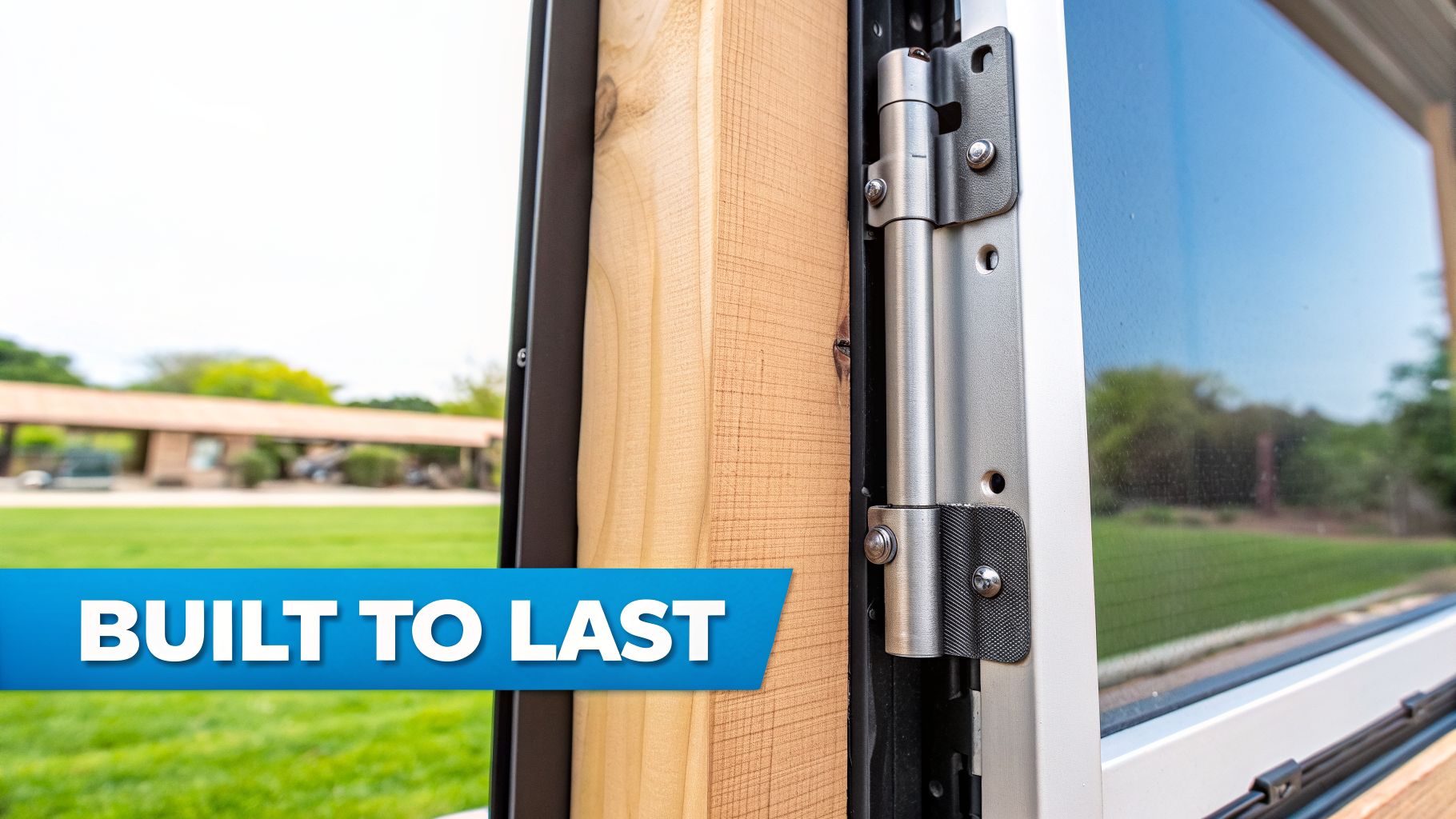
- Hinges: Check for sturdy, adjustable hinges that won't sag. For commercial doors, a full-length piano hinge is a great sign of a quality build.
- Tracks: If you're looking at a sliding or retractable screen, the tracks need to be robust. Flimsy tracks are a one-way ticket to derailing and frustration.
- Closures: Whether it's a magnetic strip or a mechanical latch, the closure has to be reliable. It needs to create a complete seal every single time.
By giving the frame and system the same attention you give the mesh, you're specifying a complete solution that is genuinely built to endure. That’s the real secret to getting it right.
Meeting Commercial Standards and FSA Guidelines
When you're running a food or hospitality business, a fly screen is a legal necessity, not a convenience. For facilities managers and business owners, meeting Food Standards Agency (FSA) guidelines isn't optional. A standard residential screen simply won't cope; your action plan must account for the far greater demands of a commercial environment.
This isn't just about putting up a barrier. FSA regulations demand solutions that stop pests from getting in, period. That means zero gaps, full doorway coverage, and materials tough enough for a professional setting. Remember this critical point when searching for suppliers of durable mesh for high-traffic door screens for your business.
What FSA Compliance Really Means For Your Screens
A DIY screen will almost certainly fall short. To meet your legal obligations and maintain hygiene, you must specify a screen with three non-negotiable features.
Complete Doorway Coverage: FSA guidance is crystal clear: openings must be proofed against pests. Any gap is a potential entry point for flies or wasps. Only a professionally fitted, made-to-measure system can guarantee a perfect seal.
Easy Sanitation: Commercial kitchens are cleaned constantly. Your screen system must be built from non-porous materials like polyester-coated aluminium and PVC-coated mesh. These can be wiped down with commercial-grade sanitisers without falling apart. Wooden frames or absorbent materials are completely unacceptable.
Robust Construction: The screen must survive relentless use. Picture kitchen staff rushing through with hot pans, delivery drivers pushing trolleys, and the door being opened and closed all day during a 12-hour service. The frame, hinges, and mesh must be built for this constant operational stress.
Practical Solutions For Commercial Kitchen Workflows
The best system for you will depend entirely on how your doorway is used. There are two main FSA-compliant solutions that cater to different workflows, each with its own advantages.
Commercial Hinged Screens
These are the workhorses of many professional kitchens. A heavy-duty, single-hinged door with a tough mesh creates a solid, reliable barrier. Look for features like a kick plate at the bottom to fend off damage from trolleys and a self-closing mechanism to ensure the door is never left open by mistake.
PVC Strip Curtains
For doorways with constant, hands-free traffic, PVC strip curtains are a fantastic choice. Staff can walk straight through without having to stop and open a door, making them perfect for the pass or a busy main kitchen entrance. The overlapping strips form an effective barrier against flying insects while allowing for a smooth workflow. They're also incredibly simple to clean and maintain.
Case Study: The Busy Restaurant Kitchen
A restaurant owner we worked with had a real headache with their back-of-house door. A standard screen they'd installed kept getting wrecked by delivery trolleys, and staff would often prop it open during service, creating a big FSA compliance risk.Our solution: We suggested a dual approach. For their main kitchen entrance, they installed heavy-duty PVC strip curtains, which instantly improved staff workflow. For a less-used side door, we fitted a commercial hinged screen with a full-length piano hinge and an automatic closer. This combination solved their pest problem and ensured they passed their next inspection with flying colours.
This focus on compliance is fundamental to running a business. In a similar vein, it's always smart to be aware of local rules for any major changes to your property. For instance, understanding construction permit requirements is just as critical in its own context.
Choosing a compliant system is a vital investment in your business's reputation and its ability to operate smoothly. You can find more specific advice by looking at our dedicated information on fly screens for commercial kitchens. This will help ensure your choice isn't just effective, but also perfectly in line with legal standards.
Key Questions to Ask Your Mesh Supplier
Choosing the right supplier is as critical as picking the right mesh. Get it right, and you gain a partner who understands your needs. Get it wrong, and you face delays, poor quality, and a screen that fails prematurely.
To find the true specialists among the general resellers, you need to ask a few pointed questions. This isn't a generic checklist; it's a way to dig into their expertise and confirm they truly know their stuff.
Can They Handle Custom Jobs?
High-traffic doorways are rarely a standard size. You might have an arched entrance, oversized bifold doors, or specific compliance needs for a food prep area. A one-size-fits-all approach is a recipe for failure.
Ask them directly: “Can you manufacture a screen for an arched or non-standard doorway, and what’s your process?”
You're looking for a clear, confident response outlining a proven process. A specialist brand like Premier Screens will mention taking precise templates on-site or working from detailed CAD drawings. A portfolio of past bespoke projects is an excellent sign. Handling custom shapes is a core part of being a specialist UK manufacturer.
Here’s another one to try: “Do you offer different mesh types, like pet-resistant or midge-proof, for all your screen systems?”
The answer should be an immediate "yes." A true specialist will have a wide range of meshes and, crucially, understand which ones work best with different frame systems, whether it's a heavy-duty hinged door or a discreet retractable screen.
How Good Are Their Materials, Really?
Your next questions should get to the heart of product quality. You need to know if the mesh and frame can genuinely stand up to the daily grind in your environment.
Start with this: “What’s the realistic lifespan of your toughest mesh in a busy commercial setting?”
A vague answer like "it lasts for years" is a red flag. A knowledgeable supplier will ask about your specific site and traffic. They should then confidently state that their PVC-coated polyester mesh, paired with a powder-coated aluminium frame, is built for years of service in demanding environments.
A real expert will always link durability back to the specific materials. If they can’t explain why it’s tough—by referencing the PVC-coated polyester weave or the non-corrosive aluminium frame—that’s a red flag.
You should also ask about their quality control. For instance, do they use a proper vendor management system for high-risk sites to guarantee consistent quality and safety? Any supplier worth their salt will have clear processes for ensuring their materials meet British standards.
What About Logistics and Support?
Even the best product is useless if the supplier can't deliver on time or offer proper support. These questions focus on the practical side of doing business with them.
For anyone in the trade or managing a commercial project, ask: “What are your typical lead times for bespoke orders, and do you offer dedicated trade accounts?”
A professional outfit will give you clear, realistic lead times. They’ll also explain the benefits of their trade accounts, like preferential pricing and direct support. Our own system, for example, provides instant online quotes and reliable nationwide delivery, giving our trade partners the clarity they need to plan their projects without guesswork.
Supplier Vetting Checklist
Use this actionable checklist to compare potential partners. Jot down notes during your calls and see how different suppliers stack up against an ideal brand like Premier Screens.
| Criteria | Ideal Supplier Response (e.g., Premier Screens Ltd) | Supplier A Notes | Supplier B Notes |
|---|---|---|---|
| Bespoke Orders | Confidently handles custom shapes (arches, etc.) with a clear templating or CAD process. | ||
| Mesh Variety | Offers a full range (pet, midge, pollen) for all screen types. | ||
| Durability Claims | Links lifespan directly to materials (e.g., PVC-coated polyester, powder-coated aluminium). | ||
| Quality Control | Can describe their quality checks and compliance with British Standards. | ||
| Lead Times | Provides clear, realistic timelines for both standard and bespoke orders. | ||
| Trade Support | Offers dedicated trade accounts with clear benefits like better pricing and support. | ||
| Local Manufacturing | UK-based manufacturing for better quality control and faster turnaround. | ||
| Expertise | Asks you questions to understand your specific needs before recommending a product. |
By asking these questions and comparing the answers, you'll quickly separate the experts from the order-takers. A great supplier isn't just selling you a product; they're providing a solution that will perform for years to come.
Common Questions About High Traffic Door Screens
After 30 years in the business, you get to hear the same questions time and again. When you're about to invest in a durable screen door, it's natural to have a few final things you want to be sure about.
We’ve pulled together the most common queries we get from homeowners and businesses. These are the practical, real-world questions that come up right before making a decision, and here are our straight-talking answers.
What Is The Most Durable Mesh For A Home With Large Pets?
If you have an energetic dog or a cat that loves to climb, your only real option is a 'pet-resistant' or 'toughened' mesh. This isn't your standard fibreglass screen; it's a specialised PVC-coated polyester material engineered to be up to seven times stronger than normal insect mesh.
Its main job is to resist punctures and tears from claws. Standard mesh would shred pretty quickly, but our pet-resistant mesh is built to withstand repeated scratching and impact. It’s the perfect choice for busy patio and back doors in lively family homes.
Are Durable Mesh Screens Difficult To Clean And Maintain?
Not at all. One of the best features of a high-quality screen system is just how simple it is to look after. The smooth surface of the PVC-coated polyester mesh means dirt and grime don't really stick. The same goes for our powder-coated aluminium frames.
For a routine clean, all you need is a soft cloth and some mild, soapy water to wipe everything down. This is especially important in commercial kitchens, where our systems are designed for quick sanitation to help you meet FSA standards. A little bit of care goes a long way.
One common mistake we see is people using harsh, abrasive cleaners. These can strip the protective coating on both the frame and the mesh. Always stick to gentle methods to keep your screen looking and working its best for years.
Can I Install A High-Traffic Screen Door Myself?
Yes, absolutely. For anyone comfortable with a bit of D.I.Y., our 'supply-only' kits are a brilliant option. We provide a made-to-measure screen system that shows up at your door with all the parts you need and clear, easy-to-follow instructions.
However, for more complicated jobs—like large bifold doors, unusually shaped openings, or any commercial property—we really do recommend our professional installation service. Our technicians guarantee a perfect fit and flawless operation, taking all the stress off your shoulders. It’s often the best way to protect your investment.
How Do I Get An Accurate Quote For A Custom-Sized Screen?
Getting a price for a bespoke screen should be fast and transparent. The days of long phone calls and guesswork are over. With a modern online quoting tool, like ours, you can get an exact price in just a few minutes.
You simply need to enter your height and width measurements, then pick your mesh type and frame colour. The system will give you an immediate, all-in price with no hidden surprises. It’s a straightforward approach that simplifies budgeting for everyone, whether you're a homeowner buying one screen or a trade buyer fitting out an entire building.
At Premier Screens Ltd, we provide the durable, made-to-measure solutions you need for any high-traffic doorway. Whether you need a supply-only kit or a fully installed system, explore your options and get your instant online quote today.