
How to Keep Mosquitoes Out of House: 2026 UK Guide
The best way to keep mosquitoes out of your house isn't a complex gadget or chemical spray—it's to turn your home into a fortress they simply can't breach. This starts with creating a solid physical barrier. The first actionable step is a thorough inspection to find and seal every potential entry point, from the smallest crack around a pipe to a tiny gap in a window frame.
This foundational step is critical before installing bespoke screens to achieve total protection.
Your First Line of Defence Against Mosquitoes
That maddening buzz of a mosquito in the bedroom at night is a sign your home's defences have been breached. The secret to a peaceful night’s sleep isn’t swatting them once they’re in, but stopping them from getting inside in the first place.
To do this, you have to think like a pest. A mosquito can squeeze through an opening as small as 1.5mm. Your first job is to conduct a detailed audit of your property to identify all these weak spots. A single unsealed gap can render all other efforts useless, so this initial inspection is non-negotiable.
Conducting a Room-by-Room Inspection
Grab a notepad and walk through your house, room by room, with a critical eye. Pay close attention to anywhere different building materials meet, as these joints are common failure points. Look at the seals around your window frames, not just the glass. Over time, sealant can crack and pull away, creating a perfect entry point for insects.
Next, focus on your doors. Check the weatherstripping around the entire frame. If you can see daylight peeking through when the door is shut, you can be sure a mosquito can get through. Don't forget to look down—a worn-out or missing door sweep is a wide-open invitation for all sorts of pests.
A common mistake is only looking for large, obvious gaps. Remember, many UK mosquito species are tiny. A gap the width of a credit card is more than enough space for them to enter.
Identifying Hidden Entry Points
Beyond obvious windows and doors, most homes have hidden entry points that often go completely unnoticed. This is where a proper, thorough audit really proves its worth.
Here are the key culprits you need to hunt down and seal:
- Utility Lines: Check where pipes for water, gas, or electrical cables enter your home. The gaps around these are almost always poorly sealed.
- Air Bricks and Vents: These are essential for ventilation, but they can also be a superhighway for insects. Ensure they’re covered with a fine, sturdy mesh.
- Loft and Wall Vents: Like air bricks, vents in your loft or walls need proper screening to block pests while still allowing air to circulate.
- Chimneys and Flues: If your fireplace is unused, an open flue is a direct route from the outside straight into your living room. A chimney cap with a built-in screen is a simple fix.
This whole process can be broken down into three essential actions.
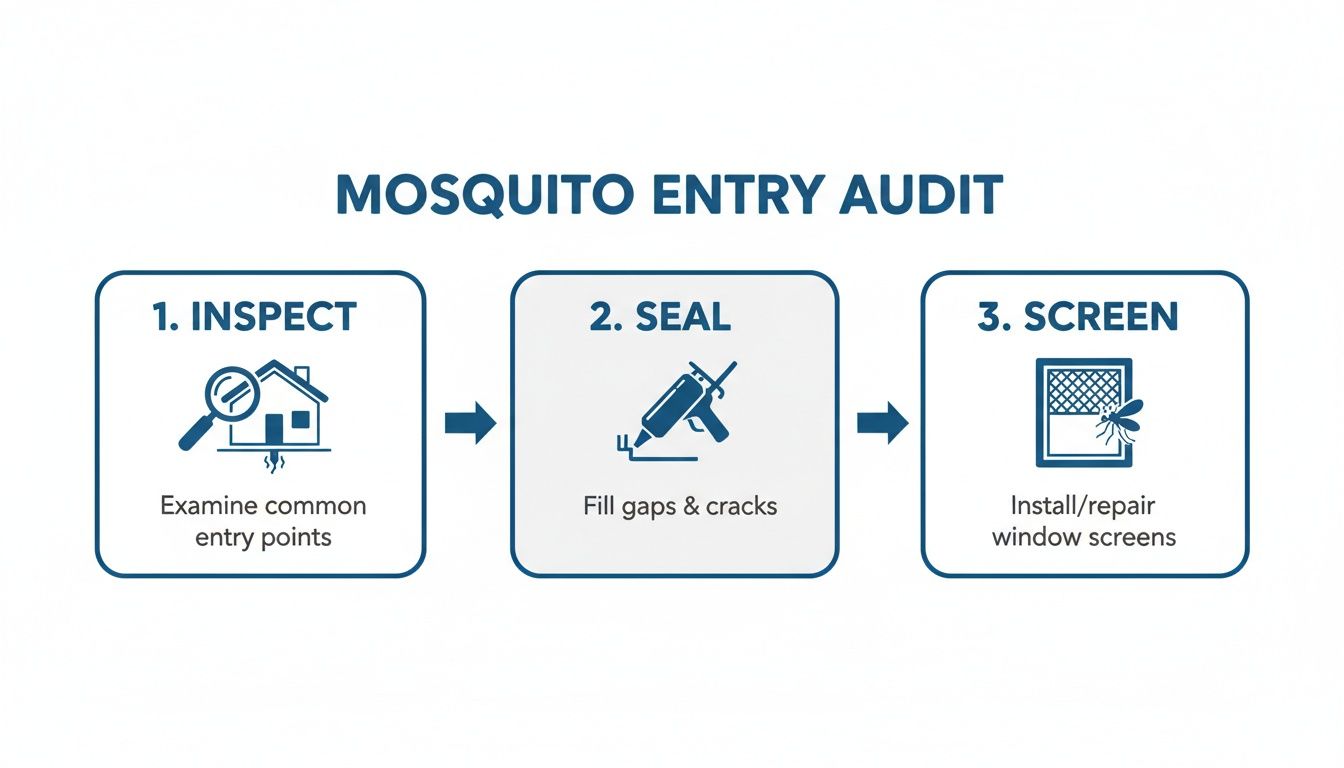
Think of it as your plan of attack: first, you find the weak spots (Inspect), then you patch them up (Seal), and finally, you install high-quality screens as the ultimate barrier (Screen).
Why a Proactive Approach Is So Important
Taking these steps transforms your property from an easy target into a secure space. It’s an upfront investment of effort that delivers long-term peace of mind and drastically cuts down on the number of pests you have to deal with inside. This is especially important now, given the spread of different mosquito species in the UK.
By getting the basics right with a complete entry point audit, you’re perfectly setting the stage for the most effective and permanent solution there is—installing bespoke fly screens from Premier Screens Ltd. When the structure is sealed tight first, your investment in our screens will deliver 100% protection, creating a home where you can finally enjoy fresh air without the constant threat of biting insects. It’s simply the smartest way to keep mosquitoes out for good.
Sealing Your Home for a Mosquito-Free Zone
Right, you’ve done your audit and found all the potential entry points. Now for the satisfying part: sealing them up for good. This is the single most critical, hands-on step you can take. Getting this right creates a permanent barrier that makes every other pest control method, including our fly screens, far more effective.
We're not talking about temporary fixes that fail after one season. This is about using the right materials and techniques to create a lasting seal against even the most determined pests.
Mastering Doors and Windows
It’s no surprise that doors and windows are the main highways for mosquitoes. The problem isn't the glass; it's the tiny, often-ignored gaps around the frames and seals where they can slip through unnoticed.
For doors, the most common failing is the gap at the bottom. A simple foam strip won't cut it for long. Your best bet is to fit high-quality brush strips. These create a dense, flexible barrier that completely closes the gap while still letting the door operate smoothly. They’re far more durable than foam and provide a professional-grade seal.
Windows demand a different approach. Your best tool here is a good quality exterior-grade caulk or silicone sealant. Pay close attention to the outside frame where it meets the brickwork or siding. Years of weather and building settlement can open up small cracks, and applying a clean, continuous bead of sealant will eliminate dozens of potential entry points in one go.
Pro Tip: When you apply a bead of caulk, don’t just leave it. Smooth it down with a wet finger or a proper caulking tool. This does more than just make it look neater—it forces the sealant deep into the crack, creating a much stronger and more durable bond.
Tackling Hidden Gaps and Vents
Mosquitoes are opportunistic. They will happily exploit less obvious openings like air bricks, utility pipes, and extractor fan vents. Leaving these unsealed is like locking your front door but leaving a back window wide open.
The solution is simple but incredibly effective: cover these openings with a fine mesh. For air bricks and other external vents, you'll want a tough, weatherproof material like stainless steel or fibreglass insect mesh. Cut a piece slightly larger than the opening and secure it tightly with a strong, weatherproof adhesive or screw it directly into the surrounding wall.
This very principle is used in large-scale public health strategies. Surveillance has been ramped up to stop species like the Asian tiger mosquito (Aedes albopictus) from taking hold. The UK Health Security Agency (UKHSA) reported that by 2024, they had deployed 1,070 ovitraps across 117 locations—a huge increase from just 58 sites in 2019. This shows just how effective physical barriers are. Fitting bespoke fly screens from Premier Screens Ltd on your windows and doors essentially creates your own private defence network, blocking entry just like the pros. You can read more about these public health surveillance efforts.
Sealing Materials At a Glance
Choosing the right product is key for a seal that lasts. Don't grab the cheapest tube of filler; use the right tool for the job.
| Gap Type | Recommended Material | Why It Works Best |
|---|---|---|
| Window & Door Frames | Exterior Silicone Caulk | It's flexible and waterproof, so it moves with your house and won't crack under temperature changes. |
| Gaps Under Doors | Aluminium Brush Strips | Incredibly durable and provides a physical barrier that pests can't chew through or squeeze past. |
| Air Bricks & Vents | Fine Fibreglass Mesh | Allows essential airflow for your home but physically blocks even tiny insects like midges. |
| Around Pipes | Expanding Foam Sealant | Perfect for filling irregular and larger gaps completely, creating an airtight and watertight seal. |
By methodically working your way around the property and sealing every last gap, you are properly fortifying your home. This proactive work stops mosquitoes at the perimeter, drastically cutting the odds they'll ever become an indoor problem. It’s the essential foundation for a truly mosquito-free home, perfectly preparing it for Premier Screens Ltd fly screens.
Choosing the Right Fly Screens for Your Property
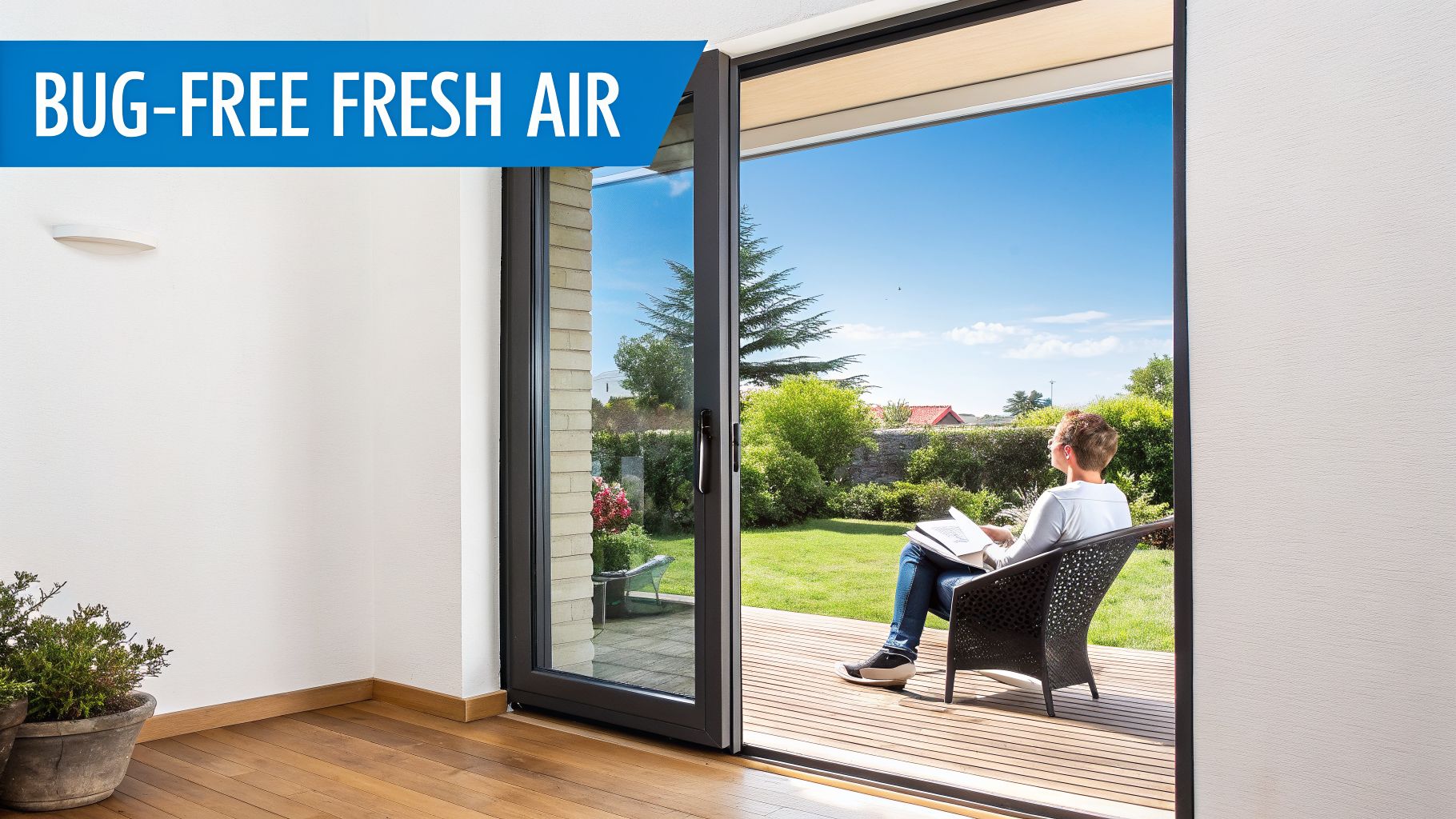
Once you've sealed the structure, the most effective step you can take is to fit high-quality fly screens. This isn't just about keeping pests out; it’s about reclaiming your home. It means you can throw open your windows on a warm evening or enjoy a breeze through your patio doors without worrying about a mosquito invasion.
Think of our screens as the ultimate gatekeepers. As a UK manufacturer with over 30 years of experience, Premier Screens Ltd sees them as a smart investment in comfort, health, and hygiene. A properly fitted screen is the only method that provides a 100% effective physical barrier while still allowing fresh air and natural light to flood your home. It’s genuinely the best of both worlds.
Screens for Every Home and Style
For homeowners, the challenge is finding a solution that’s as discreet as it is effective. You want protection that doesn’t spoil your home's aesthetic or block the views you love. This is where modern screen systems from Premier Screens Ltd truly shine.
Retractable Screens: These are the masters of disguise. When you don't need them, they roll away into a sleek cassette, leaving your window or door opening completely clear. They are perfect for bi-fold doors, French doors, and any opening where you want the screen to simply disappear.
Hinged and Magnetic Screens: A hinged screen door is a classic, robust solution for standard single doors. For an even more seamless option, magnetic screens offer a simple seal that closes automatically behind you—brilliant for households with kids or pets always on the move.
Sliding Screens: If you have large patio doors, our sliding screen panels are an excellent choice. They operate on their own track, are incredibly durable, and can cover wide openings with ease, making them ideal for high-traffic areas.
Choosing the right system comes down to how you use the space. For a kitchen window you open daily, a simple roller screen might be perfect. For a large set of patio doors leading to the garden, a more robust sliding or plissé system is a better long-term investment.
Commercial and FSA Compliant Solutions
For businesses, especially in the food and healthcare sectors, fly screens are not just a nice-to-have; they're a legal necessity. The Food Standards Agency (FSA) has strict guidelines to prevent pests from contaminating kitchens and food preparation areas. Keeping mosquitoes and flies out is critical for compliance.
At Premier Screens Ltd, we regularly fit commercial kitchens, cafés, and restaurants with solutions designed for heavy use and easy cleaning.
Chain Screens are a popular choice for busy doorways. They provide an effective barrier against flying insects while allowing staff to walk through hands-free. They are durable, easy to clean, and maintain airflow—a must in a hot kitchen.
For main kitchen entrances, Double-Action Doors with mesh panels provide a sturdy, hygienic barrier built to withstand constant use. Paired with our durable aluminium frames and tough mesh, these systems are built to last and keep your business fully compliant.
Choosing the Perfect Mesh
The frame is only half the story; the mesh you choose is just as important. Different environments have different needs, and selecting the right mesh ensures you get the exact protection you're after. You can learn more about how the right window screen stops mosquitoes in our detailed guide.
Our Premier Screens Ltd mesh options are designed to tackle specific challenges, so you can find the perfect balance between protection, airflow, and durability.
Premier Screens Mesh Options Compared
Choosing the right mesh can feel technical, but it’s straightforward once you know what you’re looking for. This table breaks down our most popular options to help you decide.
| Mesh Type | Best For | Key Feature | Ideal Application |
|---|---|---|---|
| Standard Insect Mesh | Blocking common UK flies and mosquitoes. | Excellent airflow and visibility. Made from durable fibreglass. | Most residential windows and doors where standard pests are the main concern. |
| Superfine Midge Mesh | Stopping tiny insects like midges and gnats. | A much tighter weave than standard mesh, blocking even the smallest pests. | Homes in rural, coastal, or highland areas (e.g., Scotland) with midge problems. |
| Pet-Resistant Mesh | Resisting damage from cats and dogs. | Made from extra-strong PVC-coated polyester, 7 times stronger than standard mesh. | Households with pets that may claw or push against screens on doors or ground-floor windows. |
| Pollen Mesh | Reducing airborne allergens for hay fever sufferers. | A unique weave that captures a high percentage of pollen particles. | Bedrooms and living rooms for individuals who suffer from seasonal allergies. |
Making the right choice transforms a simple screen into a bespoke solution for your property. Whether you need to pass an FSA inspection, stop pesky midges, or simply enjoy a bug-free breeze, there is a Premier Screens Ltd system and mesh combination that is perfect for the job.
Eliminating Mosquito Breeding Grounds Outside
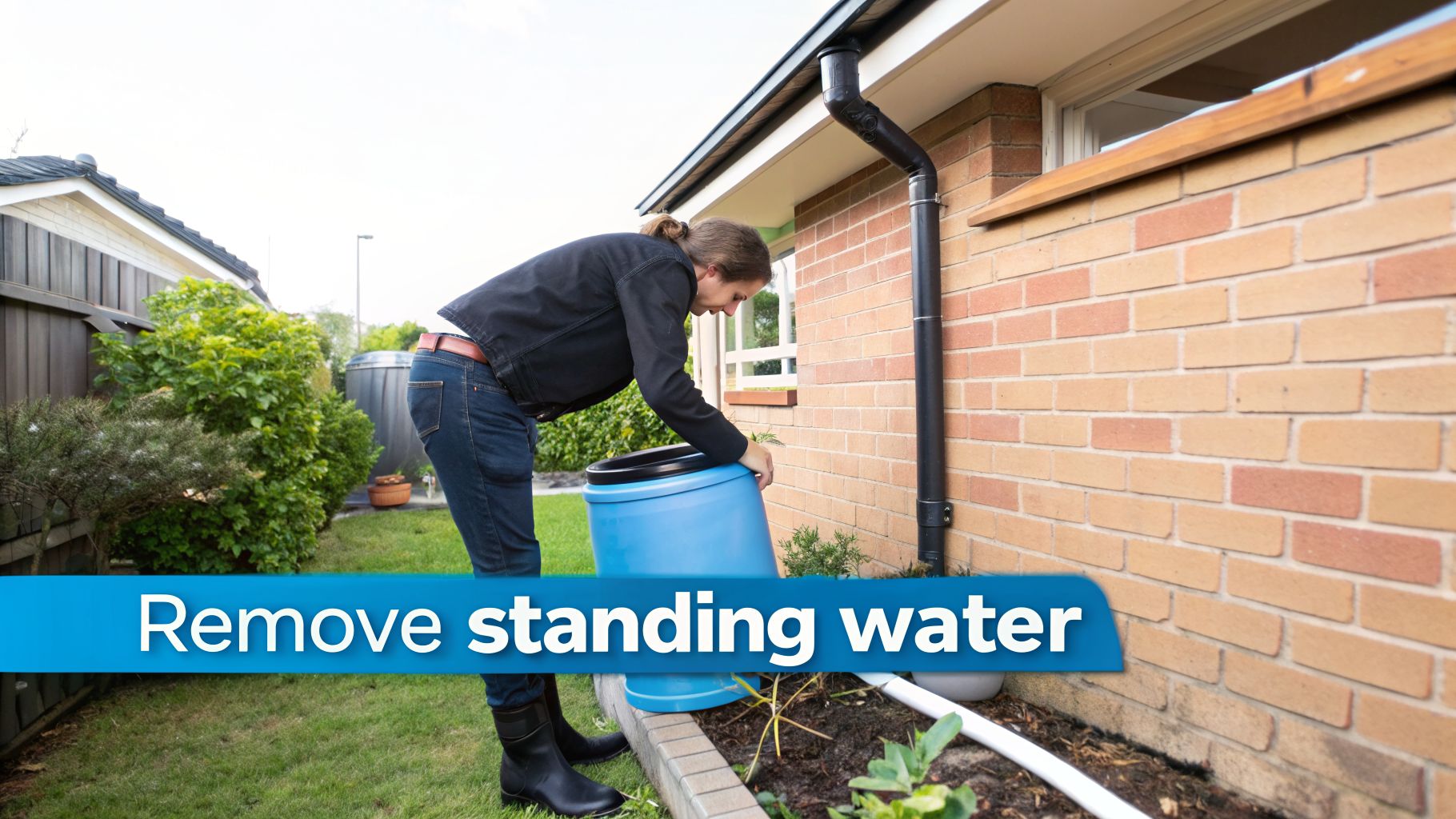
While sealing your building and fitting Premier Screens Ltd fly screens is your best last line of defence, the real battle against mosquitoes starts outside. To properly keep them out of your house, you have to get to the source and break their life cycle. It’s all about turning your garden and grounds from a mosquito nursery into hostile territory.
The trick is to start thinking like a mosquito. They aren't fussy. A tiny bit of standing water—no bigger than a bottle cap—is all they need to lay eggs. By getting rid of these breeding spots, you massively cut down the number of adult mosquitoes that ever make it to your doors and windows.
Look Beyond The Obvious Puddles
Everyone knows to tip out buckets of rainwater, but mosquitoes are more resourceful than that. They find and use tiny, hidden water sources that most people walk past every day. Making a regular patrol of your property to find and deal with these spots is one of the most effective things you can do.
When you're looking, keep an eye out for these easily missed problem areas:
- Blocked Gutters and Drains: Clogged with leaves and muck, gutters become long, shallow pools of stagnant water—a perfect mosquito breeding ground.
- Saucers Under Plant Pots: Those little trays that catch runoff are classic breeding sites. Empty them after watering.
- Children’s Toys and Garden Furniture: A forgotten toy car, a dip in a tarpaulin, or an upside-down wheelbarrow can hold enough water.
- Poorly Sealed Water Butts: A water butt is great for the garden, but if it’s uncovered or badly sealed, it’s basically a mosquito factory. Make sure yours has a tight-fitting lid and a screened overflow pipe.
Stagnant water in clogged gutters is a massive, often overlooked, hotspot. To stop this, it's vital to know how to clean gutters safely and do it regularly. This one bit of maintenance can get rid of a major mosquito problem right over your head.
Proactive Garden And Landscape Management
How you manage your garden isn't just about looks; it's a form of active pest control. Certain plants and water features can either help or hinder your efforts, so a few smart decisions here can make a real difference.
A pond, for example, can be a beautiful addition but needs to be managed. You can either add fish like minnows that happily eat mosquito larvae, or you can make sure the water is always moving with a pump. Likewise, planting flowers that attract dragonflies, like Black-Eyed Susans, brings in natural predators that will hunt adult mosquitoes for you.
This hands-on approach is getting more important across the UK. Projects like the UKHSA's Mosquito Recording Scheme show that nuisance biting is a growing problem. It has even confirmed the return of species like Culex modestus to parts of the country where it hadn't been seen for decades. When you get rid of breeding sites, you're helping manage the local pest population for everyone.
A Clever Trick For Larvae Control
For water you can't just drain, like in an ornamental pond or a large water butt, there's a smart and safe trick. Try using a biological larvicide that contains Bacillus thuringiensis israelensis (Bti). It’s a natural bacterium that’s lethal to mosquito larvae but completely safe for people, pets, birds, and other wildlife.
You can even make simple but effective traps, sometimes called ‘Buckets of Death’:
- Fill a dark-coloured bucket about halfway with water.
- Chuck in a handful of leaves or grass cuttings. This makes the water more attractive for egg-laying mosquitoes.
- Add a small piece of a Bti dunk, which you can find at most garden centres.
The mosquitoes will lay their eggs in the bucket, but the Bti will kill the larvae before they can grow up. Placing a few of these around your property is a brilliant, low-effort way to actively bring down the next generation of pests. It’s a proactive step that works perfectly alongside physical barriers from Premier Screens Ltd, giving you a layered defence system to keep your property genuinely mosquito-free.
Advanced Strategies for a Pest-Free Environment
Even with your property perfectly sealed and screened, adding a few extra layers of defence can give you total peace of mind. While physical barriers from Premier Screens Ltd are the definitive way to keep mosquitoes out of your house, these extra tactics complement them by actively tackling the mosquito population right outside your door.
Think of it as creating a defensive buffer zone—these are methods that deter and disrupt mosquitoes before they even get a chance to test your windows and doors.
Use Airflow to Your Advantage
Mosquitoes are surprisingly weak fliers. They can’t handle much more than a gentle breeze, which is why you’ll often find them lurking in still, humid corners. You can easily turn this weakness against them.
A well-placed fan on your patio or deck creates an incredibly effective no-fly zone, making it almost impossible for them to land and bite. The moving air also does a great job of dispersing the carbon dioxide and other body odours that attract them to you in the first place. It’s a simple trick, but it can make all the difference for enjoying an evening outdoors.
Reduce the Local Population with Non-Toxic Traps
While repellents simply keep mosquitoes away, certain traps are designed to actively cut down their numbers. One particularly clever and effective DIY method is the "Bucket of Death," which uses a mosquito's own breeding instincts to stop them in their tracks.
Here’s a step-by-step guide:
- Grab a dark-coloured bucket and fill it about halfway with water.
- Toss in a handful of organic material, like old leaves or grass cuttings. As this breaks down, it releases scents that egg-laying female mosquitoes find irresistible.
- Let it stand for a day or two to become even more appealing.
- Add the active ingredient: a small piece of a larvicide dunk containing Bacillus thuringiensis israelensis (Bti).
Bti is a naturally occurring bacterium that is deadly to mosquito larvae but harmless to people, pets, and wildlife. Female mosquitoes will lay their eggs in the bucket, but the Bti ensures the larvae are eliminated before they mature into biting adults.
Placing a few of these traps around the garden is a brilliant, low-effort way to suppress the local mosquito population. This active control works hand-in-hand with the passive barrier of your Premier Screens Ltd screens, significantly reducing the pressure on your home’s defences. For a sustainable and holistic approach, you can also consider implementing Integrated Pest Management strategies to deter a wide range of pests.
Why Mosquito-Proofing Is a Growing Health Priority
Keeping mosquitoes out of your house has always been about avoiding itchy bites. But now, it’s becoming an increasingly important health measure. Thanks to global travel, mosquito-borne diseases are a more frequent concern, even here in the UK.
Recent data highlights a concerning trend of "souvenir" infections brought back by travellers. Taking robust measures at home is not an overreaction—it’s a sensible precaution in a world where diseases can travel as fast as aeroplanes.
Official statistics drive this point home. GOV.UK data for 2023 showed 2,106 imported cases of malaria, a sharp 26% increase from 2022. On top of that, from January to June 2024, there were 473 cases of dengue in England, Wales, and Northern Ireland—a threefold rise from the same period in 2023. These figures are a stark reminder that while local transmission is rare, the risk from imported cases makes a secure home environment essential. You can read the full report on rising mosquito-borne infections.
Ultimately, creating multiple layers of defence is the smartest way to keep mosquitoes out of your house. By combining the absolute physical barrier of Premier Screens Ltd products with proactive outdoor measures, you create a truly pest-free environment. This layered approach also contributes to improving indoor air quality by allowing you to keep windows open for ventilation without the risk.
Common Questions on Keeping Mosquitoes Out
Even with the best intentions, a few practical questions always come up when you’re deciding how to mosquito-proof your property. It’s completely normal to want to get the details right for your home or business.
Here at Premier Screens Ltd, we’ve spent over 30 years manufacturing and fitting screening solutions across the country, so we've heard them all. From tackling tiny midges in the Highlands to ensuring a busy kitchen meets FSA compliance, we have the answers.
Are Fly Screens Really Effective Against UK Mosquitoes and Midges?
This is the number one question we get, and the short answer is a resounding yes. But the real key is choosing the right mesh for your location.
For most homes, our standard insect mesh is more than enough to stop common houseflies and the larger UK mosquito species. It gives you that perfect balance of solid protection and great airflow.
However, if you're in a rural spot, near water, or in a place like the Scottish Highlands, the infamous midge is your main problem. These pests are so small they can wiggle through standard mesh. That’s why we always recommend our superfine midge mesh in these areas. Its tighter weave forms a physical barrier that even the smallest insects can’t get through, without you even noticing a difference in your view or the breeze coming in.
The bottom line is that a professionally fitted screen from Premier Screens Ltd with the correct mesh provides 100% effective protection. It’s not a deterrent; it’s a complete physical barrier that stops pests from entering your property, full stop.
Can I Install Premier Screens Myself or Do I Need a Professional?
We believe in giving you options, so we offer both. Many of our systems, especially our popular retractable and magnetic screens, are designed for a straightforward DIY fit. You can get an instant online quote for your exact measurements, and we’ll ship a kit with everything you need to get the job done.
For more complex jobs—like huge bi-fold doors or commercial premises needing to satisfy FSA standards—our professional nationwide installation service is the way to go. It’s also perfect for anyone who just wants the peace of mind that comes with a guaranteed perfect result. Our experienced technicians handle everything, ensuring your screens are fitted flawlessly for long-term durability.
Are Your Screens Suitable for Restaurants Needing FSA Compliance?
Absolutely. A huge part of our work is supplying commercial kitchens, restaurants, and cafés with screens specifically designed to meet the strict hygiene rules of the Food Standards Agency (FSA). Keeping flies, mosquitoes, and other pests out of food prep areas isn't just good practice; it's a legal requirement.
Our commercial range is built for the job:
- Durable Aluminium Frames: They’re tough, easy to wipe down, and made to survive the chaos of a busy kitchen.
- Robust Mesh Options: We use hard-wearing mesh that provides a complete pest barrier day in, day out.
- Specialist Doors: For high-traffic kitchen entrances, our chain screens allow staff to walk through hands-free. Our double-action doors are another incredibly sturdy solution for busy doorways.
Choosing Premier Screens Ltd for your business is a simple way to ensure your premises stay hygienic, well-ventilated, and fully compliant with all FSA regulations.
What Is the Difference Between a Retractable and a Sliding Screen?
The main difference comes down to how they work and what they look like when they’re not being used.
A retractable screen (sometimes called a roller screen) from Premier Screens Ltd is all about being discreet. When you don't need it, the mesh vanishes into a neat cassette, leaving your window or door completely clear. They’re a huge favourite for modern homes with bi-fold or French doors, where the view is everything.
A sliding screen, on the other hand, runs on a track system, just like a sliding glass door. The screen panels simply slide to one side to open the doorway. This design is incredibly robust and is often the best choice for very large openings or high-traffic patio doors where you need something that can take a lot of punishment.
Both are fantastic at stopping mosquitoes. The right choice really just depends on your home’s style, how you use the door, and what you prefer aesthetically.
At Premier Screens Ltd, we provide the ultimate physical barrier to keep mosquitoes out of your house for good. Whether you need a discreet solution for your home or a compliant system for your business, we manufacture the perfect fit. Explore our full range of bespoke fly screens and get your instant online quote today at https://www.premier-env.co.uk.