Finding the Best Mesh for DIY Window Screens UK
Deciding on the best mesh for your DIY window screens in the UK comes down to your specific goals. There isn’t a single "best" option—the right choice depends entirely on your home and lifestyle.
For most homes just wanting to keep out common insects at a great price, standard fibreglass is our go-to recommendation. But if you have a cat or dog, you’ll want the much tougher pet-resistant mesh to prevent damage. And for anyone who dreads hay fever season, our specialised pollen mesh is a genuine game-changer.
A Quick Guide to Choosing Your DIY Screen Mesh
When you start a DIY window screen project, picking the right mesh is the most important decision you'll make. It dictates the screen's durability, visibility, airflow, and—most importantly—what it keeps out. With over 30 years of manufacturing experience here at Premier Screens, we provide actionable advice to help you get it right the first time.
The "best" mesh for you depends on a simple question: what problem are you solving? Are you stopping flies in a suburban kitchen? Preventing a cat from shredding the screen? Or blocking pollen from drifting into a bedroom? Each job requires a specific tool. Understanding the main mesh types is the first step to a successful, long-lasting project.
The Four Main Mesh Options
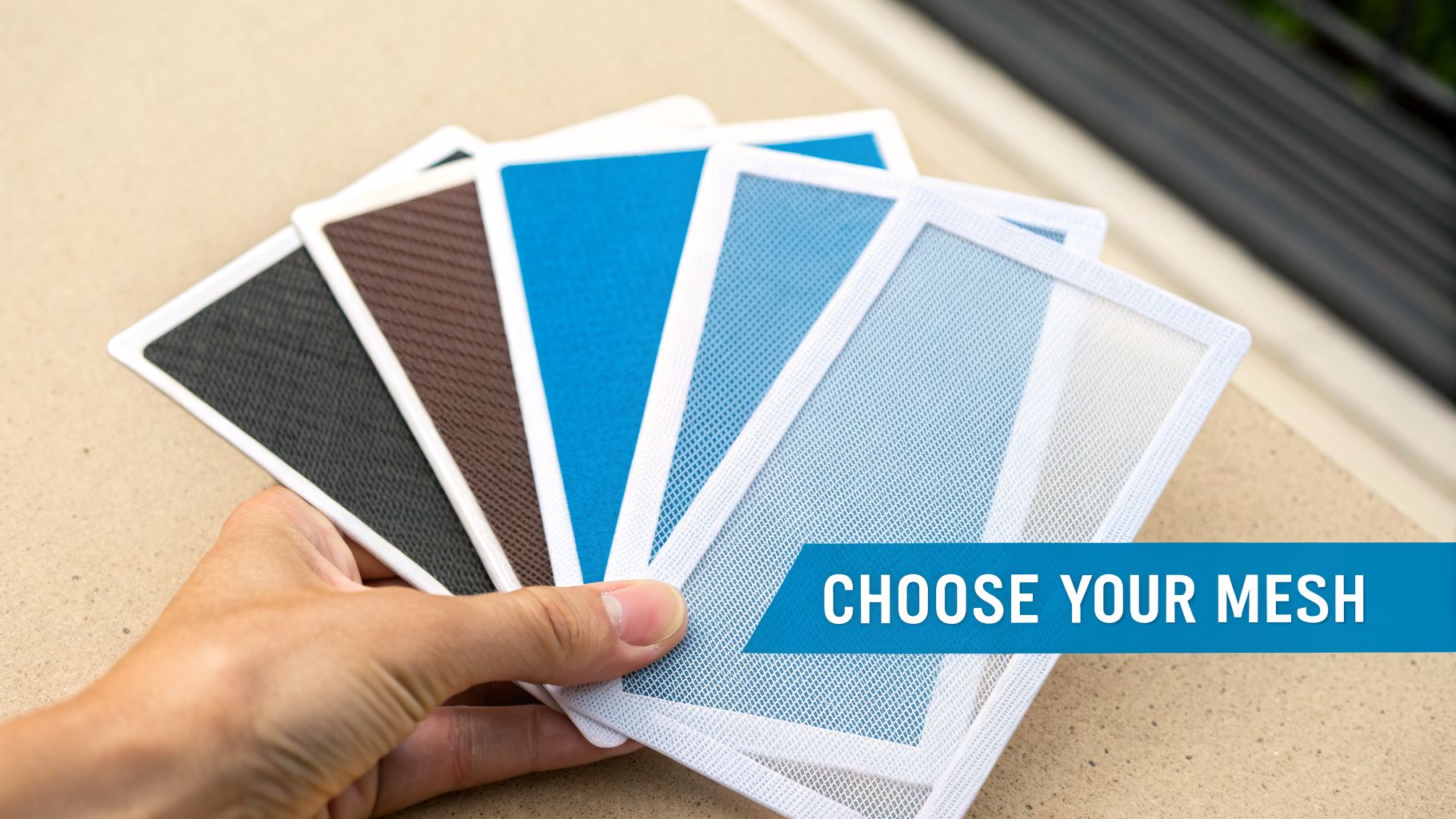
To make your decision easy, we've broken down the most popular materials into four main types. Each one is engineered for a specific purpose, offering a different balance of features to suit common household and commercial needs across the UK.
- Standard Fibreglass Mesh: This is the workhorse of the fly screen world. It’s affordable, flexible, and does a fantastic job of stopping flies, moths, and mosquitoes. It's the perfect choice for most residential windows where extreme durability isn't the top priority.
- Toughened Pet-Resistant Mesh: Made from a seriously strong, vinyl-coated polyester, this mesh is built to handle claws, paws, and the general rough-and-tumble from pets and kids. It costs more upfront but pays for itself in longevity.
- Pollen Mesh: This mesh has a much finer weave and uses a natural electrostatic charge to grab airborne allergens like pollen and dust before they get into your home. If you suffer from hay fever, you'll feel the difference immediately.
- Midge Mesh: An ultra-fine mesh specifically designed to block the tiniest of insects, like the notorious Scottish midge. If you live near water or in rural, boggy areas, this is an absolute must-have.
Actionable Insight: Your choice of mesh is a trade-off between cost and performance. While standard fibreglass is great for many situations, we advise customers to invest in a specialised mesh like our pet or pollen screen from the start. This saves you money and hassle down the line by perfectly matching the screen to your environment.
To help you compare these options, here's a quick at-a-glance overview.
This table gives you a fast comparison of the main DIY window screen mesh types available in the UK, helping you match the right material to your needs.
DIY Window Screen Mesh At-a-Glance
| Mesh Type | Primary Use Case | Material Strength | Visibility & Airflow | Relative Cost |
|---|---|---|---|---|
| Fibreglass | General insect protection | Standard | Excellent | £ |
| Pet-Resistant | Homes with cats and dogs | Very High | Good | £££ |
| Pollen Mesh | Allergy and dust reduction | High | Moderate | £££ |
| Midge Mesh | Tiny insects (midges) | Standard | Good | ££ |
Ultimately, choosing the right mesh ensures your DIY screen will do its job effectively for years to come, whether that’s simply stopping flies or creating an allergy-free sanctuary.
Standard Fibreglass vs Toughened Pet Mesh
When choosing the right mesh for your DIY window screens, the decision often boils down to two main players: our standard fibreglass and the much tougher pet-resistant mesh. While both will do a fantastic job of keeping insects out, they're built for very different levels of wear and tear. Making the right choice from the start is the key to a screen that serves you well for years.
For most homes, standard fibreglass is the go-to for a reason. It's lightweight, flexible, and because it won't rust or corrode, it’s perfectly suited to the UK's damp climate. For the average residential window, it strikes a brilliant balance between performance and price.
Fibreglass: The All-Rounder
Standard fibreglass mesh truly shines when it comes to visibility and airflow. You can throw your windows open, enjoy a fresh breeze, and keep your views crystal clear without worrying about flies, wasps, or mosquitoes. This impressive performance has made it a dominant force in home improvement.
In fact, with the European insect screen market projected to be worth US$285.4 million by 2025, fibreglass is leading the charge. At Premier Screens, our standard fibreglass mesh is engineered to block 98% of common flying insects while still allowing 70-80% of natural airflow. It's the perfect choice for our supply-only DIY kits.
Actionable Insight: Use our standard fibreglass for:
- Upper-floor windows that are well out of reach of pets or young children.
- Kitchens and living areas where you want to maximise light and fresh air.
- Budget-conscious DIY projects where you still need a high-quality, effective insect barrier.
However, its standard strength is also its main drawback. A determined cat’s claws or a dog jumping up at the window can cause tears, meaning you'll face repairs or a replacement. That’s exactly where our more robust alternative comes in.
Pet Mesh: The Strategic Upgrade
Think of our toughened pet-resistant mesh as a long-term investment in durability. It’s made from an extra-strong, vinyl-coated polyester that is noticeably thicker and more resilient than standard fibreglass. This material is specifically designed to stand up to the scratching, clawing, and pushing from even the most persistent pets.
Our Brand Advice: While our pet mesh has a higher initial cost—typically around 30% more than fibreglass—its real value is in its longevity. For any pet owner, this upfront investment pays for itself by saving you the recurring cost and hassle of fixing or replacing torn screens.
Of course, there is a trade-off for this superior strength. The thicker strands mean a slight reduction in visibility and airflow. However, modern pet mesh is cleverly designed to be as unobtrusive as possible, and our customers tell us the difference is tiny compared to the peace of mind they get.
Actionable Insight: Our pet mesh is the clear winner for:
- Ground-floor windows and patio doors.
- Any household with cats, dogs, or even curious young children.
- High-traffic spots in commercial settings, like cafe kitchens or office break rooms, where screens are more likely to get bumped.
Ultimately, choosing between fibreglass and pet mesh comes down to a simple look at your home and lifestyle. For a quiet, pet-free house, fibreglass offers outstanding value. But if you share your home with four-legged family members, upgrading to pet mesh isn’t just a preference—it’s a practical necessity. For more guidance on choosing between different materials, you can check out our guide on the best fly screen mesh options for UK homes.
Specialised Mesh for Health and Comfort
Sometimes, just keeping out the odd housefly isn't enough. Your DIY window screens can do much more—they can be a frontline defence for your health and comfort. This is where you move beyond standard mesh and look at materials engineered for specific problems, like pollen allergies or those tiny, biting midges.
For the millions of us who suffer from hay fever, or anyone living near water where midges are a nightmare, these advanced meshes aren't a luxury; they're essential. Let's look at the two most popular options from our range: pollen mesh and midge mesh. One is about creating a low-allergen sanctuary, the other is about forming an impenetrable barrier against the UK's most infuriating tiny pests.
Pollen Mesh for Hay Fever Sufferers
For the estimated one in four people in the UK who dread hay fever season, opening a window in spring can feel like inviting misery indoors. Our pollen mesh tackles this head-on. It turns your window into an active filter, stopping airborne allergens before they ever get a chance to ruin your day.
So how does it work? Unlike standard fibreglass, pollen mesh has a much tighter weave. But the real magic is in its special coating, which creates a natural electrostatic charge. This static field acts like a magnet for fine particles, pulling them out of the air as it flows through.
This clever system is incredibly effective against:
- Grass and tree pollen: The main culprits behind hay fever.
- Dust and other airborne irritants: Which helps improve your general indoor air quality.
Our Actionable Advice: Fit pollen mesh in bedrooms and main living areas to create 'safe zones' in your home. It means you can finally enjoy a fresh breeze without the endless sneezing, itchy eyes, and runny nose that come with high pollen counts. It’s a genuine quality-of-life improvement.
The trade-off? You will notice a slight reduction in airflow and visibility compared to a standard mesh. The same dense weave that blocks the pollen also slows the breeze a little. For anyone who has suffered through a bad allergy season, though, it’s a tiny price to pay for a symptom-free home.
Midge Mesh for Ultimate Insect Protection
While your average fly screen will stop houseflies and wasps, it’s completely useless against the notorious Scottish midge. These minuscule biting insects—and similar gnats you find near lakes and rivers across the UK—can walk straight through the holes in a standard mesh. If your property is in one of these areas, our midge mesh is the only solution that will work.
Midge mesh is all about its ultra-fine weave. The holes are simply too small for even the tiniest of pests to squeeze through. If you live in the Scottish Highlands, the Lake District, or any rural spot near slow-moving water, fitting anything less is just a waste of money.
Actionable Insight: You absolutely need midge mesh if:
- Your home is in a known midge hotspot.
- You run a holiday let or B&B where guest comfort is everything.
- You’re still getting bitten by tiny, unidentified insects even with screens already fitted.
Visibility and airflow through midge mesh are a little less than standard fibreglass but noticeably better than pollen mesh. It strikes the perfect balance for anyone who needs serious insect protection without heavy-duty filtration. For homes in affected regions, it is without a doubt the best mesh for DIY window screens in the UK, guaranteeing your space stays peaceful and bite-free.
Matching the Right Mesh to Your Property
Choosing the right mesh for your DIY window screens isn’t a one-size-fits-all decision. The best choice for a city flat will be completely different from what’s needed for a rural cottage. To give you real-world guidance, we’ve put together a few common scenarios we see every day at Premier Screens.
By finding the situation that most closely matches your own, you can choose a mesh with confidence, knowing it will perform exactly as you need it to. We’ll link the features of each mesh directly to the practical demands of your property, showing how a smart choice makes all the difference.
If you have specific health concerns or live near water, this quick decision tree can help narrow down your options right away.
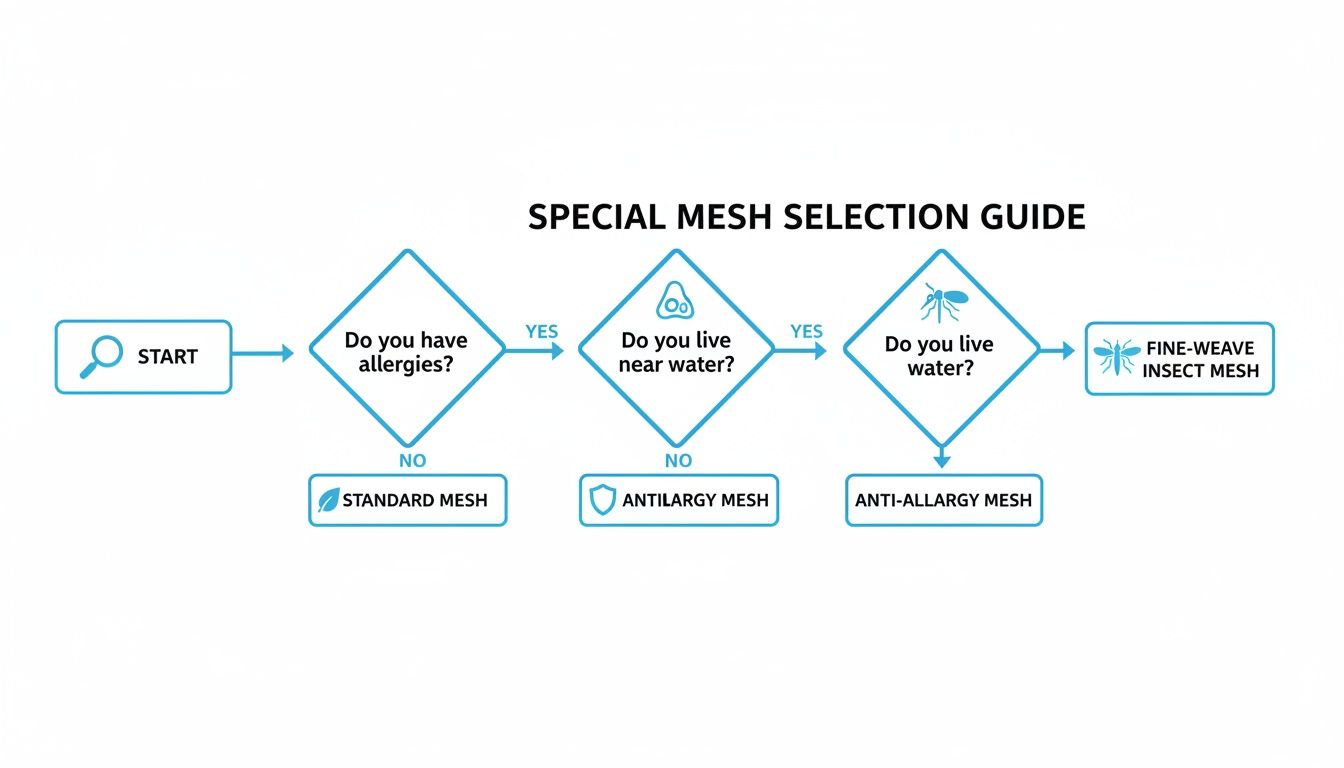
As the flowchart shows, factors like allergies or proximity to water immediately point towards specialised meshes, simplifying your choice from the start.
The Suburban Family Home
For the typical family home in a UK suburb, the goal is simple: keep out common pests like flies, wasps, and spiders without spending a fortune. You'll also want great visibility and airflow to make the most of those rare sunny days.
- Our Recommendation: Standard fibreglass mesh for most windows, with a tactical upgrade to pet-resistant mesh for ground-floor windows and patio doors.
- Why It Works: Fibreglass is the workhorse of our mesh range—cost-effective and brilliant at blocking 98% of common pests while keeping your view clear. However, ground-floor windows and doors are high-traffic zones, vulnerable to kids playing, pets scratching, or even just moving furniture. Investing in our tougher pet mesh for these specific spots gives you durability exactly where it matters most, saving you from unnecessary repairs down the line.
The Urban Apartment with Allergies
Living in a city flat, especially on an upper floor, often means fewer big insects but a whole new set of problems: dust, pollution, and sky-high pollen counts. For the one in four people in the UK who suffer from hay fever, an open window can trigger days of misery.
- Our Recommendation: Pollen mesh, especially for bedroom and living room windows.
- Why It Works: Our pollen mesh is much more than a simple screen; it’s an air filter. Its denser weave and electrostatic properties are designed to capture tiny airborne particles like pollen and dust before they get into your home. This creates a low-allergen sanctuary, letting you enjoy fresh air without suffering. The slight trade-off in airflow is a small price to pay for such a dramatic improvement in indoor comfort.
The Commercial Kitchen or Café
For any food business, hygiene is paramount, and complying with Food Standards Agency (FSA) guidance is a legal must. Your screens have to be tough, effective, and easy to clean to stop pests from ever reaching food prep areas.
Premier Screens Brand Insight: As manufacturers with over 30 years of experience supplying commercial kitchens, we know that durability is everything. The screen has to withstand daily cleaning, knocks from equipment, and constant use without failing.
- Our Recommendation: Heavy-duty fibreglass mesh is a solid starting point, but stainless steel mesh is the ultimate choice for total durability and FSA compliance.
- Why It Works: While durable fibreglass provides an effective barrier, stainless steel is in another league. It’s stronger, completely non-corrosive, and can handle the most aggressive cleaning regimes, including steam cleaning. It represents the gold standard for food safety environments, ensuring you meet all regulations and protect your hard-earned reputation.
The Holiday Cottage in the Highlands
Running a holiday let in a beautiful rural spot like the Scottish Highlands or the Lake District comes with a unique, tiny terror: midges. These minute biting insects can sail straight through standard mesh, turning a guest's dream getaway into an itchy nightmare.
- Our Recommendation: Midge mesh on all windows and doors. No exceptions.
- Why It Works: Our midge mesh has an ultra-fine weave specifically engineered to block even the smallest of insects. In the hospitality business, guest comfort is king—it drives positive reviews and repeat bookings. By providing a midge-free sanctuary, you show a real commitment to quality and a deep understanding of the local environment. It's an essential investment for any holiday let in a midge-prone area.
DIY Kits vs Professional Installation
So, you've picked the perfect mesh. Now for the next big question: do you roll up your sleeves and go the DIY route, or call in the professionals? This choice really boils down to two options: ordering a supply-only DIY kit from a manufacturer like us, or hiring an expert for a complete fitting service. Both have their merits, and the right path for you will depend on your budget, how quickly you need it done, and the specifics of your project.
Going for a supply-only DIY kit has become a hugely popular choice for homeowners and even small businesses, and the reason is simple: it saves a lot of money. When you handle the assembly yourself, you’re not paying for labour. We send you everything you need—the exact mesh you chose, frames cut to your precise measurements, and all the little components—right to your doorstep. It’s the best way to get a truly bespoke fit without the professional price tag.
The Case for DIY Kits
The term "DIY" might sound a bit intimidating, but putting together a modern window screen is surprisingly straightforward. Honestly, if you can handle a tape measure and a rubber mallet, you've got all the skills you need.
The process is broken down into a few simple steps:
- Measure Carefully: Get an accurate measurement of the height and width of your window reveal. This is the most critical step.
- Assemble the Frame: The frame pieces are pre-cut, so you just connect them using the corner keys we provide.
- Lay and Spline the Mesh: Place your mesh over the assembled frame. Then, use a splining tool to push the rubber spline into the channel, which locks the mesh in place nice and tight.
- Trim the Excess: Grab a utility knife and carefully trim the extra mesh around the edges for a clean, professional-looking finish.
If you’re new to this sort of job, it can help to get a feel for the precision needed. While the materials are different, the hands-on process has some overlap with other window tasks. Looking at guides on topics like how to install window privacy film can give you an idea of the careful work involved and boost your confidence before you begin.
The DIY approach is especially good for tougher materials. Our pet-resistant polyester mesh, for instance, has become a go-to for UK households with cats or dogs. It’s so durable that it’s quite forgiving during installation, and a standard window screen only takes about 20 minutes to put together. While it costs roughly 30% more than standard fibreglass—around £40-£60/m²—most people see a return on that investment within a couple of years by avoiding repairs.
When to Choose Professional Installation
While our DIY kits offer unbeatable value, there are definitely times when calling in a professional is the smarter move. It gives you a guaranteed, hassle-free result, which is crucial for many commercial projects and more complex homes.
Our 30 Years of Experience Tell Us: For a standard window in a typical home, a DIY kit is fantastic value. But if you’re fitting out a busy commercial kitchen or dealing with a listed building's quirky, non-standard windows, a professional installation offers total peace of mind. At Premier Screens, we handle these jobs to ensure every legal and aesthetic detail is handled perfectly.
You should seriously consider professional installation if:
- You're a Commercial Business: Restaurants, cafés, and food production sites must comply with Food Standards Agency (FSA) regulations. A professional installation from a trusted company like Premier Screens is your guarantee of compliance. It’s non-negotiable.
- The Project is Large or Complex: Fitting screens to dozens of windows in an office building, university hall, or a large house is a massive job. Professionals have the systems to get it done efficiently and to a consistently high standard.
- Windows are Awkward or At Height: Unusually shaped windows, traditional sash windows, or any windows a few storeys up can be tricky and pose safety risks. These are best left to experienced fitters who have the right equipment and training.
Ultimately, the choice is yours. A DIY kit empowers you to get a custom-fit, high-quality screen at a fraction of the cost, making it the ideal solution for most homeowners. For those bigger, more critical jobs, a professional service delivers a perfect finish with zero stress.
If you’re ready to get started with your own project, feel free to browse our full range of fly screen mesh on a roll to find the perfect material.
Your Questions About DIY Screen Mesh Answered
When you’re taking on a DIY screen project, a few practical questions almost always come up. With our 30 years of manufacturing experience, we’ve heard them all, so we've put together some straightforward answers to help you get the job done right.
How Do I Measure My Windows for a DIY Kit?
Getting the measurements spot-on is the single most important step for a perfect fit. You'll need to measure both the width and the height of the window frame opening where the screen will actually sit.
Actionable Tip: Take three separate measurements for each dimension: one at the top, one in the middle, and one at the bottom. Once you have your three width and three height figures, always use the smallest measurement for each dimension when ordering. This simple rule guarantees the frame will slot in perfectly, even if your window opening isn't perfectly square.
Does a Darker Mesh Block the View More?
It might sound odd, but a darker mesh like charcoal or black actually gives you the clearest, most uninterrupted view. Your eyes naturally look through a dark colour rather than at it. These darker threads absorb light and cut down on glare, letting your focus rest on the scenery outside.
On the other hand, lighter colours like white or grey reflect light, which makes the mesh grid itself far more noticeable. If you want a screen that practically disappears, we always point customers toward our charcoal fibreglass mesh.
Can I Use the Same Mesh for Windows and Doors?
You can, but the decision should really come down to how much traffic the door gets. For a busy patio or sliding door that's constantly being opened and closed, we always recommend our toughened pet-resistant mesh. Its extra strength is vital for withstanding bumps, accidental pushes, and the inevitable attention from kids or pets.
For a less-used back door or for your standard windows, our durable fibreglass mesh is more than tough enough for the job. We supply custom kits for every kind of opening, ensuring you get the right material where it counts.
A Note on Maintenance: After you’ve fitted your new screens, a bit of simple upkeep will keep them looking great for years. For a full guide, you can check out the best way to clean window screens for some excellent tips. A gentle wash twice a year with a soft brush and some mild detergent is usually all it takes to keep the mesh clear and in top condition.
Ready to get started? At Premier Screens Ltd, we provide everything you need for a successful DIY installation, from custom-cut frames to the ideal mesh for your home. Get your instant online quote today and enjoy an insect-free home tomorrow.